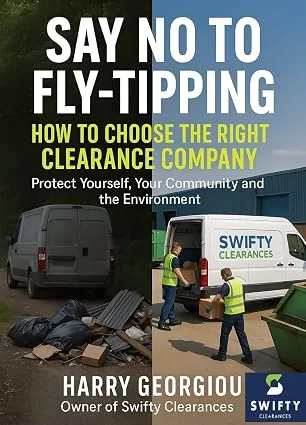
Say No to Fly-Tipping
Chapter 2 — The Hidden Dangers of Fly-Tipping
← Harry Georgiou / Say No to Fly-Tipping
If your waste is found illegally dumped and you cannot demonstrate that you took reasonable steps to ensure it was handled lawfully, you may face enforcement action.
Simply saying, I paid a guy to take it away, may not be enough.
Checking the operator, keeping appropriate paperwork and recording the details of the company you use can provide important evidence that you acted responsibly.
Fly-tipped waste can cause long-term damage to the environment.
Mixed waste may release chemicals into soil and water. Plastics can break down into microplastics, while illegal fires can release harmful smoke and pollutants into the air.
Rivers, hedgerows, farmland and wildlife habitats can all be affected.
Fly-tipped waste can also present immediate dangers.
Broken glass and sharp metal can cause serious injuries. Batteries, oils and chemicals can burn or contaminate land. Food waste can attract rats and other vermin.
Asbestos is an especially serious hazard. Damaged asbestos-containing materials can release fibres that pose significant health risks when inhaled.
When waste is dumped on private land, the landowner can be left facing the cost and disruption of removing it.
A single incident can cost thousands of pounds, particularly where hazardous waste is involved.
Farm gateways can be blocked, livestock can be injured and crops or soil can become contaminated.
Fly-tipping is not always a small-scale operation.
Illegal waste activity can involve unmarked vehicles, false identities, temporary businesses and cash transactions. Operators can collect money quickly, dump waste and disappear before anyone can hold them accountable.
The community is then left to deal with the consequences.
A minority of customers continue to chase the rock-bottom price.
That demand creates an opportunity for rogue operators.
Without customers willing to pay for questionable services, the business model becomes much harder to sustain.
Accountability therefore begins with the person producing the waste.
Reader Comments
Leave a Comment
We would love to hear your thoughts on this chapter.
About Harry Georgiou
Harry Georgiou is the owner of Swifty Clearances, a waste clearance business. He writes about responsible waste disposal, fly-tipping prevention, and the practical steps households and businesses can take to avoid inadvertently funding illegal waste operations.
Author Page