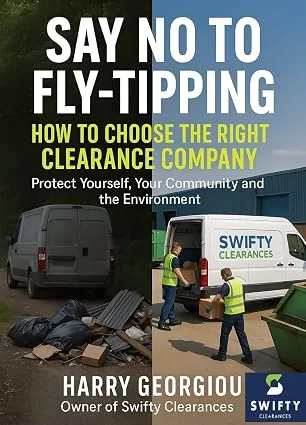
Say No to Fly-Tipping
Chapter 3 — The True Cost to the UK
← Harry Georgiou / Say No to Fly-Tipping
The cost of dealing with fly-tipping is substantial.
Councils have to investigate incidents, organise clear-ups, transport waste and deal with the environmental and public-health consequences.
Ultimately, much of that cost falls on council taxpayers.
Every pound spent removing illegally dumped waste is money that cannot be spent elsewhere.
A forty-pound cash-only clearance may sound like a bargain. It may not be a bargain at all.
If the waste is later discovered dumped illegally, the customer may face enforcement action while the council and landowner are left dealing with the consequences.
The cheapest quote can become the most expensive option.
Fly-tipping investigations can be difficult.
Evidence may be limited. Dumping can take place in isolated rural locations. Vehicles may be unmarked, and identifying the person responsible can be challenging.
Authorities may therefore have to prioritise removing waste quickly to protect public health and safety.
That creates a cycle: waste is dumped, the council clears it, public money is spent, and the same locations are targeted again.
Prevention is therefore just as important as clean-up.
Fly-tipping creates costs that are not always obvious. These can include blocked farm tracks and lost working time, veterinary bills, replacement fencing, emergency responses to waste fires, specialist hazardous-waste clearances, environmental testing and remediation, damage to local amenities and tourism, and the loss of community confidence.
The visible pile of rubbish is only part of the cost.
Reader Comments
Leave a Comment
We would love to hear your thoughts on this chapter.
About Harry Georgiou
Harry Georgiou is the owner of Swifty Clearances, a waste clearance business. He writes about responsible waste disposal, fly-tipping prevention, and the practical steps households and businesses can take to avoid inadvertently funding illegal waste operations.
Author Page