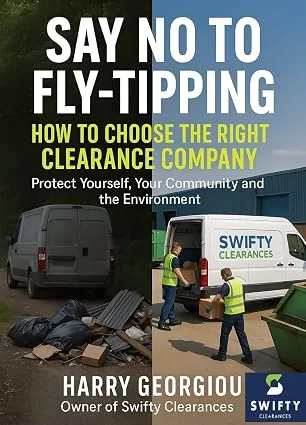
Say No to Fly-Tipping
Chapter 1 — Introduction
← Harry Georgiou / Say No to Fly-Tipping
Fly-tipping is one of the UK's most serious environmental crimes. It blights our countryside, drains public money and can expose households and businesses to fines and prosecution.
In 2023/24, councils in England recorded more than a million incidents. Large-scale clear-ups alone cost councils millions of pounds, while the wider financial burden is considerably higher. That is money that could otherwise be spent on schools, hospitals, youth services, roads and safer communities.
So why does fly-tipping continue?
Rogue operators can undercut legitimate businesses. Some customers are tempted by the cheapest possible price. Enforcement can be difficult, particularly in rural areas and at isolated dumping hotspots. Too often, councils are left dealing with the consequences rather than preventing the problem at its source.
But customers have more power than they realise.
By choosing properly authorised waste operators and insisting on the right paperwork, you can protect yourself and help undermine the business model that allows fly-tipping to flourish.
This book explains the hidden dangers and true costs of fly-tipping; how to spot the warning signs of a rogue operator; the questions you should ask before handing over your waste; the documents you should request and keep; the dangers associated with hazardous waste, including asbestos, chemicals, fridges and tyres; the particular burden fly-tipping places on farmers and rural communities; the legal framework, explained in plain English; real-world case studies showing what can go wrong, and what can go right; and practical checklists, templates and safeguards you can use yourself.
There is also a simple extra precaution, the letter in the waste safeguard, which can help demonstrate that you took reasonable steps when arranging a clearance.
If every customer followed a few basic rules, fly-tipping could be reduced significantly.
Let's begin.
Reader Comments
Leave a Comment
We would love to hear your thoughts on this chapter.
About Harry Georgiou
Harry Georgiou is the owner of Swifty Clearances, a waste clearance business. He writes about responsible waste disposal, fly-tipping prevention, and the practical steps households and businesses can take to avoid inadvertently funding illegal waste operations.
Author Page