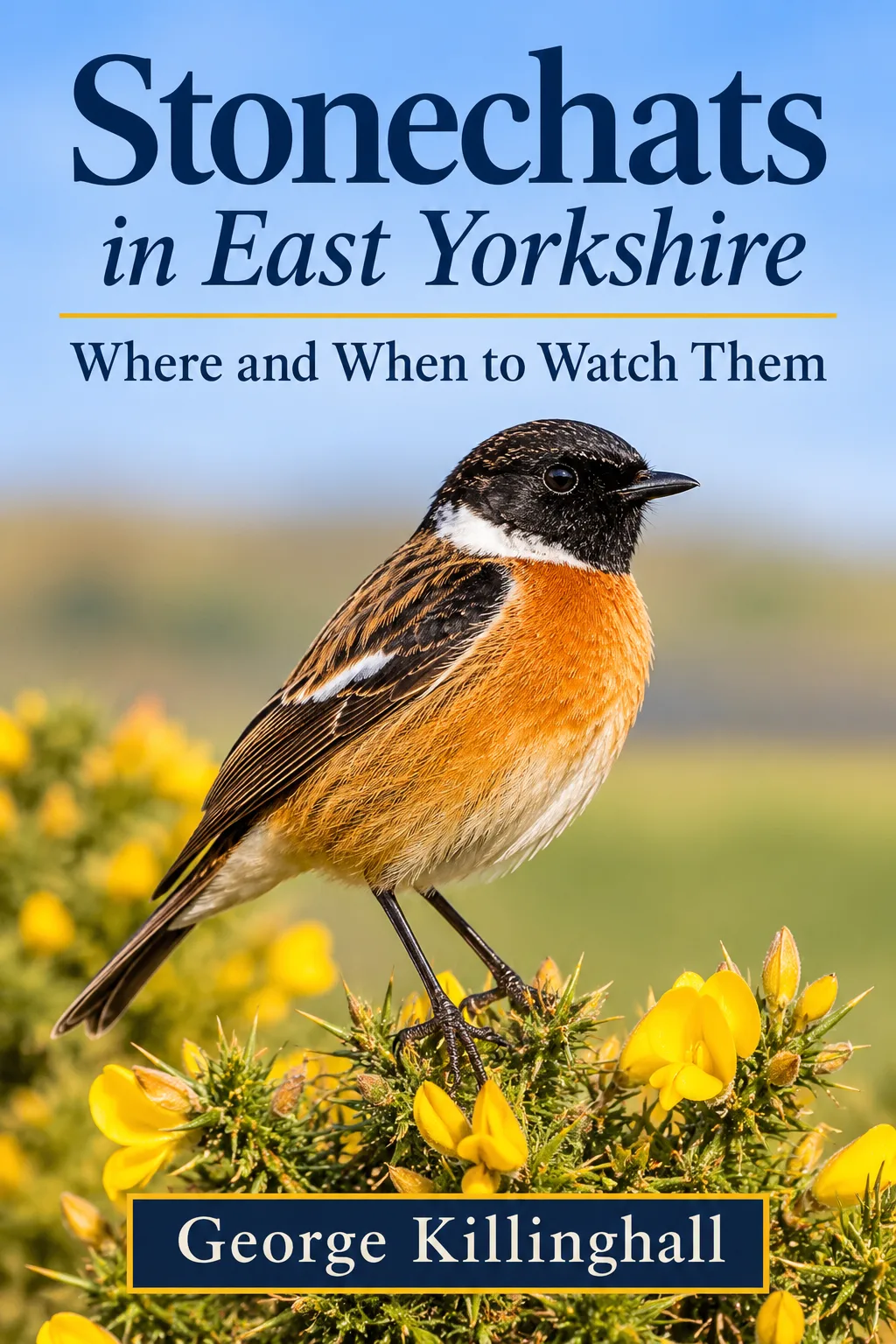
East Yorkshire is a wonderful place to enjoy some of Britain's most attractive countryside birds, and the Stonechat is certainly one of the most appealing. Small, lively and beautifully marked, these characterful birds can often be spotted perched on gorse bushes, fence posts and tall grasses, keeping a watchful eye on their surroundings.
With their distinctive orange-red breasts, dark heads and habit of sitting prominently in the open, Stonechats are relatively easy to recognise once you know what to look for.
They are particularly associated with open countryside, coastal scrub, rough grassland and heathland. Fortunately, East Yorkshire has plenty of these habitats, providing some excellent opportunities for birdwatchers and wildlife photographers throughout the year.
Unlike some of our more elusive countryside birds, Stonechats often make themselves surprisingly conspicuous. A little patience and a careful look along suitable stretches of coastal vegetation or rough grassland can sometimes produce a rewarding encounter.
Getting to Know the Stonechat
The Stonechat (Saxicola rubicola) is a small member of the flycatcher family, measuring approximately 12–13 centimetres in length.
The male is particularly striking, with a black head, bright orange-red breast and distinctive white patches on the sides of his neck. His dark upperparts and colourful chest make him stand out beautifully against the greens and browns of the surrounding countryside.
The female is more subtly coloured, with brown plumage, a warm orange breast and less prominent markings around the head and neck. Although not quite as eye-catching as the male, she is an equally attractive little bird.
One of the most interesting features of the Stonechat is its distinctive call. Its familiar 'tchak-tchak' sound resembles two small stones being struck together, which is where the bird gets its name.
Stonechats also have a characteristic habit of perching upright on exposed branches, fence posts and the tops of bushes. They frequently flick their wings and tails, moving from one lookout point to another as they search for insects.
Watching a male Stonechat sitting on top of a windswept gorse bush, his orange breast catching the sunlight, is one of those simple countryside pleasures that makes birdwatching so enjoyable.
Where to Look for Stonechats in East Yorkshire
East Yorkshire offers a variety of habitats that attract Stonechats, particularly areas of coastal grassland, scrub, heathland and rough agricultural land.
The key is to look for places where low vegetation provides plenty of feeding opportunities and suitable perches from which the birds can watch for insects.
The Yorkshire coast
The coastal landscape provides some excellent opportunities for encountering Stonechats. Areas of rough grassland, coastal scrub and gorse are particularly attractive to these birds.
Look around the quieter stretches of the Holderness coast, where suitable vegetation provides shelter and feeding opportunities.
Spurn Point
Spurn Point is one of East Yorkshire's best-known wildlife locations. Its mixture of coastal grassland, dunes, scrub and saltmarsh attracts a wide variety of birdlife throughout the year.
Stonechats are among the species worth looking for, particularly around areas of rough vegetation and coastal scrub. The reserve is also an excellent place to enjoy the wider spectacle of bird migration.
The Humber Estuary
The Humber Estuary provides a mixture of grazing marsh, rough grassland and scrubby field boundaries. Areas around Welwick, Kilnsea and the surrounding countryside are worth exploring.
Although Stonechats are not restricted to wetland habitats, the rougher grassland and vegetation around the estuary can provide suitable feeding and nesting opportunities.
The Yorkshire Wolds
The rolling countryside of the Yorkshire Wolds is perhaps better known for its farmland birds, but pockets of rough grassland, scrub and uncultivated field margins can also attract Stonechats.
Look around areas where hedgerows meet open grassland, particularly where there are scattered bushes and plenty of insect life.
Blacktoft Sands
Blacktoft Sands, beside the Humber Estuary, is another worthwhile destination for anyone interested in East Yorkshire's birdlife.
Its extensive grazing marshes, reedbeds and surrounding grassland support a wide range of species. The rougher vegetation around the reserve is worth checking for Stonechats, alongside the many other birds that make this an interesting place to visit.
Remember that sightings are never guaranteed. Stonechats are wild birds, and their distribution depends on habitat, weather and seasonal movements.
The Best Time of Year to See Stonechats
Stonechats can be encountered in East Yorkshire throughout the year, although their numbers and distribution vary between seasons.
Spring
Spring is an excellent time to watch Stonechats as breeding pairs establish territories. Males become particularly conspicuous, frequently singing and calling from prominent perches.
Look for them around coastal scrub, gorse bushes and areas of rough grassland.
Summer
During summer, Stonechats are busy raising their young. They can often be seen carrying insects into dense vegetation, where their nests are carefully concealed close to the ground.
This is an interesting time to observe their behaviour, although care should be taken not to disturb breeding birds.
Autumn
Autumn brings changes in the local Stonechat population. Some birds move away from their breeding territories, while others arrive from further north and continental Europe.
The Yorkshire coast can be particularly interesting during this period, as migrating birds use coastal habitats as feeding and resting places.
Winter
Winter can be a surprisingly rewarding time for Stonechat watching. Although some birds remain in their breeding territories, others move to more sheltered coastal areas and lowland grasslands.
The open landscape makes them relatively easy to spot, particularly when they perch on exposed vegetation.
Tips for Watching and Photographing Stonechats
Stonechats are active little birds, but their habit of perching in exposed positions makes them excellent subjects for wildlife photography.
Rather than rushing towards a bird when you spot one, find a comfortable position and allow it to move around naturally. They will often return to the same favourite perches, giving you opportunities to observe and photograph them.
A pair of binoculars is invaluable, particularly when scanning long stretches of coastal grassland or rough fields.
For photographers, a telephoto lens will help capture their attractive markings without needing to approach too closely.
Some useful tips include:
- Look for birds perched on gorse bushes, fence posts and tall grass stems.
- Listen for their distinctive 'tchak-tchak' call.
- Pay particular attention to coastal scrub and rough grassland.
- Watch for the male's bright orange-red breast and black head.
- Visit during the early morning or late afternoon when the light is softer.
- Wear muted clothing and avoid sudden movements.
- Use a telephoto lens rather than approaching too closely.
- Be particularly careful around potential nesting areas during spring and summer.
One of the pleasures of photographing Stonechats is capturing the contrast between their colourful plumage and the natural surroundings. A male perched on a frost-covered branch or against a background of golden autumn grasses can make a particularly attractive photograph.
The Magic of a Stonechat in the East Yorkshire Countryside
There is something wonderfully characteristic about seeing a Stonechat sitting on top of a windswept bush, its orange breast standing out against the muted colours of the surrounding landscape.
They are not particularly large or spectacular birds, but their confidence and lively behaviour make them fascinating to watch.
Sometimes you might spot one sitting quietly on a fence post, watching for insects. At other times, a pair will move restlessly between bushes, calling to one another as they search for food.
Their presence adds a little extra interest to a walk along the Yorkshire coast or through the quieter parts of the Wolds.
For wildlife photographers, they are particularly rewarding subjects. Their willingness to use exposed perches often provides excellent opportunities for photographs, especially when the light is favourable.
You do not need expensive equipment or specialist knowledge to enjoy these birds. A pair of binoculars, a little patience and an appreciation of the countryside are often all that is required.
Respecting These Wonderful Little Birds
Although Stonechats are relatively familiar birds in suitable habitats, they still need protection from unnecessary disturbance.
Their nests are usually concealed close to the ground in thick vegetation, making them particularly vulnerable to trampling and disturbance during the breeding season.
When watching or photographing them:
- Keep to public footpaths wherever possible.
- Avoid entering areas of dense vegetation where birds may be nesting.
- Never approach a suspected nest.
- Keep dogs under control, particularly around rough grassland and coastal scrub.
- Avoid repeatedly following birds to obtain photographs.
- Do not disturb birds that are feeding or resting.
Responsible birdwatching helps protect the habitats and wildlife that make East Yorkshire such a special place.
Recommended East Yorkshire Locations to Add to Your Birdwatching Itinerary
If you are hoping to see Stonechats, three particularly worthwhile places to investigate are:
- Spurn Point – An excellent coastal wildlife destination, with varied habitats and opportunities to encounter Stonechats throughout the year.
- Welwick Saltmarsh – Worth exploring for its mixture of grazing marsh, rough grassland and surrounding coastal habitats.
- Blacktoft Sands – A well-known Humber Estuary reserve with extensive grazing marshes, reedbeds and a wide variety of birdlife.
For further information about local wildlife and recent sightings, visit the Spurn Bird Observatory and the RSPB Blacktoft Sands website.
East Yorkshire has plenty to offer anyone who enjoys watching birds in their natural surroundings, and the Stonechat is a lovely example of the wildlife that can be discovered without travelling far from home.
Whether you encounter one along the windswept coast, beside the Humber Estuary or among the rolling fields of the Yorkshire Wolds, take a few moments to appreciate this attractive little bird.
So, next time you are out exploring the East Yorkshire countryside, keep an eye on those gorse bushes, fence posts and patches of rough grassland. You might just be rewarded with the sight of a handsome little Stonechat watching the world go by.




Reader Comments
Leave a Comment or a Book Review
We would love to hear your thoughts on this chapter, or even a complete book review.