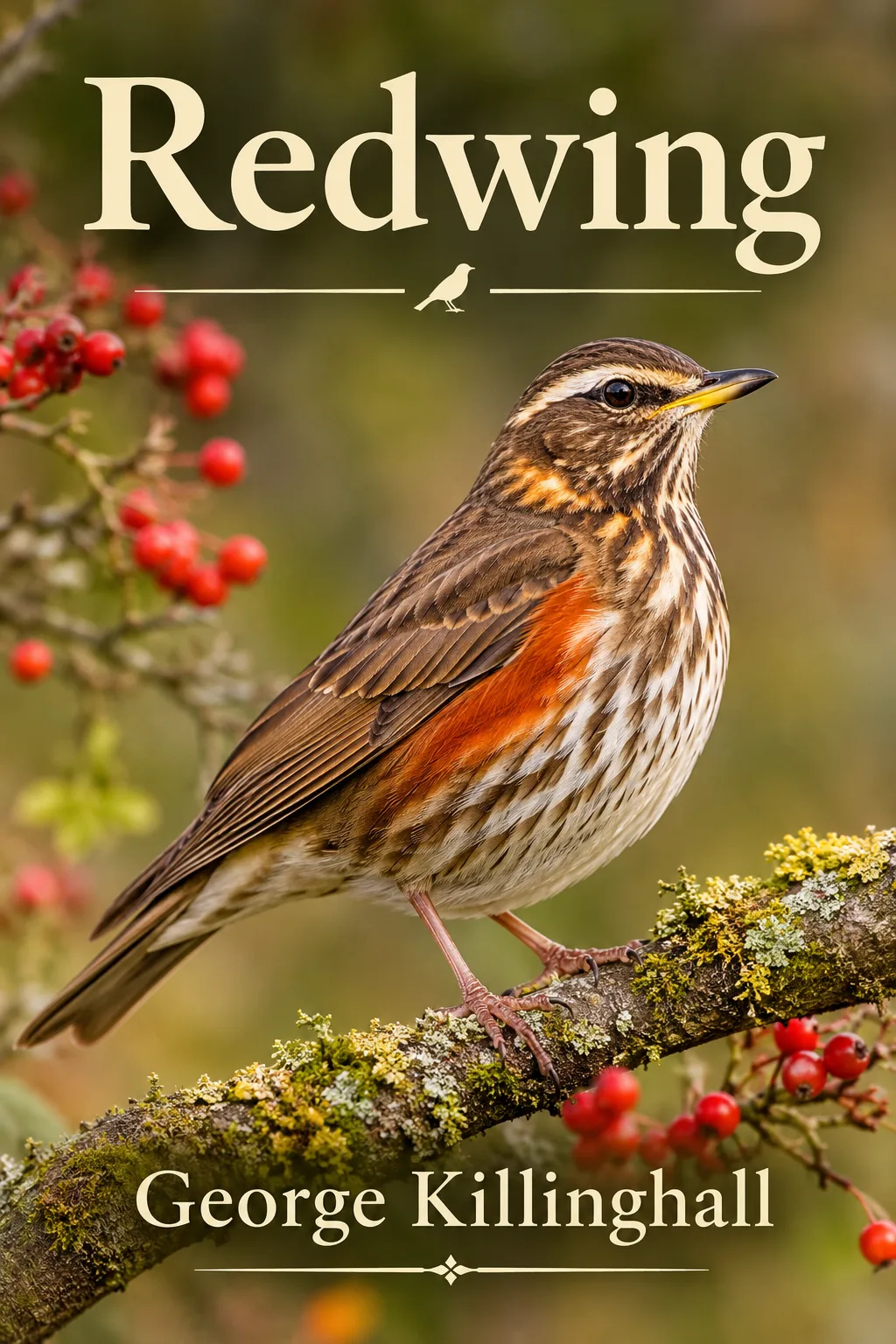
East Yorkshire is a wonderful place to enjoy some of Britain's most welcome winter visitors, and the Redwing is certainly one of the most appealing. Small, handsome and often seen in lively flocks, these thrushes arrive in the autumn from the north, bringing a little extra life to the hedgerows, fields and parks of the county.
With their bold creamy eyestripes, warm red flanks and habit of feeding in loose, chattering groups, Redwings are relatively easy to recognise once you know what to look for.
They are particularly associated with berry-laden hedgerows, open pasture and soft, damp grassland. Fortunately, East Yorkshire has plenty of these habitats, providing some excellent opportunities for birdwatchers and wildlife photographers from October through to the end of winter.
Unlike some of our more secretive winter birds, Redwings can often be found in plain view, particularly when they are feeding in the open. A little patience and a careful look along a well-berried hedge or across a quiet field can sometimes produce a rewarding encounter.
Getting to Know the Redwing
The Redwing (Turdus iliacus) is Britain's smallest true thrush, measuring approximately 20–22 centimetres in length.
It is slightly smaller and darker than the familiar Song Thrush, with olive-brown upperparts and a cream-coloured breast streaked with dark brown. The feature that gives the bird its name is the rich red-orange patch on its flanks, which is often visible beneath the wing as the bird feeds or takes flight.
The best identification clue is the striking pale stripe above the eye, together with a second, paler stripe beneath the cheek. These markings give the Redwing a slightly stern expression that is easy to pick out, even at a distance.
Male and female birds look very similar, so there is no need to worry about telling them apart.
One of the most interesting features of the Redwing is its call. Many birds migrate at night, and on a still autumn evening you may hear their thin, high-pitched 'seeep' drifting down from the darkness overhead. It is one of the great sounds of the changing season, and a sure sign that the winter visitors have arrived.
Redwings also have a characteristic habit of feeding in company. They hop across fields in search of earthworms, then flutter up into a hawthorn or rowan to feast on berries, often alongside Fieldfares, Blackbirds and Song Thrushes.
Watching a flock of Redwings drop into a berry-laden hawthorn on a cold, bright morning is one of those simple countryside pleasures that makes birdwatching so enjoyable.
Where to Look for Redwings in East Yorkshire
East Yorkshire offers a variety of habitats that attract Redwings, particularly areas of hedgerow, rough pasture, parkland and woodland edge.
The key is to look for places where berries are plentiful and where soft ground provides good feeding for worms and other invertebrates.
The Yorkshire coast
The coastal landscape provides some excellent opportunities for watching autumn arrivals. Birds crossing the North Sea often make landfall along the Holderness coast, and the first Redwings of the season can appear in the coastal scrub and hedgerows after a night of migration.
Look around the quieter stretches of the coast, where sheltered bushes provide food and a place to rest.
Spurn Point
Spurn Point is one of East Yorkshire's best-known wildlife locations, and few places offer a better view of autumn migration in action. Its mixture of dunes, scrub and open grassland attracts a wide variety of birdlife.
Redwings are among the species worth looking for in October and November, particularly early in the morning when newly arrived birds can be seen passing overhead or settling in the bushes. The reserve is also an excellent place to enjoy the wider spectacle of bird migration.
The Humber Estuary
The Humber Estuary provides a mixture of grazing marsh, rough grassland and scrubby field boundaries. Areas around Welwick, Kilnsea and the surrounding countryside are worth exploring.
Although Redwings are not restricted to wetland habitats, the hedgerows and damp fields around the estuary can provide plenty of food, especially after a spell of wet weather.
The Yorkshire Wolds
The rolling countryside of the Yorkshire Wolds is perhaps better known for its farmland birds, but its hedgerows, field margins and areas of woodland edge are excellent places to look for winter thrushes.
Look around areas where mature hawthorn and blackthorn hedges run alongside open pasture, particularly where there are scattered trees and plenty of berries.
Parks, gardens and village edges
Redwings are not shy of people when the weather turns cold. Parks, churchyards and larger gardens with berry-bearing trees and shrubs can attract flocks, and a heavy frost often brings them closer to houses in search of food.
If you have a holly, rowan or cotoneaster in your garden, keep an eye on it during a cold snap.
Remember that sightings are never guaranteed. Redwings are wild birds, and their movements depend on berry supplies, weather and seasonal conditions.
The Best Time of Year to See Redwings
Redwings can be encountered in East Yorkshire from autumn until early spring, although their numbers and distribution vary between seasons.
Autumn
Autumn is the most exciting time to watch Redwings, as birds from Iceland and Scandinavia begin to arrive. The main movement usually takes place in October, when clear, calm nights can produce large numbers of birds passing overhead.
The Yorkshire coast can be particularly interesting during this period, as tired birds drop into the first suitable cover they find.
Winter
Winter can be a surprisingly rewarding time for Redwing watching. Flocks spread out across the countryside, feeding on the remaining berries and searching damp fields for worms.
Once the hedgerow berries have been eaten, the birds often turn to open pasture, and hard weather can push them into gardens and parks.
Spring
By March and April the flocks begin to thin out as the birds head north again. Late in the season you may hear a little quiet, rambling song from birds preparing to leave, which is a lovely reminder that these visitors are bound for far-off breeding grounds.
Summer
Redwings are absent from East Yorkshire in summer, as nearly all of the birds we see breed in northern Europe and Iceland. That absence is part of what makes their return so welcome.
Tips for Watching and Photographing Redwings
Redwings are active, sociable birds, and their habit of feeding in the open makes them excellent subjects for wildlife photography.
Rather than rushing towards a flock when you spot one, find a comfortable position and allow the birds to settle. They will often return to the same favourite hedge or field, giving you opportunities to observe them at leisure.
A pair of binoculars is invaluable, particularly when scanning long stretches of hedgerow or distant fields.
For photographers, a telephoto lens will help capture their attractive markings without needing to approach too closely.
Some useful tips include:
- Look for flocks feeding in berry-laden hawthorn, rowan and holly.
- Scan damp pasture and playing fields for birds hopping across the grass.
- Listen for their thin, high-pitched 'seeep' call on still autumn nights and early mornings.
- Watch for the creamy eyestripe and red flanks, which separate them from the Song Thrush.
- Check for Fieldfares, which often feed alongside Redwings.
- Visit during the early morning or late afternoon when the light is softer.
- Wear muted clothing and avoid sudden movements.
- Use a telephoto lens rather than approaching too closely.
One of the pleasures of photographing Redwings is capturing the contrast between their subtle plumage and the colours of the winter countryside. A bird perched among bright red berries, or one fluffed up against a frosty morning, can make a particularly attractive photograph.
The Magic of a Redwing in the East Yorkshire Countryside
There is something wonderfully evocative about seeing a Redwing in the pale light of a November morning, its red flanks glowing against the dull colours of the hedgerow.
They are not particularly large or spectacular birds, but their long journey makes them fascinating to watch. Many of them have crossed the North Sea in the dark, and within a few hours they are feeding quietly in an East Yorkshire field as though nothing had happened.
Sometimes you might spot a flock moving restlessly through a line of hawthorns, calling softly to one another as they strip the berries. At other times, a single bird will sit quietly at the top of a tree, watching the world go by.
Their arrival adds a little extra interest to a walk along the Yorkshire coast or through the quieter parts of the Wolds.
For wildlife photographers, they are particularly rewarding subjects. Their willingness to feed in the open often provides excellent opportunities for photographs, especially when the light is favourable.
You do not need expensive equipment or specialist knowledge to enjoy these birds. A warm coat, a pair of binoculars and an appreciation of the countryside are often all that is required.
Respecting These Wonderful Winter Visitors
Although Redwings are relatively familiar birds in suitable habitats, they still need protection from unnecessary disturbance.
Winter is a demanding time for them. Tired birds that have just completed a long migration need to feed and rest, and repeated disturbance can force them to waste valuable energy. Hard weather can make berries and worms difficult to find, so it is important to give them space.
When watching or photographing them:
- Keep to public footpaths wherever possible.
- Avoid flushing feeding flocks, particularly in cold weather.
- Keep dogs under control, especially around fields and hedgerows where birds are feeding.
- Avoid repeatedly following birds to obtain photographs.
- Do not disturb birds that are resting after migration.
- Consider leaving berries on garden shrubs and hedges, as they provide a vital food source.
Responsible birdwatching helps protect the habitats and wildlife that make East Yorkshire such a special place.
Recommended East Yorkshire Locations to Add to Your Birdwatching Itinerary
If you are hoping to see Redwings, three particularly worthwhile places to investigate are:
- Spurn Point – An excellent coastal wildlife destination, and one of the best places to witness autumn arrivals in October and November.
- Welwick Saltmarsh – Worth exploring for its mixture of grazing marsh, rough grassland and hedgerows along the Humber Estuary.
- The Yorkshire Wolds – A fine area for quiet lanes, berry-laden hedgerows and open pasture where winter thrushes often gather.
For further information about local wildlife and recent sightings, visit the Spurn Bird Observatory website.
East Yorkshire has plenty to offer anyone who enjoys watching birds in their natural surroundings, and the Redwing is a lovely example of the wildlife that can be discovered without travelling far from home.
Whether you encounter one along the windswept coast, beside the Humber Estuary or among the rolling fields of the Yorkshire Wolds, take a few moments to appreciate this attractive little traveller.
So, next time you are out exploring the East Yorkshire countryside on a crisp winter morning, keep an eye on those hawthorn hedges and quiet pastures. You might just be rewarded with the sight of a handsome Redwing, fresh from its journey across the sea.





Reader Comments
Leave a Comment or a Book Review
We would love to hear your thoughts on this chapter, or even a complete book review.