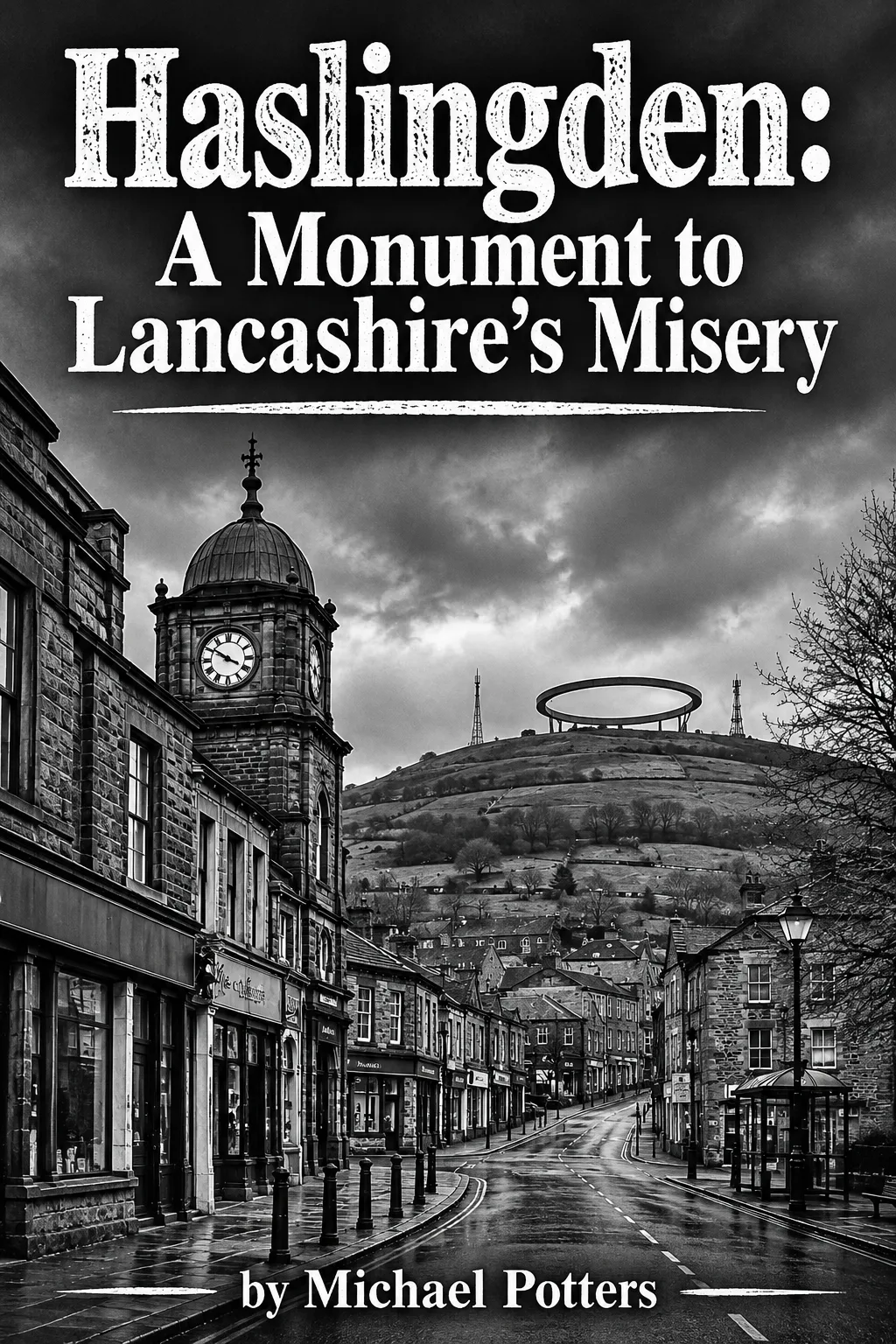
There are unpleasant places, there are depressing places, and then there is Haslingden: a town that appears to have been constructed from the leftover materials of the Industrial Revolution and subsequently abandoned by anyone with the ambition to improve it. Nestled among the hills of Rossendale, it possesses the extraordinary ability to make an otherwise attractive stretch of Lancashire countryside feel like a punishment for having taken the wrong turning.
Haslingden is not merely uninspiring. It is comprehensively, almost impressively, devoid of appeal. It has the atmosphere of a place where optimism was once attempted, found to be an unnecessary expense, and quietly discontinued. Its streets, buildings and commercial centre combine to create an impression of permanent disappointment, as though the entire settlement has been caught in an administrative error that nobody can be bothered to correct.
The town centre is an exercise in architectural resignation. Deardengate and the surrounding streets offer a weary procession of ageing stone buildings, tired shopfronts and commercial premises that seem to have surrendered to the passage of time. The Victorian architecture might once have represented prosperity and civic ambition, but today it resembles the architectural equivalent of a retired factory worker who has long since stopped expecting anything from life. The shops provide the usual assortment of everyday necessities, but there is little to suggest that anybody would voluntarily travel here for the privilege of purchasing them. Describing Haslingden as a thriving market town requires an exceptionally flexible interpretation of the word thriving.
The town's industrial heritage is frequently presented as a source of considerable pride. During the nineteenth century, Haslingden was an important centre of textile manufacturing, with dozens of mills producing woollen and cotton goods. It was an industrious, expanding settlement whose factories helped fuel the prosperity of the wider Rossendale Valley. Unfortunately, the Industrial Revolution eventually ended, and Haslingden appears to have taken the news particularly badly. Its mills have largely disappeared, its manufacturing economy has declined, and its former industrial importance has been reduced to a collection of historical references and buildings that serve as reminders of an era when the town actually had a reason to exist.
The surrounding region was once known as the Golden Valley, a suitably grand title for an area whose textile industries generated considerable wealth. Haslingden itself now offers a rather different interpretation of the name. Whatever gold once passed through its mills has long since vanished, leaving behind a town that seems to have retained all the industrial grime without the inconvenient necessity of industrial prosperity. The Golden Valley has become something of a historical joke, with Haslingden occupying the position of a former employee still displaying its old company identification badge long after the factory has closed.
And then there is Haslingden Flag, the town's celebrated sandstone, which has achieved the rather remarkable distinction of being considerably more successful than the place from which it came. Quarried extensively around the town, this exceptionally hard stone was used for paving prominent locations across Britain, including Trafalgar Square in London. It is an impressive industrial achievement, although one cannot help noticing that Haslingden's most enduring contribution to the outside world is a material used primarily to stop people falling over. The stone has travelled, acquired prestige and established a reputation for durability. The town has remained exactly where it started, seemingly unable to follow its own products into a more successful existence.





Reader Comments
Leave a Comment or a Book Review
We would love to hear your thoughts on this chapter, or even a complete book review.