The Anchored Dead
Chapter 5: The Migration North
← Terry Farland / The Anchored Dead
The body did not float. It remained suspended in the black brine, its limbs moving with the slow, unnatural rhythm of the tide pulling through the tunnel.
Caleb lunged forward, grabbing Arthur by the shoulder and hauling him backward through the archway into the inn cellar. They scrambled up the stone steps, splashing black water onto the floorboards above, and slammed the cellar door shut.
Higgins dropped his pitchfork, backing away toward the bar. "What is it? What's down there?"
"Lock the hatch," Caleb ordered, his face ashen. "Nail it down. Tell every family along King Street to leave their lower rooms before nightfall."
They stumbled out into the damp street. The fog had thickened into a wall of gray wool, cutting off the view of the sea wall entirely. But from out in the cove, muffled by the mist, came a sound that sent a shutter through the cobbles—the deep, resonant clang of an iron bell striking three times.
"The ship's bell," Arthur said, clutching his satchel to his chest. "There was no bell on that deck when the coble boarded her."
"We can't stay here," Caleb said, turning toward the upper road. "If that chain is anchored in the shale under the village, it'll pull the whole lower town into the sea when the tide turns."
"No," Arthur said, a sudden, dreadful realization taking hold. He pulled out the glass plate he had developed hours earlier. Under the gray daylight, the corroded silver emulsion showed a distinct pattern—the specters were not multiplying in Robin Hood's Bay. They were moving.
The outlines of the drowned crew were fading from the glass negative of the Bay Scars, leaving behind only the pitted, salt-scorched scars on the emulsion. The images were migrating along the silver salts, following the geological line of the shale cliffs north.
"They aren't staying in the bay," Arthur said, looking up the coastal road toward the north headland. "The silver in my plates... it's a path. The whole coastline is connected by the same seam of alum shale."
"Whitby," Caleb whispered, his eyes widening. "The Abbey sits right on the highest point of the shale reef."
"And the harbor there has deep water," Arthur added. "If that vessel drops anchor off the East Pier, it won't just be smuggler cellars that flood. It'll be the whole Old Town."
Without another word, Arthur turned and began climbing the steep incline of Wayfarer’s Croft toward the high road, his wet boots heavy with silt.
They reached the crest of the hill where the road met the open moorland. Looking back over the edge of the cliff, Arthur looked down into the void of the fog-covered bay.
The three-masted schooner was gone.
The waters of the cove were empty, save for the white foam breaking over the Bay Scars. But far to the north, drifting above the gray line of the sea fog like three splintered fingers against the pale autumn sky, were the topmasts of the Dolphin, moving steadily along the coast toward the high cliffs of Whitby.
About Terry Farland
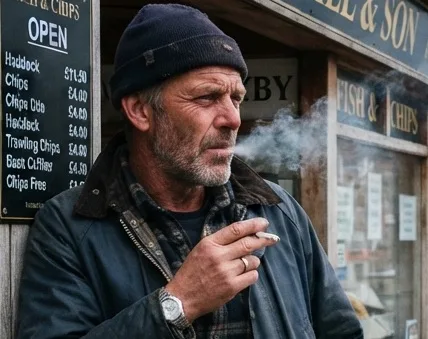
Terry Farland writes gothic fiction set on the North Sea coast. His work draws on the photography, fishing and folklore of Yorkshire's coastal villages, and the uneasy line between what the camera records and what the sea returns. The Anchored Dead is his first novel for Tales From A Harrogate Caravan.
Author Page
Reader Comments
Leave a Comment or a Book Review
We would love to hear your thoughts on this chapter, or even a complete book review.