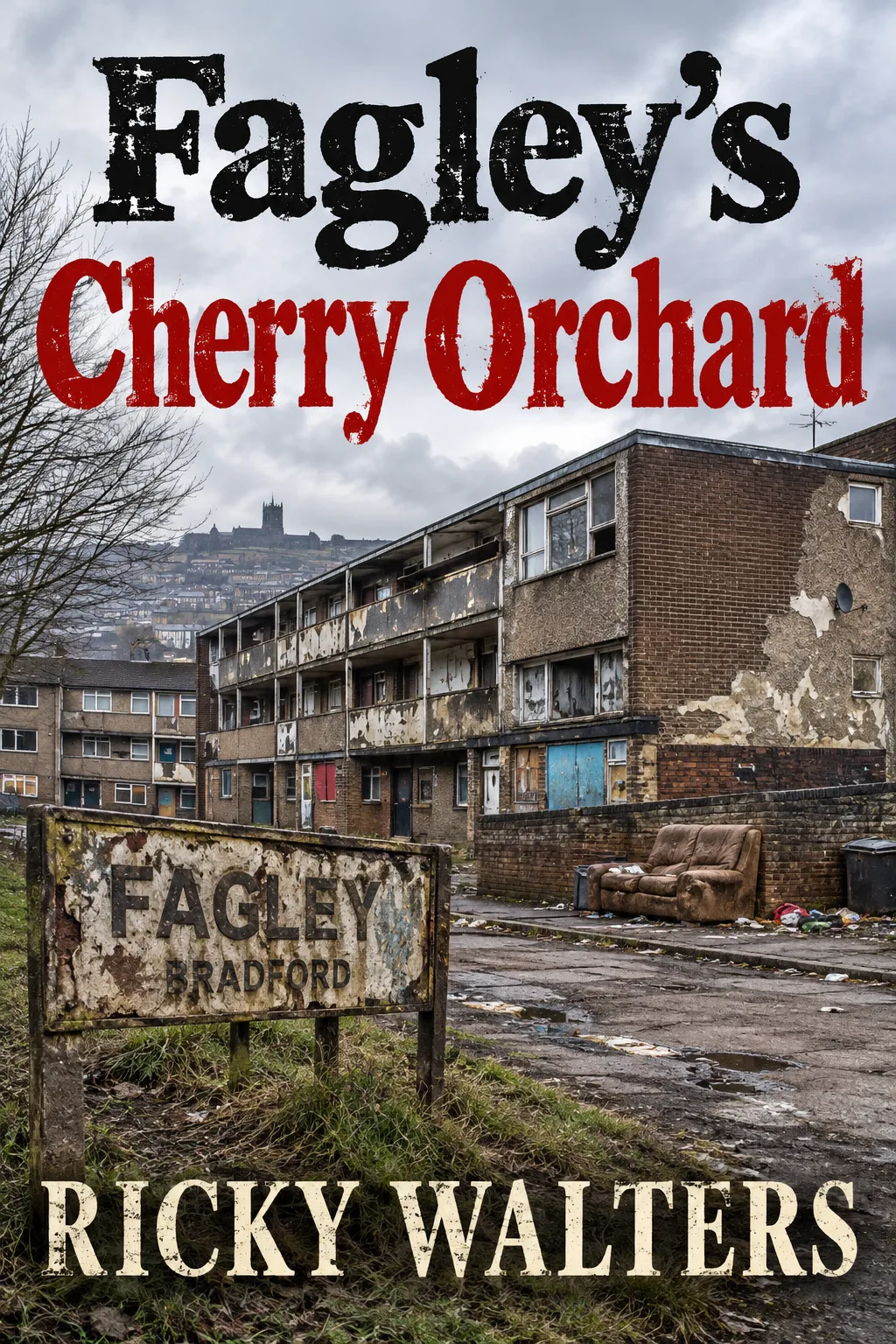
Fagley's Cherry Orchard
Chapter 5: The Last Tree
14 minute read
← Ricky Walters / Fagley's Cherry Orchard
The days following the auction passed with the peculiar slowness that often accompanies an ending. At Cherry Orchard House, the family had begun the business of leaving, although none of them seemed particularly capable of doing it properly. There were boxes in the hall, suitcases on the landing and piles of unwanted possessions in the dining room. The house, which had once seemed too large for its occupants, now appeared to be shrinking around them.
Valerie had taken charge of the practical arrangements. She had contacted the removal company, spoken to the solicitors and made enquiries about temporary accommodation. She had also arranged for some of the furniture to be collected by a local charity. These tasks required a degree of organisation that Geoffrey found exhausting and Margaret found upsetting.
Geoffrey had discovered that he possessed an extraordinary number of books, most of which he had not opened for years. He was reluctant to part with any of them, explaining that they represented an important record of his intellectual life. Valerie pointed out that several were damp, many were out of date and some had been eaten by insects.
He regarded this as a rather superficial assessment.
Margaret, meanwhile, had become increasingly attached to objects that had previously meant very little to her. She wanted to keep the old dining table, although it was too large for the accommodation she was likely to find. She wanted the curtains from the drawing room, several pictures, the silver tea service and a collection of chipped china that had belonged to her mother. Every object seemed to contain some portion of the life she was about to lose.
The difficulty was that memories were not particularly easy to transport.
Hannah returned on Saturday morning.
She had spent the previous few days staying with a friend and had been making enquiries about work. She had also been considering whether she might return to college and complete a course she had abandoned some time earlier.
She found her mother sitting in the sitting room with a pile of photographs on her lap.
"Have you been through those?"
Margaret looked up.
"Some of them."
Hannah sat beside her.
They began to examine the photographs together. There were pictures of family holidays, birthday parties, weddings and Christmas gatherings. In one, Geoffrey was standing beside a large birthday cake, looking considerably younger and more self-satisfied than he did now. In another, Margaret was sitting beneath the apple trees with Hannah as a baby.
Hannah smiled.
"I remember this garden."
"You were always playing outside."
"I remember the swing."
"Your grandfather put that up."
Margaret looked at the photograph for a long time.
"I thought we'd always have this place."
Hannah put an arm around her.
"So did I."
They sat quietly.
After a while, Hannah asked whether her mother had decided where she would go.
Margaret said that she had been looking at a small flat in Bradford. It was not particularly attractive, but it was affordable and reasonably convenient for the shops and transport. She had not yet decided whether she could bear to live somewhere so different from the house.
Hannah told her that she would help.
Margaret looked at her daughter.
"You have your own life to think about."
"I know."
"You shouldn't have to look after me."
Hannah smiled.
"Perhaps you could try looking after yourself for a change."
Margaret laughed, although there was a little sadness in it.
Geoffrey had not taken the sale particularly well.
He spent much of his time talking about the injustice of the situation, although he was gradually beginning to accept that there was no practical way of reversing it. He had also been forced to consider his own circumstances.
The comfortable life he had expected to continue indefinitely was over. He would need somewhere to live, and his income was insufficient to maintain the habits to which he had become accustomed.
Valerie suggested that he might consider taking a part-time job.
He was offended.
"At my age?"
"You're not an invalid."
"I have never been particularly suited to ordinary employment."
"That may be the problem."
He looked at her.
Valerie was becoming increasingly impatient with him, although she still felt responsible for his welfare. She had spent so many years organising the affairs of other people that she had scarcely considered what she wanted for herself.
Now that the house was being taken away, she was beginning to understand that her own future could not simply be another responsibility to be postponed.
Peter had encouraged her to think about this.
He had also suggested that they might meet for a proper conversation once the family had settled elsewhere. Valerie had not given him an answer, but she had not refused.
For her, this was progress.
Darren Walsh arrived on Monday with Imran Hussain and a surveyor.
They had come to inspect the property and assess the work required before any development could begin. The surveyor spent much of the morning examining the roof, the foundations and the outbuildings. Imran walked around the orchard, making notes and taking photographs.
Darren stood near the garden wall, looking towards the trees.
He had grown up in a different part of Bradford, in a house where space had always been limited. His father had worked long hours, and his mother had managed the household with the sort of economy that left very little room for waste. He remembered the difficulty of finding somewhere affordable to live when he was young, and the embarrassment of inviting friends into a home that was always crowded.
He had worked hard to escape those circumstances.
He had also become increasingly aware that success in property was not simply a matter of buying land cheaply and selling houses at a profit. There were planning conditions, building costs, interest rates and the unpredictable behaviour of people who lived nearby and did not necessarily welcome a new development.
Imran joined him beside the largest apple tree.
"The trees are older than I expected," he said.
Darren looked up.
"Can we keep some of them?"
"Possibly. The access road is the main difficulty. We would need to alter the layout."
"Would it make much difference?"
"It depends what you mean by difference. It would reduce the number of houses slightly, but it might improve the scheme."
Darren looked across the garden.
"Could we keep the old tree?"
Imran examined it.
"That one?"
"Yes."
"It may be possible, but we'd need an arboricultural report."
Darren nodded.
He had begun to feel that preserving a few trees might be worthwhile, although he was not entirely certain why. Perhaps it was because he remembered his father working on the estate, or perhaps because the garden had begun to seem less like a piece of land and more like something that had survived several generations of human confusion.
Imran looked towards the house.
"There's another matter. If we're going to include affordable housing, we need to be clear about what that means."
Darren nodded.
"I know."
"Not just a few houses labelled affordable in the brochure. Properly affordable, with arrangements that people can understand and access."
Darren smiled faintly.
"You're becoming expensive, Imran."
"I'm trying to save you money in the long run."
"That's what they all say."
Imran laughed.
They continued their inspection.
On Tuesday, Albert Sykes began to pack.
He had been offered temporary accommodation by a relative, and Darren had agreed that he could have a little more time to remove his belongings. The old caretaker had spent most of his life in service to the house, and he found the idea of leaving it almost impossible to understand.
His possessions were modest. He had a few clothes, some books, a battered radio, a collection of photographs and several tools that he had accumulated over the years. He also had a small wooden box containing things that he had kept because he could not think of a reason to throw them away.
Valerie found him sitting in the kitchen with the box open.
"What have you got there, Albert?"
"Bits and pieces."
She looked inside.
There were old keys, a broken watch, several buttons, a small pocketknife and a photograph of the orchard taken many years earlier.
"Are you taking all that with you?"
"I don't see why not."
She smiled.
"Perhaps you should."
Albert picked up the photograph.
"Your grandfather had this taken when the trees were younger."
Valerie looked at it.
The orchard appeared much larger than it did now. The trees were neatly arranged, and the grass had been carefully cut. A wooden bench stood near the wall.
"I don't remember it looking like that."
"Things change."
He said it without bitterness.
Valerie sat down opposite him.
"Have you found somewhere to go?"
"My nephew says I can stay with him for a while."
"That sounds sensible."
Albert nodded.
"I suppose it does."
He closed the box.
For a moment he looked towards the kitchen window.
"Your grandmother used to sit there in the mornings. She liked to watch the birds."
Valerie followed his gaze.
"I remember."
"No, you were too young. You remember the stories."
She smiled.
"Perhaps."
Albert seemed satisfied.
The final evening arrived.
Most of the furniture had gone, and the rooms were beginning to echo. Margaret had packed her belongings, although she had kept one small box of photographs beside her bed. Geoffrey had arranged to stay with an old friend until he found somewhere permanent. Valerie was leaving for a rented flat nearby, and Hannah was making plans for her own future.
Peter came to say goodbye.
He found Valerie in the garden, where she was standing beside the apple tree.
"I thought I'd find you here," he said.
She turned.
"I suppose it's the last place I can go without somebody asking me to pack something."
He smiled.
They walked slowly along the path.
Peter told her that he had been offered some additional work with a local education project. He was hoping to help young people who had left school without qualifications and were struggling to find employment.
Valerie said that it sounded worthwhile.
He asked whether she had decided what she wanted to do.
She told him that she had been considering returning to work. She had previously trained in administration, and there were opportunities in the area, although she was uncertain whether she wanted to continue in the same kind of job.
Peter listened.
He did not offer advice.
This was one of the things Valerie liked about him. He was capable of talking for a very long time about the state of society, but he could also remain silent when another person needed to think.
After a while he asked whether she would like to have dinner with him sometime.
Valerie looked at him.
"You're not proposing marriage, are you?"
"Not unless you've brought a ring."
She laughed.
"Then yes. Dinner would be nice."
They stood for a moment beneath the branches.
Peter looked towards the house.
"It's strange to think that somebody else will live here."
"Perhaps they'll be happy."
"I hope so."
Valerie looked at him.
"And perhaps the people who live in the new houses will be happy too."
Peter nodded.
"That's what matters."
Margaret spent the final hour walking through the rooms.
She went upstairs and stood in the bedroom where she had slept for most of her adult life. She looked at the empty wardrobe, the marks on the walls and the patch of sunlight that had fallen across the carpet each afternoon.
Then she went into Hannah's old bedroom.
There was a small crack in the ceiling, and the curtains had faded considerably. Margaret remembered the room full of toys, schoolbooks and clothes, and the sound of Hannah coming downstairs in the morning.
She closed the door.
In the sitting room, Geoffrey was waiting.
"Are you ready?"
She looked at him.
"No."
He nodded.
"Neither am I."
They stood together for a moment.
Then Margaret picked up her handbag.
Albert was waiting by the front door. He had already taken his box outside and placed it beside his nephew's car.
He looked at Margaret.
"Shall I lock up?"
She nodded.
"Yes, Albert."
He turned the key.
The lock made a small, ordinary sound.
For a moment they all stood on the front step, looking at the house.
Then Margaret walked towards the car.
The following morning, the orchard was quiet.
Darren arrived early to meet the surveyor. The weather was bright, and the ground had begun to dry after several days of rain. He walked through the garden, examining the boundaries and considering the proposed access.
The surveyor explained that the house would require extensive work if it were to be retained. The roof, drainage and internal structure all needed attention. There was also the question of whether the existing building could be incorporated into the development without making the overall scheme uneconomic.
Darren listened.
He knew that the simplest option would be to clear the site and begin again.
He also knew that the simplest option was not always the best.
He walked towards the largest apple tree.
Its branches were bare, but there were small buds beginning to form. Spring was approaching, although there was little to suggest it yet.
He stood beneath it for a while.
Then he called Imran.
"I want another look at the layout."
Imran sounded surprised.
"What have you got in mind?"
"Keeping more of the orchard."
"That will mean changing the access."
"Then change it."
There was a pause.
"All right," Imran said. "I'll have another look."
Darren put the telephone away.
He knew that the decision might cost him money. It might also make the planning process more complicated. But he had begun to understand that the land had a value that could not be measured entirely in the number of houses that could be built upon it.
Whether that would be enough to preserve the orchard remained to be seen.
By the end of the month, the family had dispersed.
Margaret was living in a small flat in Bradford. She found it difficult to become accustomed to the noise of the neighbours and the absence of a garden, although she had begun to enjoy being able to walk to the shops without worrying about the condition of the roof.
Geoffrey was staying with an old acquaintance and had reluctantly begun looking for paid work. He had discovered that his knowledge of property and local history was not quite as marketable as he had imagined.
Hannah had found employment and was considering returning to education. She had also begun to visit her mother more regularly.
Valerie had settled into her flat and was making plans of her own. She had accepted Peter's invitation to dinner, and the two of them had started seeing one another. She was not entirely certain where the relationship would lead, but she had decided that uncertainty was not necessarily a reason to refuse something.
Albert was living with his nephew. He missed the orchard, although he was beginning to enjoy having somebody else make his breakfast.
As for Darren, he had submitted revised plans for the development. They included fewer houses than originally intended, a small communal green and the retention of several mature trees. The old apple tree was to remain if the necessary reports confirmed that it could safely be preserved.
There were objections, as there always were when somebody proposed changing a piece of land. Some neighbours worried about traffic and parking. Others questioned whether the affordable housing would genuinely be affordable. A few welcomed the prospect of new homes, particularly those who had grown up locally and wanted to remain near their families.
The discussions continued.
Nobody was entirely satisfied.
That, perhaps, was a more honest beginning than the promise of universal approval.
One afternoon, several months later, Hannah returned to Fagley.
She walked along the road towards the old house, passing familiar buildings and the places where she had once waited for buses and met friends. The neighbourhood seemed much the same, although she now noticed things she had previously taken for granted: the tired appearance of some houses, the small gardens, the shops that had changed hands and the people who were trying to make the best of what they had.
She passed a group of children returning from school. One of them was carrying a football, and another was eating crisps from a packet. A woman was waiting at the bus stop, speaking on her telephone in a mixture of English and Urdu. Further along, a delivery driver was unloading boxes outside a shop.
It was an ordinary afternoon in Bradford.
When Hannah reached the old estate, she stopped.
The house was still standing, although work had begun inside. Some of the windows had been boarded, and there were signs of activity near the outbuildings. The orchard remained largely untouched.
She walked towards the gate.
The old apple tree was still there.
She stood beneath it and looked up at the branches.
There were small leaves beginning to appear.
For a moment she remembered the garden as it had been when she was a child. She remembered running between the trees, her grandfather calling her back towards the house and her mother sitting on the bench with a book.
She remembered the parties, the arguments, the visitors and the long afternoons when nothing seemed likely to change.
She also remembered the day of the auction.
It had seemed like the end of everything.
Now she was beginning to understand that it had been the end of something, but not necessarily of everything.
The orchard would change. The house might disappear. The family would never return to the life it had known.
But people would continue to live in Fagley. Children would grow up, families would move into new houses, old neighbours would become strangers and strangers would become neighbours. The bus would continue along its route towards Bradford, and the shops on Leeds Road would open each morning. People would go to work, attend appointments, take their children to school and complain about the weather.
The world would carry on, not because it had forgotten the past, but because it had no choice but to make room for the future.
Hannah touched the rough bark of the tree.
Then she turned and walked back towards the road.
Behind her, the orchard stood quietly in the afternoon light.
It was no longer the private possession of the Sutcliffe family, and it would never again be quite the place they had known. But one old tree remained, its roots deep in the Bradford soil, preparing for another spring.
And for the first time in a long while, Hannah did not feel that everything worth keeping had been left behind.
The End.
About Ricky Walters
Born and bred in Shipley. A joiner, poet and writer of plays, drama, and short stories. Lives with his wife and best mate, who's a bricklayer from Fagley.
Author PageWhat to Read Next

The Cotswold Arrangement
A modern adaptation of The Marriage of Figaro: a comedy of marriage, infidelity, social ambition, concealed identities and the quiet struggle between those who possess inherited wealth and those who must work for it.
9 minute read

The Councillor’s Powders
In modern-day Leicester, a councillor's wife falls ill with a fever no hospital treatment can shift, until an elderly neighbour from Highfields remembers his grandmother's bitter bark powder.
1 minute read
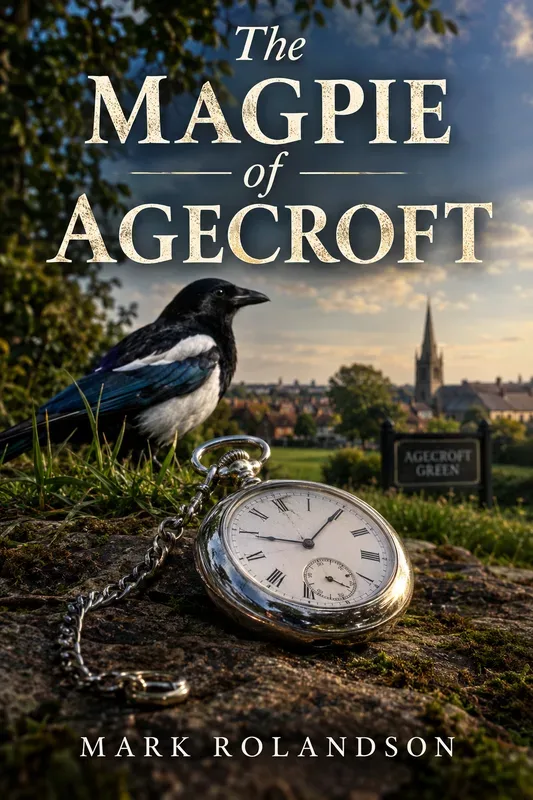
The Magpie of Agecroft
A sharp lesson in Pendlebury about flattery, a silver watch, and the price of seeking approval.
4 minute read

Reader Comments
Leave a Comment or a Book Review
We would love to hear your thoughts on this chapter, or even a complete book review.