The Fifth of November
Chapter IX — Five November
← Liam Barrantine / The Fifth of November
The morning of the fifth of November arrived beneath a low, grey sky. In Alwoodley, the streets looked much as they had a week earlier. The same houses stood behind their hedges. The same cars occupied the driveways. People left for work, took children to school and stopped at the shops for bread and milk. A dog barked at a passing cyclist. Someone struggled to start an old car. Nothing in the ordinary life of the suburb suggested that the previous weeks had brought it close to becoming the setting for a national tragedy. But behind that familiar appearance, events were moving towards their conclusion.
The police had spent several days assessing the information provided by Rooke and the anonymous messages. They had interviewed people connected with the group, examined the available evidence and worked to establish what the men intended to do. The investigation had not produced a single dramatic revelation. It had been a process of comparison and verification, of checking one statement against another and separating fact from assumption. The more they learned, the clearer the danger became.
Mercer was arrested that morning. The officers found him at a small flat he had been using since leaving the rented room. He did not resist, although he protested that the police had misunderstood his intentions.
"You don't know what we were trying to achieve," he said as they escorted him towards the waiting car.
Detective Inspector Ward walked beside him.
"Then you'll have the opportunity to explain."
Mercer looked towards the road. A bus passed. A woman waiting at the crossing glanced briefly at the officers before returning her attention to her phone. He had imagined arrest as a moment of historical significance. In reality, it took place on a damp pavement while strangers continued about their business. There was no crowd. No speech. No sudden understanding of what had brought him there. Only a police car, a few officers and a man who had run out of reasons to believe that his actions were beyond ordinary judgement.
Matthew Vale was interviewed later that day. He provided information about the meetings and acknowledged his own involvement. Andrew Shaw had already contacted the authorities and agreed to assist the investigation. Daniel Rooke remained in police custody while officers established the extent of his role.
The proposed attack did not take place.
That evening, people across Leeds prepared for Bonfire Night. Families gathered in gardens and parks. Children wore thick coats and woollen hats. The first fireworks rose above the rooftops, breaking into brief showers of colour against the dark sky. From a distance, the explosions sounded almost like distant thunder.
Rooke watched the evening news from a room in the police station. The presenter announced that officers had disrupted a suspected conspiracy involving a planned attack on a major public event. Several arrests had been made, and the investigation was continuing. The report gave few details. It did not identify every person involved, explain every decision or describe the months of private conversations that had brought the group together. It presented the information the authorities were prepared to confirm, and no more.
Rooke understood that the public would eventually construct its own version of events. Some people would demand harsher penalties. Others would question how the group had been allowed to develop without detection. There would be arguments about political grievances, security failures and the limits of lawful protest. Mercer would have wanted the country to debate those questions. He had simply failed to understand what it meant to force people to confront them through violence.
A detective entered the room and sat opposite Rooke.
"We'll need to speak again tomorrow," she said.
"I understand."
"There's something else."
He looked up.
"Mr Mercer has asked to make a further statement."
Rooke waited.
"He says that he wants to explain how the plan developed and why he believed it was necessary."
"Does he?"
"He says he does."
Rooke looked back at the television. The report had moved on to the weather. A presenter stood beneath a clear graphic showing the expected conditions across the country. In the studio, everything appeared orderly and controlled.
"What happens now?" Rooke asked.
"The investigation continues. There will be interviews, evidence to examine and decisions about charges. It won't be finished quickly."
"And after that?"
"That's for the courts to determine."
The detective stood and left.
Rooke remained in the chair. He thought about the house in Alwoodley, the desk and the clock that had stopped at eleven eighteen. He thought about the first meeting, when the men had spoken about changing the country as though it were an object that could be lifted from one place and set down in another. He had once believed that his presence might make the difference between a reckless idea and a manageable risk. Now he understood that the belief itself had been part of the danger. He had allowed himself to become involved because he thought he was different from the others. More cautious, more observant, more capable of recognising the point at which the group had gone too far. Yet each time that point arrived, he found a reason to wait until the next decision. The line had never been where he expected it. It had moved with every compromise.
Later, after the interviews and the legal proceedings that followed, the full account would become public. The men would be judged according to their individual actions and the evidence presented against them. Their motives would be examined, their statements compared and their choices placed under scrutiny. Some would insist that they had been driven by principle. Some would say that they had been manipulated. Others would admit that they had mistaken anger for courage and secrecy for strength. None of those explanations would change what had almost happened.
In the months that followed, the house in Alwoodley was sold. The furniture was removed, the rooms repainted and the stopped clock taken away. A family moved in, unaware of the conversations that had once filled the upstairs room. They planted flowers in the garden and put photographs on the walls. On winter evenings, light appeared behind the windows, and the house became what it had always seemed to be from the street: an ordinary home in an ordinary suburb.
The city carried on. The buses ran through Leeds. The traffic moved along the Ring Road. People argued about politics, complained about the weather and went about their lives. The events of that autumn gradually became part of the news archive, remembered most often when November returned and fireworks began to appear in shop windows. Yet for those who had been involved, the date never became ordinary again.
For Rooke, it remained the day on which a catastrophe had been prevented, but not the day on which he could claim to have done the right thing without qualification. He had waited too long. He had helped create the circumstances that made intervention necessary. And he would have to live with both facts.
Years later, he would sometimes walk through Alwoodley on a wet November morning. He would pass the houses, the gardens and the familiar junctions, and he would wonder how many lives had been altered by decisions made in rooms that looked unremarkable from the outside. He no longer believed that history was shaped only by the people who made dramatic gestures. Sometimes it was shaped by the person who spoke when silence would have been easier. Sometimes by the person who refused to follow. And sometimes by the person who finally understood that preventing a disaster was not the same as having done nothing wrong.
On the fifth of November, the sky over Leeds darkened early. Fireworks rose above the rooftops, scattering light across the clouds. Children cheered. Dogs barked behind closed doors. The sounds travelled across the city and faded into the night. For a moment, the whole of Leeds seemed to be looking upwards. Then the fireworks ended, the smoke drifted away and the streets returned to darkness. By morning, the city would have moved on. But the choices made in the weeks before would remain. And somewhere beneath the ordinary life of the city, in the memories of those who had come close to disaster, the clock would always be stopped at eleven eighteen.
THE END
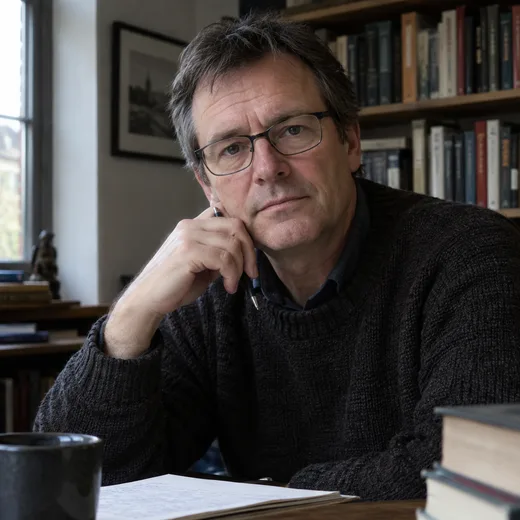
About Liam Barrantine
Liam Barrantine is 56 and lives in North Yorkshire with his family. He holds a degree in criminology and worked for many years as a forensic investigator, an experience which informs the procedural detail and the slow unravelling of evidence in his fiction. He has a particular interest in murder mysteries, the mechanics of a crime, the inconsistencies in witness accounts, the small things that do not fit. The Rain Over Leeds is his first novel.
Author Page
Reader Comments
Leave a Comment or a Book Review
We would love to hear your thoughts on this chapter, or even a complete book review.