We Are All Vampires
XXI — The Insulted and Injured - The Shy Vampire
← Karl Swainston / We Are All Vampires
The insulted and injured vampire is like the hideous and ugly vampire.
A common misconception is that a vampire is always an influential social person. This is not the case.
Their feeble physique does not allow them to exude charm and charisma. Unlike the luckier vampires, the powerful vampires, these unfortunate ones cannot go hunting positive energies. They have to rely upon another tactic to draw in the energy of others. These vampires are veritable ill and unhealthy vampires. These are the leeches, the energy suckers of the vampire world.
The shy vampire is such a contrary case. Like their counterparts, the vicious vampires, the shy vampire will also possess a big ego. However, this ego lacks the charm to operate successful attacks.
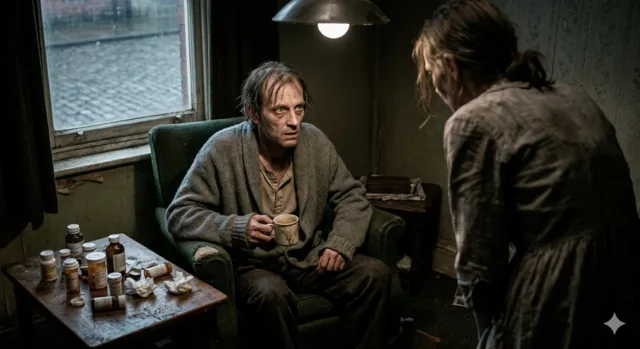
The ailing vampire possesses a deep emptiness. They are depressive creatures driven by despair and anxiety. They will find a way into a relationship, whether intimate or solely platonic: they don’t care so long as they can extract out of the relationship all they desire.
These are the leaching vampires. These are the hypochondriac vampires. There is always something wrong with them, and they always need help. Like all vampires, they adore the attention their victims give to them.
This is an emotionally unstable vampire, but yet, a very controlling vampire. They will regularly lash out at those victims helping them. ‘I know you don’t like me... I can see it in your eyes... You want to leave me like this.’ and other such phrases.
This vampire will go to extraordinary lengths to show themselves the victim, unjustly injured by society or misfortune. They are masters at believing this is so. And, in a certain sense, it is so.
They are vampires and have that urge in them to feed off the energies of others by hunting their victims, as we saw earlier in the book. But these ailing vampiric creatures are not solid or able enough to pull a vampire attack off, so they feel slighted and have a deep sense of unfulfillment. The result is that everyone is to blame for their present misfortune, most of all their carers, partners, or parents. This vampire sits shamelessly upon the stage of the victim but is not the victim. The actual victims are the people they can convince to care for them and allow themselves to be fed upon.
The tragedy for the victim is that once they have been drawn in by the ailing vampire, their life is genuinely doomed from that instant. They will have no respite as the vampire will be relentless in its needs.
The victim will become insignificant in a short period. Their energy will be sapped, and their appearance will become almost ghost-like. Their health, too, will suffer. They’ll visit the doctors and take regular doses of anti-depressants.
The only light of escape from the vampire is when the victim ‘snaps.’ ‘Right! That’s it.’
Caring for these vampires is a never-ending cycle of doom and depression. There is no way out. The vampire is born into life, and it is not made. The vampire won’t change. It will forever suck out the energies from their victims.
The victim has to sever the relationship. It may be painful. The vampire may be a partner, a mother or father, a sibling, or a child. It may be harsh, but one must realise that vampires cannot change. And, remember, the vampire is never satisfied; they’re always hungry for care and attention.
The ailing vampire is a vampire stuffed full of abandonment anxiety. Deep down, they know they are misfit vampires, unable to conduct truly successful vampiric attacks; they know they are pathetic vampires who have to crawl around their existence and beg for energy.
These unhealthy vampires are self-fulfilling prophecies. They are doomed to be abandoned. They cannot prevent it. They will do their best to prevent their carer from abandoning them, such as threatening self-harm. But they will rarely sacrifice themselves. After all, they are vampires. They will succeed in finding another victim to feed off.
And what about the victim in all of this vampiric charade? Should an individual sacrifice their only chance on this earthly plane to a life of day-to-day drudgery caring for an uncaring vampire?
Once the victim has severed the relationship, the vampire will find another victim to care for them. Remember: the ailing vampire is a master of playing the victim on stage.
The actual victim can now move on with their life. Their suffering and misery at the hands of the vampire have ended. After a short passing of time, all the victims will see behind them, in their past, is a gloomy image of the horror they have endured beneath the dreadful spell of the rapacious and ailing vampire.
Prefer to listen? Watch the video reading below.
Reader Comments
Leave a Comment
We would love to hear your thoughts on this chapter.

About Karl Swainston
Karl Swainston is a writer and storyteller whose work is forged from a life lived across the North of England and far beyond. Growing up on a Leeds council estate in the 1960s, Karl's journey was anything but linear. By the age of thirty, he had already lived a dozen lives: from the rigors of grammar school to a degree in Latin, a stint as a fishmonger, a period of discovery living in Marseille, and a return to the hustle of London. Whether working as a postman, a builder, or competing as a county-level chess player, he was, above all, an avid reader—constantly documenting the world around him. This restless spirit continued into his professional life. Karl later taught in Bradford, where he ran a specialist unit for 244 of the most excluded students from across the region—young people whom even the local Pupil Referral Units could not accommodate. Working alongside his old friend Malcolm, Karl spent his days navigating the volatility of Bradford's most aggressive and dysfunctional teenagers. Throughout his life, Karl has been an avid runner and has always shared his home with a rotating cast of beloved dogs and cats—companions who have been constant witnesses to his work. As a writer, Karl's range is as expansive as his history. He works across a wide breadth of genres, including fiction and short stories, autobiography and memoir, biography, non-fiction, and metaphysical writing, as well as providing sharp commentary, opinion, analysis, and essays. Whether writing about his years managing the Harrogate Arms or offering insights from his current adopted home in South East India, where he lives in a simple village with his dog, Bambi, Karl's voice reflects the full, untidy, and deeply human breadth of life. He continues to draw on the rich, decades-long tapestry of his experiences to tell stories that matter, proving that no matter where you live, the human story remains the same.
Author Page