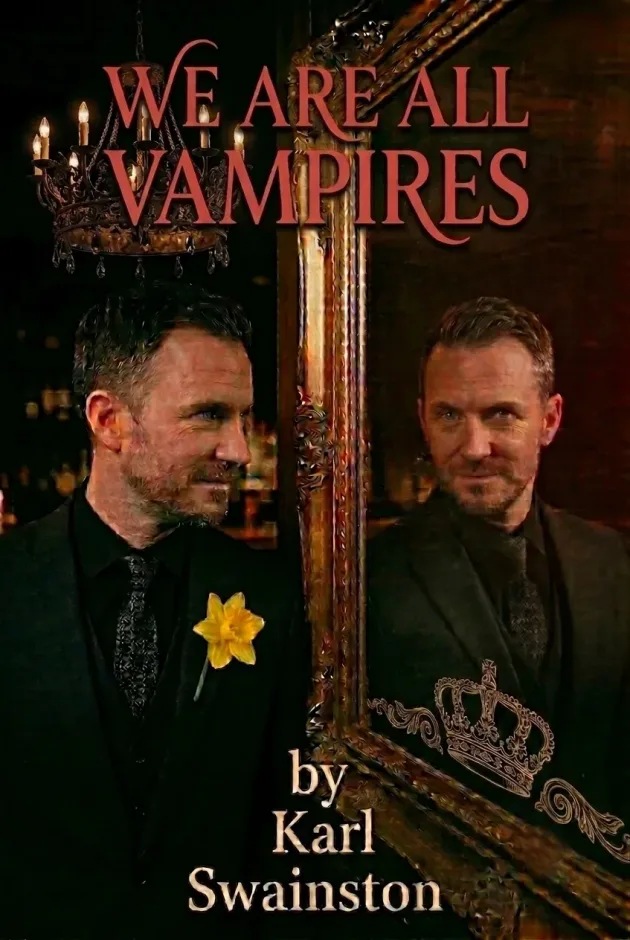
We Are All Vampires
XXII — The Conclusion - Vampires Among Us
← Karl Swainston / We Are All Vampires
Throughout this book, we have explored the many faces of the vampire. From the charming and successful to the ugly and obnoxious, from the arrogant and grandiose to the shy and ailing, we have seen how these creatures operate in every sphere of life.
We have learned that vampires are not created by society; they are born into society. They are freakish forms of nature, devouring all energies that exist in life, particularly the positive energies.
We have seen how the successful vampire uses charm and manipulation to draw in their victims, how the arrogant vampire uses self-exaggeration and grandiosity to climb the ladder of success, and how the ugly and obnoxious vampire resorts to crime and violence when their vampiric attacks fail.
We have witnessed the vampire’s lack of empathy, sympathy, and conscience. We have seen how they lack profundity and self-introspection. We have observed their deluded sense of entitlement and their intense bouts of rage when thwarted.
We have learned to recognise the tell-tale signs: the draining of positive energy, the isolation from friends and family, the constant criticism and fault-finding, the manipulation and control, the lack of genuine emotion, and the ever-present hunger for more.
But what can we do with this knowledge?
First, we must be vigilant. We must learn to recognise the vampire in our midst. Whether in our workplace, our relationships, or our families, we must be aware of the signs.
Second, we must protect ourselves. We must maintain our positive energy and not allow the vampire to drain it from us. We must surround ourselves with supportive friends and family who can help us see clearly.
Third, we must have the courage to sever the relationship when necessary. It may be painful, but it is often the only way to escape the vampire’s control.
Fourth, we must not blame ourselves. The vampire is a master manipulator. They are experts at making their victims feel responsible for their unhappiness. But we must remember: the vampire is a vampire. They cannot change. It is not our fault.
The vampire’s victims are often left with a sense of shame and embarrassment. They ask themselves, ‘How could I have been so blind?’ ‘How could I have let this happen to me?’
But we must not judge ourselves too harshly. Vampires are consummate tricksters. They are experts at hiding their true nature. They present a charming, confident, and caring facade that masks the emptiness within.
The victims of vampires often feel like they are losing their minds. They are told they are imagining things, that they are too sensitive, that they are the problem. This is classic gaslighting, a favourite tactic of the vampire.
But once we understand the nature of the vampire, once we recognise the signs, we can begin to trust our instincts again. We can begin to rebuild our lives and our self-esteem.
In the end, the greatest weapon against the vampire is knowledge. By understanding the vampire’s nature, by recognising their tactics, we can protect ourselves and others from their destructive influence.
We can create a world where the vampires are recognised for what they are and where their victims are supported and empowered to break free.
We can reclaim our positive energy and use it to build a life of happiness, fulfilment, and connection with those who genuinely care for us.
The vampire will always be with us. They are born into society. But we do not have to be their victims. We can choose to see them for what they are, protect ourselves, and live our lives free from their control.
Remember: the vampire is a vampire. They cannot change. But we can change how we respond to them. We can choose to walk away. We can choose to reclaim our lives.
Be vigilant. Be strong. Be free.
Prefer to listen? Watch the video reading below.
Reader Comments
Leave a Comment
We would love to hear your thoughts on this chapter.

About Karl Swainston
Karl Swainston is a writer and storyteller whose work is forged from a life lived across the North of England and far beyond. Growing up on a Leeds council estate in the 1960s, Karl's journey was anything but linear. By the age of thirty, he had already lived a dozen lives: from the rigors of grammar school to a degree in Latin, a stint as a fishmonger, a period of discovery living in Marseille, and a return to the hustle of London. Whether working as a postman, a builder, or competing as a county-level chess player, he was, above all, an avid reader—constantly documenting the world around him. This restless spirit continued into his professional life. Karl later taught in Bradford, where he ran a specialist unit for 244 of the most excluded students from across the region—young people whom even the local Pupil Referral Units could not accommodate. Working alongside his old friend Malcolm, Karl spent his days navigating the volatility of Bradford's most aggressive and dysfunctional teenagers. Throughout his life, Karl has been an avid runner and has always shared his home with a rotating cast of beloved dogs and cats—companions who have been constant witnesses to his work. As a writer, Karl's range is as expansive as his history. He works across a wide breadth of genres, including fiction and short stories, autobiography and memoir, biography, non-fiction, and metaphysical writing, as well as providing sharp commentary, opinion, analysis, and essays. Whether writing about his years managing the Harrogate Arms or offering insights from his current adopted home in South East India, where he lives in a simple village with his dog, Bambi, Karl's voice reflects the full, untidy, and deeply human breadth of life. He continues to draw on the rich, decades-long tapestry of his experiences to tell stories that matter, proving that no matter where you live, the human story remains the same.
Author Page