We Are All Vampires
V — The Lustful Vampire - Sandra (Part 2) and Conclusion
← Karl Swainston / We Are All Vampires
The dinner went as planned for both parties: Sandra trapped her husband, and Clive couldn’t believe his luck.
Within two months, they were married in a brief ceremony. Sandra’s parents were the only guests since Clive’s were both deceased in a traffic accident, and he had no friends.
At first, Sandra would play the dutiful wife; for the first year, she would endeavour to return home each day rather than book into a hotel as was her wont and custom.
She showed enormous tenacity in design to maintain her assumed affection for her husband.
For all intents and purposes, they appeared to be a happy couple; but no children blessed the marriage, and Sandra’s parents became disheartened once again.
Shortly after the elapse of the first year, Sandra began slowly changing the marriage’s structure.
Clive had developed a new passion: chess. He’d joined Manchester Chess Club and had become engrossed in the game.
Sandra took full advantage of this latest mathematical obsession of his and began to stay in hotels when travelling away from home and return home only on the following day.
It then became two days, three days, four days, until sometimes she would leave on a Monday morning and wouldn’t return home until Friday night, claiming to have more work on and that her extensive travels over large distances made it impractical to return home each night.
Clive accepted this, as he always did, and fell ever deeper into his pursuit of cracking the code of how best to play chess.
The couple grew more distant.
On the weekend, Sandra would return home, complain of exhaustion, and resist any of Clive’s sexual advances.
Finally, all sex ceased regularly, too, and only occasionally, throughout the year, would Sandra instigate an advance from Clive to keep him trapped.
Clive began to attend chess tournaments almost every weekend, so husband and wife rarely saw each other.
Sandra had succeeded in her design. She had become married and financially assured but kept her lifestyle intact.
Children never blessed the marriage, and her parents crawled into their pensionable age without hearing their hoped-for grandchildren’s laughs and cries.
Years passed, and both of Sandra’s parents died.
Sandra’s last bane of her life left her, and she smiled.
To all her friends, colleagues, and family, Sandra led the ideal lifestyle: a working wife, a loving husband, wealthy, good-looking and highly charismatic.
However, in reality, a darker side contrasts this existence.
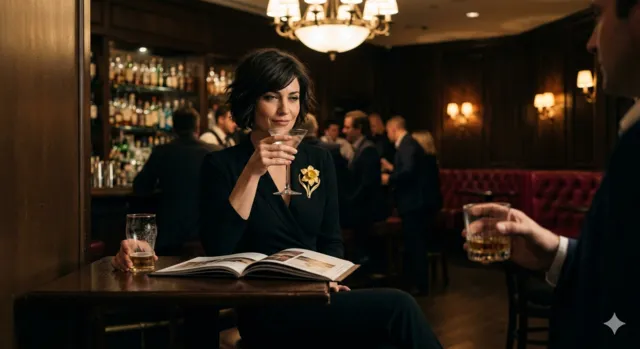
Sandra would regularly hunt for men on certain evenings after sales and occasionally during the day.
She would never entertain her clients but would pick up men in either some hotel bar or other such establishments.
She would only pick up one man a week, and he was carefully chosen.
She would never meet the man again or frequent the bar or hotel where the liaison was struck, nor would she take a man in the same city or town in the same month, but would choose different cities and towns to ‘trap,’ as she would say, ‘my prey!’
Sandra is a vampire and displays all the characteristics of a successful and powerful vampire: she is ambitious, charming, determined, focused, lacks empathy, and will exploit everyone, including close family, to get what she wants.
This vampiric creature delights when her parents pass away. Family and parents are no good for the vampire.
As will be seen later, the vampire is a hopeless parent and partner. The vampire is too selfish to be a loving and caring parent or partner.
However, the aversion to parenting does not dissuade the vampire from entering into marriage or relationships.
But before the vampire can do so, it must eliminate its victim’s friends.
Prefer to listen? Watch the video reading below.
Reader Comments
Leave a Comment
We would love to hear your thoughts on this chapter.

About Karl Swainston
Karl Swainston is a writer and storyteller whose work is forged from a life lived across the North of England and far beyond. Growing up on a Leeds council estate in the 1960s, Karl's journey was anything but linear. By the age of thirty, he had already lived a dozen lives: from the rigors of grammar school to a degree in Latin, a stint as a fishmonger, a period of discovery living in Marseille, and a return to the hustle of London. Whether working as a postman, a builder, or competing as a county-level chess player, he was, above all, an avid reader—constantly documenting the world around him. This restless spirit continued into his professional life. Karl later taught in Bradford, where he ran a specialist unit for 244 of the most excluded students from across the region—young people whom even the local Pupil Referral Units could not accommodate. Working alongside his old friend Malcolm, Karl spent his days navigating the volatility of Bradford's most aggressive and dysfunctional teenagers. Throughout his life, Karl has been an avid runner and has always shared his home with a rotating cast of beloved dogs and cats—companions who have been constant witnesses to his work. As a writer, Karl's range is as expansive as his history. He works across a wide breadth of genres, including fiction and short stories, autobiography and memoir, biography, non-fiction, and metaphysical writing, as well as providing sharp commentary, opinion, analysis, and essays. Whether writing about his years managing the Harrogate Arms or offering insights from his current adopted home in South East India, where he lives in a simple village with his dog, Bambi, Karl's voice reflects the full, untidy, and deeply human breadth of life. He continues to draw on the rich, decades-long tapestry of his experiences to tell stories that matter, proving that no matter where you live, the human story remains the same.
Author Page