We Are All Vampires
VI — Vampire and Friends
← Karl Swainston / We Are All Vampires
A powerful vampire is a remarkable creature in the diabolical art of dividing and conquering.
Once the vampire has chosen its victim and has set to work drawing out all the energy from its victim, the vampire will begin, almost imperceptibly at first, to introduce suspicion and faults in the victim’s closest friends.
This is a tough time for the victim. Most of the time, the victim does not know how to turn. They don’t want to disappoint their partner, the deceptive vampire, but at the same time, the victim does not want to hurt friends who have been there for years supporting them.
The vampire is a master at drawing out a person’s faults and highlighting that fault so that it becomes more significant than what it is. The vampire will start to drop remarks about the friends, unhelpful remarks. The vampire will then grant the victim time to reflect upon these unhelpful, negative remarks about the friends.
The creature will compound the attack by orchestrating engagements which don’t include the friends. Suppose the victim and his or her friends have already agreed upon an engagement. In that case, the vampire will quickly and efficiently introduce a grander and better engagement - minus the friends.
At length, the vampire will have forged a distance, a division into friendships, until, in the end, the friendships barely exist at all.
In this battle, only two parties know everything that is going on: the vampire and the victim’s friends.
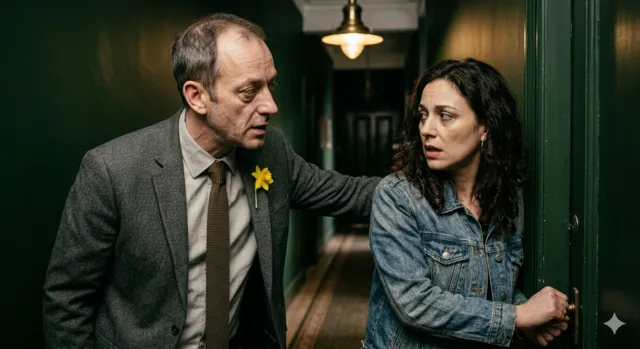
The friends will notice straight away what tactics are afoot. They will warn the victim, without success, of course, because the victim is smitten and cannot see reality; the victim only sees their excellent partner and not the vampiric creature staged before their eyes.
But when the vampire has sucked out of his or her victim the last ounce of energy, when the victim is a mere being of horrible existence and is totally wasted by the vampire, only then will the victim see through with eyes of actual reality.
Of course, the friends will come flooding back to the victim and offer all the support they can, intertwined with choruses of, ‘I told you so.’ But they will remain and be glad that the vampire has moved on to the next hapless victim.
How could the vampire reduce their victim to a state of not seeing ‘reality’ or seeing the vampire they are getting into a relationship with?
This question is as old as time: ‘I don’t know what I was thinking getting into a relationship with that monster…’ after the dust has cleared and the vampire has vanished.
Is it highly probable that before the vampire attacked and distanced the friends, it would have distanced any degree of confidence in its victim.
This confidence stripping by the creature is perpetrated very slowly but also very surely. The vampire is excellent at stripping away confidence from its victims. It does this through concentration on the negative.
Prefer to listen? Watch the video reading below.
Reader Comments
Leave a Comment
We would love to hear your thoughts on this chapter.

About Karl Swainston
Karl Swainston is a writer and storyteller whose work is forged from a life lived across the North of England and far beyond. Growing up on a Leeds council estate in the 1960s, Karl's journey was anything but linear. By the age of thirty, he had already lived a dozen lives: from the rigors of grammar school to a degree in Latin, a stint as a fishmonger, a period of discovery living in Marseille, and a return to the hustle of London. Whether working as a postman, a builder, or competing as a county-level chess player, he was, above all, an avid reader—constantly documenting the world around him. This restless spirit continued into his professional life. Karl later taught in Bradford, where he ran a specialist unit for 244 of the most excluded students from across the region—young people whom even the local Pupil Referral Units could not accommodate. Working alongside his old friend Malcolm, Karl spent his days navigating the volatility of Bradford's most aggressive and dysfunctional teenagers. Throughout his life, Karl has been an avid runner and has always shared his home with a rotating cast of beloved dogs and cats—companions who have been constant witnesses to his work. As a writer, Karl's range is as expansive as his history. He works across a wide breadth of genres, including fiction and short stories, autobiography and memoir, biography, non-fiction, and metaphysical writing, as well as providing sharp commentary, opinion, analysis, and essays. Whether writing about his years managing the Harrogate Arms or offering insights from his current adopted home in South East India, where he lives in a simple village with his dog, Bambi, Karl's voice reflects the full, untidy, and deeply human breadth of life. He continues to draw on the rich, decades-long tapestry of his experiences to tell stories that matter, proving that no matter where you live, the human story remains the same.
Author Page