Tales From A Harrogate Caravan
Chapter 55 — The Prognosis
← Karl Swainston / Tales From A Harrogate Caravan
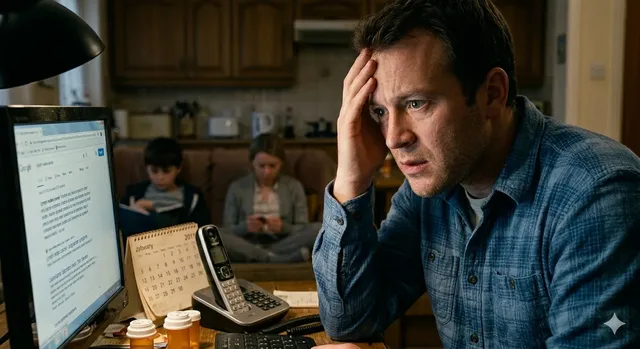
When you key in the word, you get 'stages, symptoms, and prognosis.' The latter looked the better word, and I clicked that even though I didn't quite know what it meant.
I quickly understood what the word meant, and when reading about 'large cell lung cancer,' the reading was painful. When I read of 'small cell lung cancer,' I was numb.
You don't move. You stare. You don't think. You stare. You stare and you don't stare.
The prognosis at Stage 4 was weeks. I could still hear the gun-filled game Jack was on; I could still hear Donald and Rachel laughing at a comedy film; I could hear my soul crying. I couldn't bear to be in the room, and I made some pathetic excuse to leave, and I took out the dogs into the night and into the descending dusk of the woods, and for the first time, I cried.
I didn't sleep, and the next morning, I had to get out of the house. Jack had gone to school, and Rachel and Donald were carrying on with their normal lives as best they could, as they were a little unnerved because Anna had cancer, but knowing she'd be okay.
When I got to work, there was nobody there, and I made a coffee. Some minutes after, Rita arrived, and I knew then, at that moment, she'd keyed into Google the same information as I had done that previous and dreadful evening.
She looked at me and spoke with loaded anticipation, 'How are you, Karl?'
There haven't been many times I've cracked up in tears, but that was the worst. Rita knew what I knew, what we both knew, and this anagnorises as they say in Greek, this recognition of fate, is unendurably unbearable. I cried and Rita comforted me. I didn't work that day, and Rita sent me back off home.
It was ten o'clock in the morning when my mobile rang, and it was Anna calling.
'Karl, don't come to the hospital early but leave it until four, as they're going to tell me what they have to do to treat the cancer.'
I stifled my emotion, as Anna didn't even know her condition, and her voice was so full of hope when mine was drowned in a sea of catastrophe.
When we set off for the hospital, Rachel and Jack knew something had changed. They could smell the change in atmosphere; they could tell.
When we arrived at the hospital, the nurse thought it better for Rachel and Jack to wait in the room adjacent to the one Anna was in.
A soft-sounding woman pronounced those little words, which ripped away any shred of hope.
'You have small cell lung cancer, Stage 4, and it's incurable, Anna.'
Anna was matter of fact, and she didn't really take in the full impact of what Fate was about to present her with. When the two medical team left, she cried, but she was still adamant and full of fire that she was going to 'fucking fight this cancer.'
I said nothing. And, I suppose, that was the start of my own denial.
In the car, on the way home, my mood must have been palpable, as Jack asked, 'My mam's going to be all right, isn't she, Dad?'
Outwardly I answered, 'Yes, your mam will be fine,' but inwardly, I was choking.
Prefer to listen? Watch the video reading below.
Reader Comments
Leave a Comment
We would love to hear your thoughts on this chapter.
About Karl Swainston
Karl Swainston is a writer and storyteller whose work is forged from a life lived across the North of England and far beyond. Growing up on a Leeds council estate in the 1960s, Karl's journey was anything but linear. By the age of thirty, he had already lived a dozen lives: from the rigors of grammar school to a degree in Latin, a stint as a fishmonger, a period of discovery living in Marseille, and a return to the hustle of London. Whether working as a postman, a builder, or competing as a county-level chess player, he was, above all, an avid reader—constantly documenting the world around him. This restless spirit continued into his professional life. Karl later taught in Bradford, where he ran a specialist unit for 244 of the most excluded students from across the region—young people whom even the local Pupil Referral Units could not accommodate. Working alongside his old friend Malcolm, Karl spent his days navigating the volatility of Bradford's most aggressive and dysfunctional teenagers. Throughout his life, Karl has been an avid runner and has always shared his home with a rotating cast of beloved dogs and cats—companions who have been constant witnesses to his work. As a writer, Karl's range is as expansive as his history. He works across a wide breadth of genres, including fiction and short stories, autobiography and memoir, biography, non-fiction, and metaphysical writing, as well as providing sharp commentary, opinion, analysis, and essays. Whether writing about his years managing the Harrogate Arms or offering insights from his current adopted home in South East India, where he lives in a simple village with his dog, Bambi, Karl's voice reflects the full, untidy, and deeply human breadth of life. He continues to draw on the rich, decades-long tapestry of his experiences to tell stories that matter, proving that no matter where you live, the human story remains the same.
Author Page