Tales From A Harrogate Caravan
Chapter 53 — 2011
← Karl Swainston / Tales From A Harrogate Caravan
I know where it went wrong. I know that. It was in 2011.
The winter of 2010 moved slowly into the spring and summer of 2011. Nothing much had changed, and although the students' faces at the vocational unit had changed, they were the same mischievous and difficult characters.
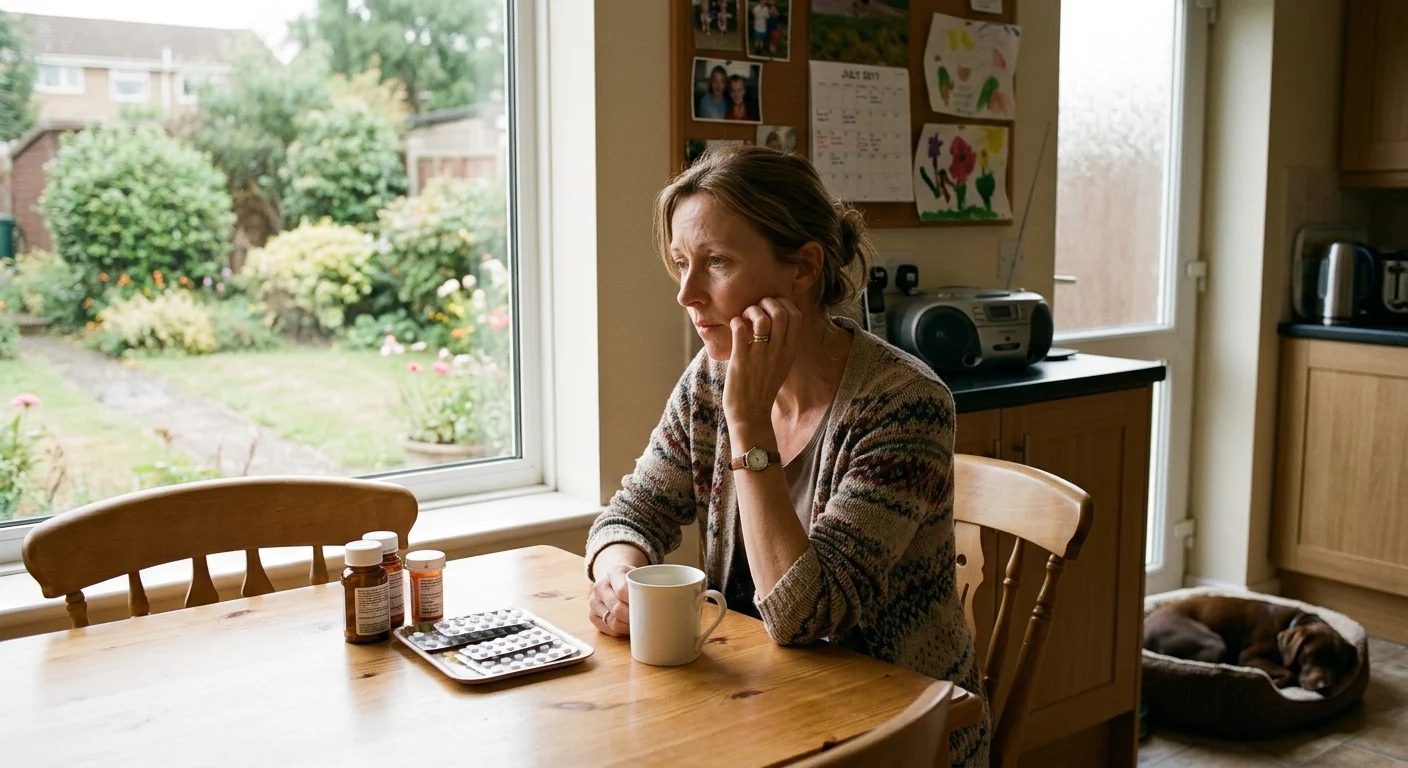
Anna had been having some problems with her blood pressure and was given tablets in order to stabilise the condition. It appeared to be nothing serious. On the way to work and on the way home, too, she'd developed this very hurtful sounding cough. It wasn't an excessively frequent cough, but it would occur once or twice throughout the day and odd enough to make you notice.
'That's a bad cough, Anna, is that? Have you told the doctor?'
'Yes, but he says it's the medication I'm on to reduce the blood pressure.'
I never questioned the cough again nor did Anna comment on it.
We had planned to go on holiday during the half-term of Spring Bank, which is at the end of May, but when the time came to book the holiday, Anna was reluctant to commit and seemed somewhat hesitant. She'd been visiting the doctor's more and more with minor complaints, and she said she wanted to wait the six weeks until the summer holidays. When those holidays came, the kids and I went, but Anna didn't.
She'd become noticeably reticent, and unlike her talkative self, you'd have to tease out of her little trips of conversation. One afternoon, she disappeared from the kitchen and didn't return for some considerable time. I went upstairs, and she was sat on the side of the bed. She'd been crying. I asked her what the matter was, and she simply replied that she was sick of going to the doctor's and complained of not knowing what was wrong with her. I comforted her, and within a short passing of time, she was her chirpy self again.
I did think later, when taking the dogs out for a walk, about the incident and why she was upset over what was – for all intents and purposes – a collection of minor ailments? And, in my ignorance, that's all, at that time, I saw the constant visits to the doctor's as. The doctors saw them as that, too, I assume, as that was why she was constantly sent back home with some different strand of medication.
It has to be mentioned that Anna was still fit and active, ran a difficult unit for difficult students, and led a fulfilled life; and although she'd lost some weight, it wasn't significant enough to make you stand back and notice. That was at the end of June.
***
With the turning of July, things began to turn. Anna asked if I would take her up to St George's Medical Centre.
'I'm sick of going to the doctor's, and I want to go to the Medical Centre and see if they can do anything,' I remember her declaring.
When you have an injury like a broken leg, you know what to do and what to plan for, but when you don't know what the ailment is, you are lost and simply don't know what to do. Anna felt like that, and I more so, as I only had knowledge of what Anna told me and nothing more. She still looked well.
St George's medical staff examined her and made an appointment for her to go to the hospital in a week's time or so. We drove back home. The next day we were back up to the Medical Centre, as Anna was now starting to be in pain. She was given medication and told they'd try to move the appointment at the hospital forward. We returned home again. A few hours later, I phoned for an ambulance, as the pain had worsened, and the medication didn't seem to be having any effect.
Anna was admitted into hospital that night. Was I worried? Of course I was. Did I think it was anything serious? No, I didn't. I don't know why I didn't, but I can remember not being overly worried and thought it was simply some minor ailment, and the doctors at the hospital would 'get it sorted'. Anna was admitted to a general ward, and they began to carry out some tests. Rita was in touch with her, and I'd take the kids whenever opening times allowed. Life went on.
Anna, although worried as any hospital admission would be, wasn't overly concerned, and she chatted merrily when being visited. She still didn't look ill. On the third day, though, when the visiting doctor was making his way round the ward, Anna waited for him to arrive at her bed and for him to give news as to what the problem was.
'You have some swollen lymph nodes in your chest,' he calmly informed. 'They can be anything, and we just need to carry out a few further tests.'
'Are they serious?' I asked.
'Most of the time, no, they're not serious, and I don't think there's anything to worry about in this case.'
'When can I go home then?' questioned Anna.
'I'm arranging for you to have your medication, and when they've done that, which will be an hour or so, you can go home.'
Wonderful! Anna was coming home, and it had all been nonsense and silly ailments. Anna was in fine spirits, and the next day she even wanted to go back to work. Rita hadn't seen Anna for a week or so, and neither had the kids at the unit seen her, but I remember as clear as summer all looked upon her differently.
'Are you all right, Anna?' asked Phillip, a young lad.
When you're with someone all the time, you don't notice a change in their appearance, and I didn't, but Rita and the kids did. The students became unusually quiet when Anna was around, and they whispered. I don't know to this day what they whispered about, but I do know their whole characters around Anna were somehow different.
Anna was doing well, considering she'd been ill and hadn't worked for a week, but come the afternoon, she became very weak and asked me if I could take her home.
Rita sorted out the cover for staffing, and Anna and I left. I returned only once to the unit for that academic year.
Prefer to listen? Watch the video reading below.
Reader Comments
Leave a Comment
We would love to hear your thoughts on this chapter.

About Karl Swainston
Karl Swainston is a writer and storyteller whose work is forged from a life lived across the North of England and far beyond. Growing up on a Leeds council estate in the 1960s, Karl's journey was anything but linear. By the age of thirty, he had already lived a dozen lives: from the rigors of grammar school to a degree in Latin, a stint as a fishmonger, a period of discovery living in Marseille, and a return to the hustle of London. Whether working as a postman, a builder, or competing as a county-level chess player, he was, above all, an avid reader—constantly documenting the world around him. This restless spirit continued into his professional life. Karl later taught in Bradford, where he ran a specialist unit for 244 of the most excluded students from across the region—young people whom even the local Pupil Referral Units could not accommodate. Working alongside his old friend Malcolm, Karl spent his days navigating the volatility of Bradford's most aggressive and dysfunctional teenagers. Throughout his life, Karl has been an avid runner and has always shared his home with a rotating cast of beloved dogs and cats—companions who have been constant witnesses to his work. As a writer, Karl's range is as expansive as his history. He works across a wide breadth of genres, including fiction and short stories, autobiography and memoir, biography, non-fiction, and metaphysical writing, as well as providing sharp commentary, opinion, analysis, and essays. Whether writing about his years managing the Harrogate Arms or offering insights from his current adopted home in South East India, where he lives in a simple village with his dog, Bambi, Karl's voice reflects the full, untidy, and deeply human breadth of life. He continues to draw on the rich, decades-long tapestry of his experiences to tell stories that matter, proving that no matter where you live, the human story remains the same.
Author Page