
A Blackpool Vendetta by Ben Arnold
12 minute read
At a Glance
- • Focus: When the police fail to charge the man who killed her son, Blackpool cleaner Brenda Lancaster bides her time, tracks him along the seafront and lets her son's old dog decide the ending.
- • By: Ben Arnold, short story, 2026
- • Title: A Blackpool Vendetta
- • Form: short story
- • Published by: Tales From A Harrogate Caravan
A modern adaptation of Guy de Maupassant
Brenda Lancaster had lived in Blackpool for most of her life. She had come there as a girl with her parents, who had moved north from Preston in search of work, and had never found a compelling reason to leave. She knew the town in all its moods: the bright, frantic misery of August, when the streets filled with people spending money they didn't have, and the long, damp winters when the hotels along the Promenade stood empty and the gulls seemed to own the place. She had worked as a cleaner in guesthouses, holiday flats and cheap hotels, and had raised her only son, Daniel, in a small terraced house off Devonshire Road. He was twenty-eight when they killed him.
The police said it had been an altercation. They used the word several times, as though it might make the business sound less brutal. Daniel had been drinking with a man called Ryan Hesketh, whom he had known since school, and the two had argued outside a pub near Talbot Road. There had been money involved, although nobody seemed able to establish exactly how much. Ryan had punched Daniel, knocked him to the pavement and kicked him repeatedly in the head and body. He had then walked away, leaving him in the gutter. A taxi driver had found him shortly after two in the morning and called an ambulance, but Daniel died in Blackpool Victoria Hospital before dawn.
Brenda listened to the police officers in her kitchen without interrupting. She had made them tea, though neither had touched it. One of them explained that Ryan was known to the police and that they were confident of locating him. She asked where he lived. The officer said he was staying somewhere in Layton, but that they had been unable to find him. She asked whether he had been arrested. No, not yet. She asked whether he had admitted what he had done. The officer looked at his colleague before answering. There were some conflicting accounts, he said, and they were still gathering evidence.
Brenda looked at the two men sitting opposite her. They were young enough to be Daniel's age, and one of them had a wedding ring. She wondered whether they had children, whether they would go home that evening and sit down to tea, whether they would tell their wives about the woman whose son had been kicked to death by a man who was now apparently difficult to locate. She thanked them for coming and showed them out.
Daniel was buried at Carleton Crematorium on a wet Thursday afternoon. There were thirty-seven people there, including several of his old school friends, most of whom Brenda hadn't seen in years. They stood around in their dark coats, looking uncomfortable and avoiding her eyes. Someone had brought flowers. Someone else had brought a photograph of Daniel as a child, standing outside Coral Island with a huge ice cream in his hand. Brenda kept the photograph. It was the only thing from that day she wanted to remember.
After the funeral she returned to her house and found Murphy waiting in the kitchen. Murphy was a large, elderly Staffordshire bull terrier, white across the chest and brindled along his back. Daniel had brought him home from a rescue centre in Fleetwood seven years earlier, and the two had been inseparable. Murphy had slept at the foot of Daniel's bed, followed him to the shops and waited outside the bathroom whenever he took a shower. Since Daniel's death, the dog had barely eaten. He spent most of his time beside the front door, lifting his head whenever he heard footsteps on the pavement.
Brenda sat down beside him and put her arms around his thick neck. For the first time since the police had arrived, she began to cry. She cried for a long time, with her face pressed into the dog's coat, while the rain tapped against the kitchen window. When she had finished, she washed her face, made herself a cup of tea and looked at the photograph of Daniel on the mantelpiece. It showed him at about twelve, grinning on the North Pier, his hair blown across his forehead. She remembered the day perfectly. He had been frightened of the height of the pier but had refused to admit it.
She took the photograph down and held it for a moment. Then she put it back.
The police did not arrest Ryan Hesketh. He had left his flat in Layton and nobody seemed to know where he had gone. His mobile phone was switched off, his social media accounts had disappeared and his friends were suddenly unable to remember the last time they had seen him. The investigation continued, although the officers who visited Brenda became less frequent and their explanations increasingly vague. Eventually, one of them told her that Ryan was believed to have left the area. He said they would contact her if anything changed.
Brenda thanked him. She had no further questions.
For several weeks she lived quietly, shopping at the market on Abingdon Street and taking Murphy for walks around Stanley Park. She rarely spoke to anybody. The neighbours thought she was coping remarkably well, which was a mistake they would later regret making. She was not coping at all. She was thinking, constantly and with a terrible concentration, about Ryan Hesketh. She imagined him drinking in a pub somewhere, laughing with his friends, buying himself new clothes and sleeping peacefully in a warm bed. She imagined him forgetting Daniel altogether. What she found hardest to bear was not the murder itself, but the prospect that the man who had committed it might simply continue living.
One afternoon, while looking through Facebook, she found a photograph of Ryan. It had been posted by a mutual acquaintance and showed him standing outside a takeaway on Whitegate Drive. He was wearing a black jacket and holding a can of lager, with the familiar expression of someone who considered himself entirely beyond criticism. The accompanying caption suggested that he was back in Blackpool. Brenda looked at the photograph for a long time before closing the laptop.
She began to pay attention.
Ryan was not particularly discreet. Within a fortnight she had discovered that he was staying with a friend in an apartment near Bispham and that he spent most evenings drinking around the town centre. She saw photographs of him outside the Winter Gardens, in pubs on Church Street and at a boxing night advertised at a local social club. He seemed to have no intention of leaving Blackpool permanently. He was simply waiting for the fuss to die down.
Brenda had no money, no useful friends and no means of forcing the police to act. She was an old woman with a bad hip and a dog that was approaching the end of its life. But she had something Ryan had not considered: time. She had spent thirty years cleaning other people's houses, learning their routines and noticing the small details that most people overlooked. She knew how easily a person could become careless when they believed nobody was watching.
Murphy was the one thing she had not yet considered. He was old, but he remained a powerful animal, and his attachment to Daniel had never diminished. One evening, while she was putting away Daniel's clothes, she found an old sweatshirt at the bottom of a wardrobe. She held it to her face, then took it downstairs and laid it on Murphy's bed. The dog approached it, sniffed it carefully and settled down beside it. Brenda watched him for several minutes. An idea had begun to form, although she did not yet know precisely what she would do with it.
She remembered something Daniel had told her years earlier. He had been walking Murphy along the beach when another dog had attacked him. Murphy had fought back with such ferocity that Daniel had struggled to pull him away. Afterwards, the dog had been perfectly calm, as though nothing unusual had happened. Daniel had laughed about it, saying that Murphy was the friendliest dog in Blackpool until somebody gave him a reason not to be.
Brenda began taking him out more regularly. They walked along the Promenade, past the Tower and the North Pier, and sometimes continued as far as Gynn Square. She watched the people who passed them, the dogs being exercised and the men who stood smoking outside the pubs. She became familiar with the times when the beach was empty and the quieter stretches of the promenade where there were few people about. She also discovered that Ryan occasionally walked a German Shepherd called Diesel along the seafront. The dog was young, nervous and badly controlled. Ryan shouted at it constantly, dragging it along by the lead and occasionally giving it a kick when it failed to obey.
One cold afternoon Brenda saw him near the boating lake in Stanley Park. She recognised his walk before she saw his face. He was wearing the same black jacket as in the photograph and had a cigarette hanging from his mouth. He stopped to speak to another man, laughing loudly, while Diesel pulled at the lead. Brenda stood beside a tree and watched. She felt no great surge of anger, no sudden desire to confront him. What she felt was something colder and more useful. She had found him, and he was still behaving as though nothing had happened.
That evening she took Daniel's photograph from the mantelpiece and placed it on the kitchen table. She sat opposite it while Murphy slept beside the radiator. She thought about the funeral, the police officers, the empty bedroom upstairs and the long, miserable silence that had settled over the house. Then she looked at the dog.
She knew what she wanted to do.
The difficulty was making sure that Ryan would never be able to hurt anybody else.
The opportunity came in February, when the weather was particularly unpleasant and the town seemed to have been abandoned by everybody except its permanent residents. Brenda had learned that Ryan regularly visited a friend in Bispham and often walked along the beach afterwards. She had also discovered that he was becoming increasingly irritated by the attention he was receiving from Daniel's former friends. A few had confronted him in pubs, and one had apparently threatened to go to the police with information about the night of the murder.
Ryan was frightened, although he tried not to show it.
Brenda understood that fear was useful. It made people careless.
She encountered him one Tuesday afternoon near Gynn Square. The wind was coming in hard from the sea, and the rain was blowing across the promenade. Ryan was standing near the sea wall, looking at his phone, while Diesel sniffed around a litter bin. Brenda approached slowly with Murphy beside her.
"Ryan?"
He looked up, annoyed at being interrupted. Then he recognised her.
"Oh. Daniel's mum."
"Brenda," she said.
He put his phone away. "What do you want?"
"I wanted to speak to you."
He glanced at Murphy. "Look, I don't want any trouble."
"Neither did Daniel."
Ryan sighed and looked towards the sea. "We've been through all this. It was an accident. We had a row, he came at me and I pushed him. I didn't mean for any of it to happen."
Brenda looked at him carefully. She had imagined this conversation many times, but now that it was taking place she found herself strangely calm.
"You kicked him when he was on the ground."
"I was drunk."
"You left him there."
"I panicked."
"You went home."
Ryan looked at her with open irritation. "What do you want me to say? I'm sorry. There you go. I'm sorry. Is that what you came for?"
She looked at him for a long moment.
"No," she said. "It isn't."
He pulled Diesel away from the litter bin and began walking towards the promenade. Brenda did not follow him. She watched him go, then turned towards the sea. The dog stood beside her, breathing heavily in the cold air.
For the first time in months, she felt that something had changed.
Ryan Hesketh died three days later.
The circumstances were reported briefly in the local newspaper. His body had been discovered on a quiet stretch of beach near Bispham, north of the Gynn, by a man walking his dog early in the morning. The police said they were investigating an incident involving a dog and appealed for witnesses. Ryan had suffered extensive injuries. There was no suggestion of robbery, and his mobile phone and wallet had been found on him.
Brenda read the report over breakfast. She folded the newspaper carefully and put it beside her plate. Murphy was lying near the radiator, asleep with his nose tucked beneath his front paws.
The police arrived shortly after seven the following morning. Two officers, one of whom Brenda recognised from the original investigation, asked if they could come inside. She let them in and offered them tea. They declined.
They explained that Ryan had died and that they were making enquiries into his movements during the previous few days. They asked whether she had seen him recently. Brenda said she had spoken to him near Gynn Square on Tuesday. The officer wrote this down.
"Was there any argument?"
"No."
"Did he threaten you?"
"No."
"Did you threaten him?"
Brenda looked at him with mild surprise.
"Why would I do that?"
The officer glanced towards Murphy, who had raised his head at the sound of their voices.
"Does your dog ever cause trouble?"
"He's an old dog," Brenda said. "He mostly sleeps."
They asked a few more questions and left. Before going, the younger officer noticed the photographs of Daniel arranged along the mantelpiece. He stood looking at them for a moment, then said he was sorry about what had happened.
Brenda thanked him.
The police returned twice over the following fortnight. They examined her phone, spoke to her neighbours and asked about her movements. There was nothing they could establish that connected her to Ryan's death. Brenda had been at home for much of the relevant period, and nobody had seen her near the beach that morning. The investigation continued, but it gradually became clear that no charges would be brought.
The newspapers lost interest. Ryan's death was replaced by stories about the council, the state of the town centre and the latest arguments over the regeneration of the seafront. Blackpool had other things to worry about.
Spring arrived. The days became longer, the hotels began preparing for the summer season and the first coach parties returned to the Promenade. Brenda continued taking Murphy for his walks, although he was becoming slower and increasingly reluctant to climb the stairs. Sometimes they went as far as the North Pier and sat on a bench overlooking the sea. She would talk to him about Daniel, telling him things he already knew: what Daniel had eaten for breakfast, how he had once fallen off a bicycle on Caunce Street, how he had spent his last Christmas complaining about the television.
One afternoon, while they were sitting near the Tower, Murphy rested his head against her leg. Brenda stroked his ears and looked out towards the sea. The tide was coming in, covering the wet sand and swallowing the footprints left by the morning's walkers.
She thought about Daniel, and for the first time she was able to remember him without immediately seeing the terrible final image of his death. She remembered his laughter, his untidy bedroom, his stupid jokes and the way he used to call her every Sunday, even when he had nothing to say. She remembered the little boy on the North Pier, holding his ice cream and grinning at the camera.
She took the photograph from her handbag and looked at it.
"There you are, my love," she whispered.
Murphy lifted his head.
Brenda put the photograph away and stood up. They walked slowly towards home, past the amusements and the shops, while the evening lights began to come on along the Promenade.
She had not forgiven Ryan Hesketh. She knew she never would. But the anger that had occupied every waking hour of her life had finally subsided, leaving behind something quieter and more permanent. She had done what she believed she had to do, and the world had continued without noticing.
At home, she made herself a cup of tea and put Murphy's dinner down beside the radiator. Then she went into the living room, straightened Daniel's photograph on the mantelpiece and turned off the light.
Outside, the sea moved steadily towards the shore, indifferent to the lives and deaths of the people who lived beside it.
Reader Comments
Leave a Comment or a Book Review
We would love to hear your thoughts on this chapter, or even a complete book review.

About Ben Arnold
Ben Arnold writes crime fiction. A Blackpool Vendetta, a modern adaptation of Guy de Maupassant set on the Blackpool seafront, is published on Tales From A Harrogate Caravan.
Author PageFiled under: Short Story · Mystery, Crime & Thriller · Regional Interest
Read Other Works

The Rain Over Leeds
A body in a passage off Briggate. A wallet still full. An address in Seacroft hidden in the dead man's coat. Frank Salters has one question — not who killed Daniel Mercer, but who wanted the address found.
12 minute read
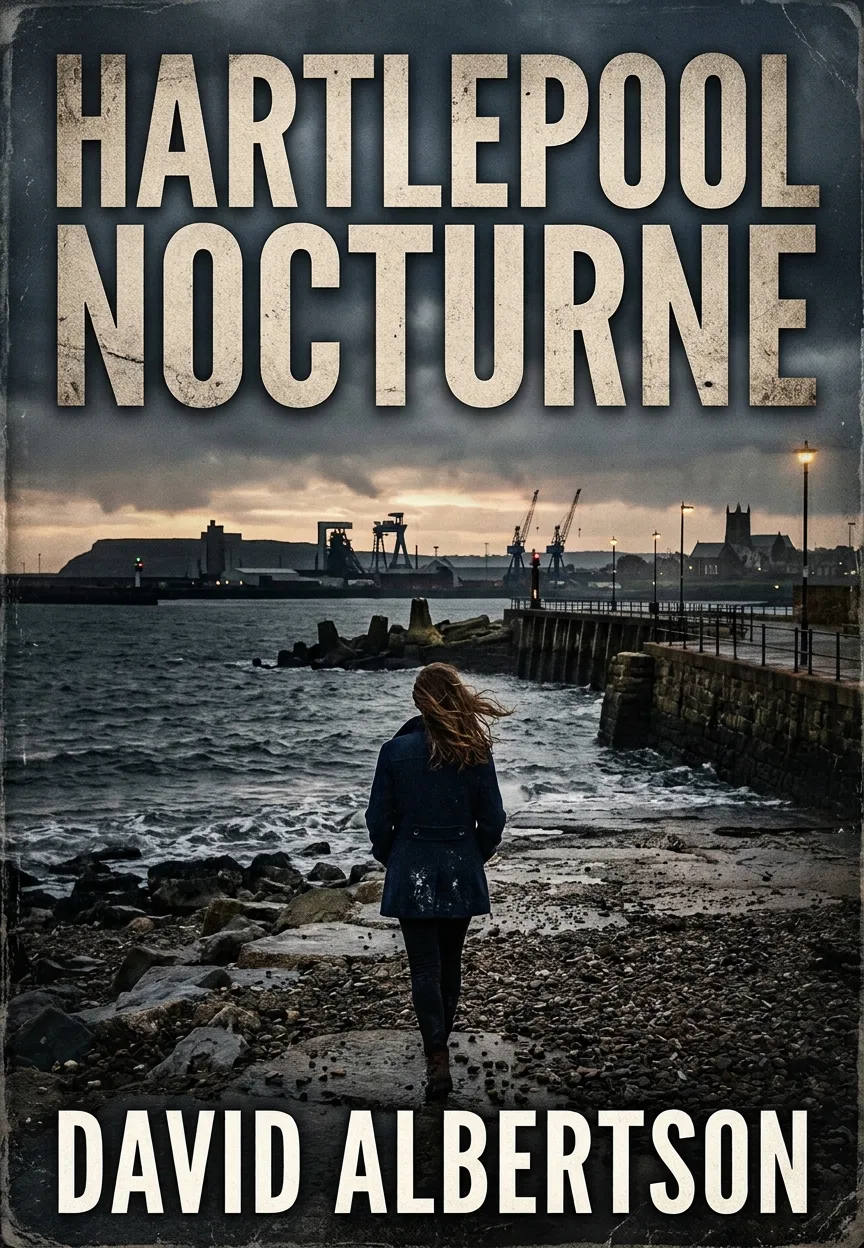
Hartlepool Nocturne
A dark tale of the Hartlepool docks, where a young wife kept under watch in a pebble-dashed terrace takes a lover, and decides she will never be locked in the dark again.
9 minute read

The Bridge Between Two Worlds
In 1815 a Chepstow foundry draughtsman uncovers a forged survey, is murdered and is branded a thief. Seventy-four years later, as the iron bridge over the Wye is strengthened, his great-grandson returns with a tin box of papers to clear...
24 minute read