The Anchored Dead
Chapter 21: The Quiet Coast
← Terry Farland / The Anchored Dead
The explosion shattered every pane of glass within half a mile.
The blast igniting the gas line tore through the underground culverts, collapsing the old brick furnace foundations and burying the subterranean iron seam beneath fifty tons of shattered shale and iron slag.
The geyser of phosphorescent brine collapsed instantly. The phantom timbers of the Dolphin dissolved into a thick, harmless mist that carried through the broken roof, dissipating into the cold rain above the Esk Valley.
Silence fell over the ruined studio, broken only by the steady hiss of escaping steam and the patter of raindrops falling on the wet wreckage.
Caleb pushed a pile of corrugated iron off his back and sat up, coughing dust and sulfur smoke. Beside him, Sterling was slowly rising, his fur coat covered in white gypsum dust, but unhurt.
Arthur lay near the drained zinc trough, his right arm pale and completely numb, but his eyes open and clear.
On the floor around him lay thousands of shards of broken glass. The silver emulsion had peeled away from the glass fragments entirely, rolling into tight, inert gray flakes that lay motionless among the wet cinders, as dull and harmless as ash.
Epilogue: The Unfinished Plate
Spring came early to the North Riding that year, washing the moorland sheep-tracks clean and bringing the bright yellow gorse into bloom along the cliffs of Ravenscar.
In May, Arthur Wright reopened his small shop on Grape Lane in Whitby. He had taken down the sign that offered portraiture and landscape negatives. Across the window, painted in small, neat black letters, was a new trade: A. Wright – Repairer of Optical Instruments & Lenses.
He never prepared another wet-collodion glass plate.
His mahogany camera sat on a high shelf in the back of the shop, its brass fittings polished, its leather bellows oiled, but its dark slide permanently sealed with brass screws.
On a quiet afternoon, Caleb Ward walked into the shop, carrying a small package wrapped in brown paper.
"From the parish council," Caleb said, setting the parcel on the workbench. "They cleared out the late Custodian Finch's cottage above the Abbey grounds yesterday. Found this locked in his iron desk."
Arthur carefully unwrapped the paper.
Inside was a single, small silver daguerreotype plate from the 1850s—the predecessor to the glass collodion. It was housed in a faded velvet case.
Arthur held the metal plate up to the soft north light coming through the shop window. The mirror-like surface reflected his own face: older now, with faint silvering at his temples, but calm.
Behind his reflection, etched forever into the polished silver sheet, was a view of Whitby harbor taken forty years prior. The water was smooth as glass. The 199 Steps climbed the green cliff toward the sky, unbroken by shadow or storm. And resting at anchor in the calm harbor basin was a tiny, perfect wooden schooner, her sails furled, her lines clean, sleeping peacefully on the tide.
Arthur closed the velvet case with a soft, decisive click, and set it on the shelf beside his lamp.
Outside, the bells of St. Mary's rang out over the town, carried across the rooftops by a sweet, clean wind blowing in from the open sea.
About Terry Farland
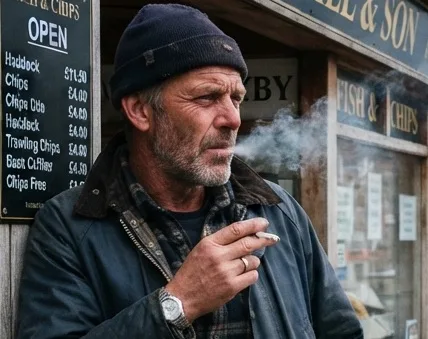
Terry Farland writes gothic fiction set on the North Sea coast. His work draws on the photography, fishing and folklore of Yorkshire's coastal villages, and the uneasy line between what the camera records and what the sea returns. The Anchored Dead is his first novel for Tales From A Harrogate Caravan.
Author Page
Reader Comments
Leave a Comment or a Book Review
We would love to hear your thoughts on this chapter, or even a complete book review.