The Anchored Dead
Chapter 16: The Draughtsman’s Ledger
← Terry Farland / The Anchored Dead
Three weeks passed, bringing the beginning of November and the heavy, relentless gales of late autumn. The sea fret no longer hung over the cliffs; instead, cold, driving rain swept in off the North Sea, washing the gray ash from the gutters of Robin Hood's Bay and scouring the stone walls of Whitby.
Arthur had not prepared a single wet-collodion plate since the night on the Bay Scars. His darkroom remained locked, the red paper on the small window pane fading under the pale winter light. He spent his days in the small reading room of the Whitby Literary and Philosophical Society, sitting near the coal stove with stacks of yellowed harbor logs and maritime ledgers.
He was searching for the origins of the silver plates themselves.
The glass negatives he had used were not standard commercial stock. He had purchased them from a itinerant chemical dealer named Silas Thorne, who had passed through Whitby in early autumn claiming the glass was treated with a new, highly sensitive silver-salts process imported from Prussia.
On a rainy Tuesday afternoon, Caleb found Arthur seated at a corner table covered in dry parish registers from the late eighteenth century.
"You're going to blind yourself in this light, lad," Caleb said, setting a damp woolen cap on the table. "The harbor master says the sea's quiet. Not a scrap of wreckage has washed up from Ravenscar since the night you dropped the lead box."
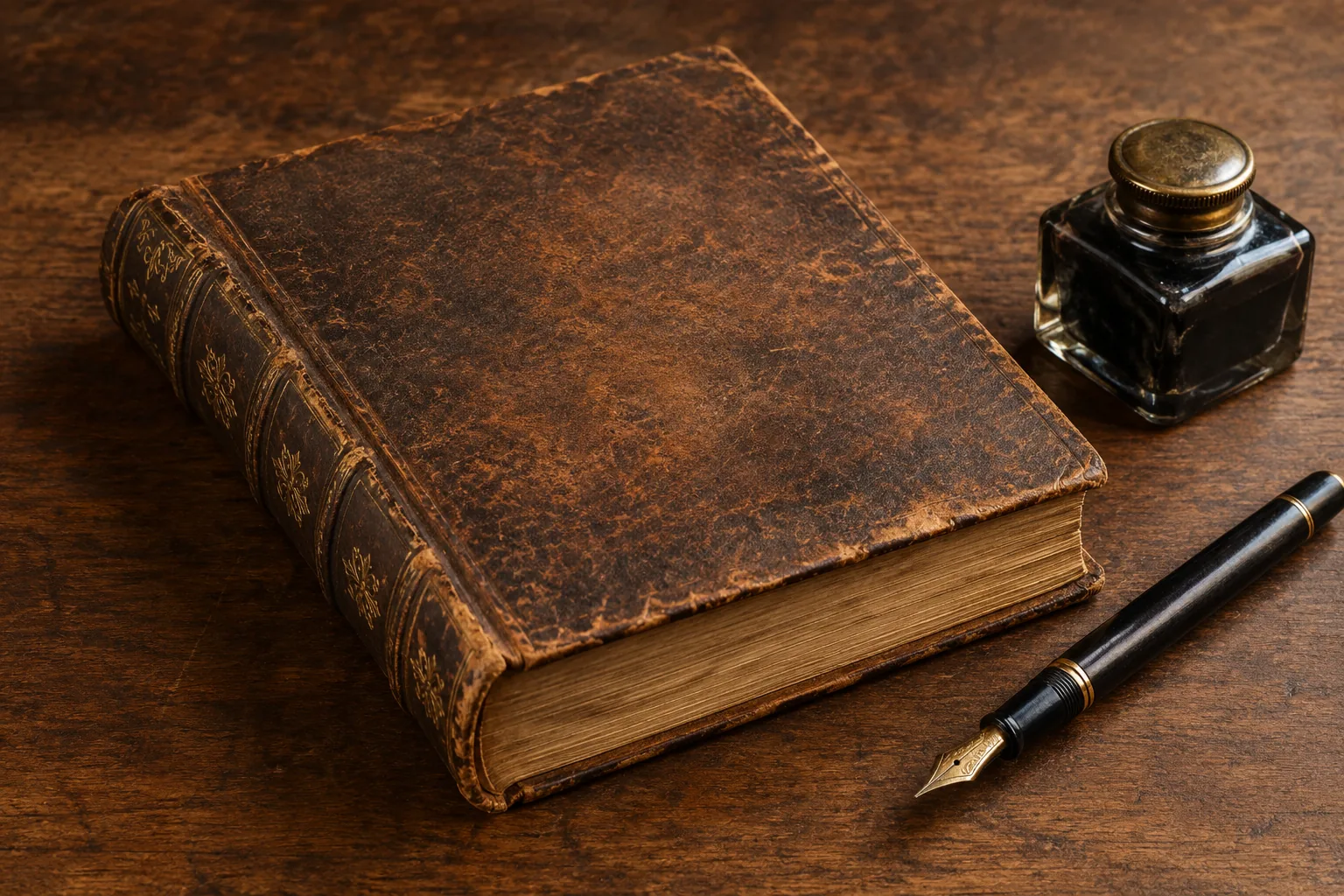
"The vessel was never built in Prussia," Arthur said quietly, not looking up from a heavy leather-bound volume dated 1792.
Caleb leaned over the table. "What are you talking about?"
Arthur pointed his finger at a column of faded brown copperplate script. "The Dolphin was built in 1840 at the shipyard on the Esk. But the iron used for her fittings—her anchor chain, her hawseholes, her knees—was forged at the old alum works up on the East Cliff."
"Plenty of ships used local iron," Caleb said.
"Not this iron," Arthur replied, turning the page to a map drawn in black ink. "The shale extracted from the East Cliff in the late eighteenth century wasn't just boiled for alum dye. The deep seams—the dark slate eighty feet beneath the Abbey ruins—were rich in native silver and iron pyrites. When they smelted the ore at the mouth of the Esk, they couldn't separate the silver from the iron. It was burned right into the metal of the chains."
Arthur looked up at Caleb, his eyes dark with exhaustion.
"The anchor chain on the Dolphin wasn't just iron, Caleb. It was made of the same mineral salts that coat my photographic plates. When the ship sank in 1854, the chain didn't rust into the seabed—it acted as an anode, conducting the charge of every storm that hit the coast for twenty years."
Caleb stared at the map, his jaw tightening as he traced the line of the alum seam from the Abbey, down the 199 Steps, along the ocean floor, and straight into the reef at Ravenscar.
"It was a single circuit," Caleb said.
"It is a circuit," Arthur corrected him, closing the ledger with a heavy thud. "And the camera didn't capture a ghost, Caleb. It completed the wire."
About Terry Farland
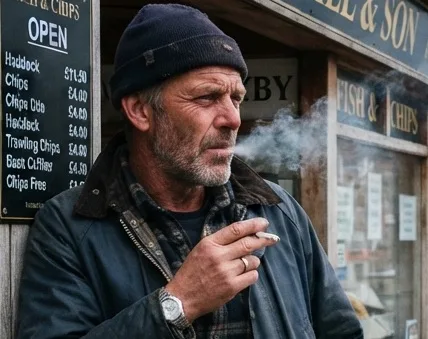
Terry Farland writes gothic fiction set on the North Sea coast. His work draws on the photography, fishing and folklore of Yorkshire's coastal villages, and the uneasy line between what the camera records and what the sea returns. The Anchored Dead is his first novel for Tales From A Harrogate Caravan.
Author Page
Reader Comments
Leave a Comment or a Book Review
We would love to hear your thoughts on this chapter, or even a complete book review.