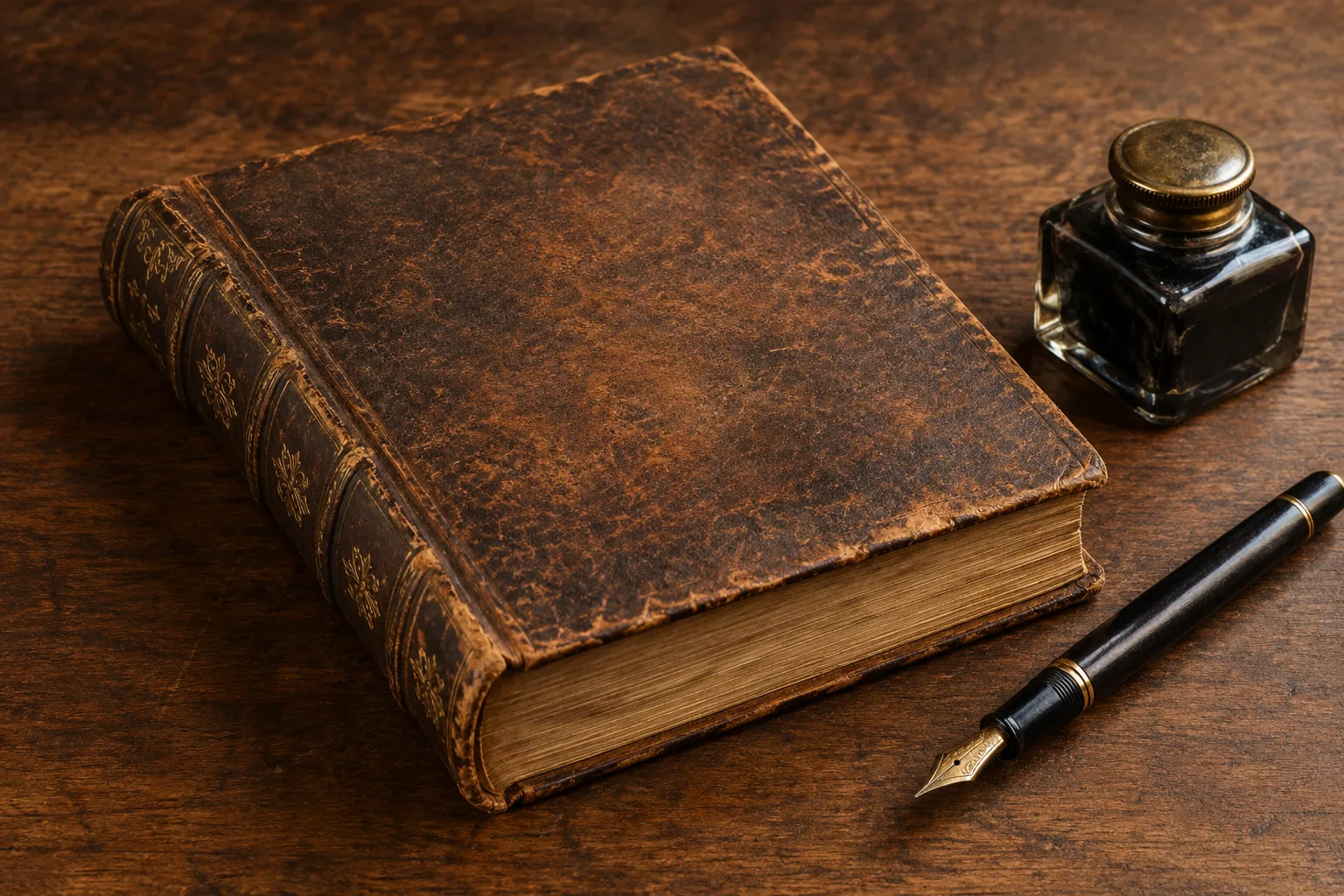
The Press That Eats Children
Chapter 1 — The Day the Words Disappeared
← RMKN Khan / The Press That Eats Children
First rule of Pigeon Hollow: Don't trust the paper.
The first thing that vanished was a grocery list.
I was walking past Mrs. Peabody's front stoop when she let out a sound I'd never heard from her before—a low, bewildered moan, like a dog that can't find its bone. She stood in her housedress with her reading glasses pushed up to her forehead, staring at a piece of lined notepaper as if it had personally wronged her.
"Eggs. Bread. And…" Her finger trembled over the page. "There was a third thing. I wrote it down."
I leaned in. The paper read:
EGGS
BREAD
Nothing else. No smudge, no erasure. Just space—clean and white and wrong.
"Maybe you forgot to write it?" I suggested.
Mrs. Peabody's eyes went sharp as tacks. "Mira Birch, I have written this same list every Tuesday for forty years. There was a third thing."
That was at 9:15 in the morning.
By 10:30, Old Man Higgins was standing in the middle of the street shaking his newspaper at anyone who'd slow down. The headline was gone—not torn, not smudged, just absent. Where it should have read MAYOR'S SECRET MEETING, there was only blank grey newsprint.
'Clear as day it was!' he kept saying. 'Clear as day!'
At 11:47, the library's dictionary turned blank.
I was hiding in the fiction aisle—thirteen years old and skipping the last twenty minutes of study hall, same as most Tuesdays—when the gasp went through the room like a cold wind. I followed the sound to the reference desk, where Miss Wicker, the librarian, stood clutching the Oxford English Dictionary with both hands, her face the colour of old paper.
She opened it. I crept close enough to see.
Page after page: white. Every word, from Aardvark to Zygote, was gone. Not faded. Not wet. Just gone, as if language itself had decided to leave town.
That's when I saw him.
A boy about my age, leaning against the biography section. He didn't belong in the children's area—too old—but he wasn't old enough for the adult shelves either. His coat was too large for him, sleeves hanging past his wrists. Dark stains ringed his fingertips the way ink stains do when you've been writing for hours, except these stains moved. Curled. Like letters I couldn't quite read from across the room.
Our eyes met over the chaos.
He smiled—a slow, deliberate thing—and pulled a single sheet of paper from his coat. Even from fifteen feet away, I could read it.
MIRA BIRCH.
Just my name. The letters shimmered like they were still wet.
Then he turned and walked out the front door.
I should have let him go. I should have told a teacher, a parent, an adult with better judgment than me. Instead I followed him down the library steps and into the afternoon.
He moved strangely, coat flapping in a wind that wasn't blowing for anyone else. He ducked into the alley beside the post office—an alley I was nearly certain hadn't existed yesterday. The bricks were too red, too new, as if they'd been printed there that morning.
At the far end stood a door with no handle. Two words were stamped in peeling red paint:
PRESS HERE
The boy glanced back once. Then he placed his palm flat against the door and vanished.
I stood in that alley for a long moment, listening to the silence. The air smelled like old books and something sharper—the electric tang that comes just before lightning strikes.
My shoes stuck faintly to the pavement as I walked forward.
I raised my hand. The door was warm.
I pressed.
Reader Comments
Leave a Comment
We would love to hear your thoughts on this chapter.