Tales From A Harrogate Caravan
Chapter 45 — The Vocational Unit and Rachel's Operation
← Karl Swainston / Tales From A Harrogate Caravan
Teaching was progressing well with the passing years, and Anna and I had managed to pay off most of the debts incurred during those university years. On Saturdays we always met up with Bennie and old Brian at the Grey Goose and had a good afternoon betting and having a general laugh. We actually did quite well with the horses, and on most occasions it paid for the beer, but, to be honest, that was about all it accomplished. Nevertheless, it was still enjoyable. There'd even be many occasions when we went to the races at Ripon, Beverley, and York with the favourites. You couldn't beat the dinner they served in the canteen there at Beverley, though.
In 2004, at school, I was managing a couple of Learning Support Centres and coordinating alternative curriculum placements for students excluded from mainstream schooling. I'd left teaching drama a couple of years back, and my responsibilities were solely with disaffected and difficult students. The Centres aimed to address emotional and behavioural issues with the students, and, if somewhat successful, a programme of reintegration back into mainstream schooling was actioned.
If the students didn't respond, but responded reasonably well in the centres, they were kept there, and their entire schooling happened there. If the student didn't respond to any of the support programmes, alternative educational provision was found for them outside the school.
After the so-called Bradford Riots, the Government and the local council released pots of educational funding to deal with students at risk of exclusion such as HOP – Home Office Project; BIP – Behaviour Improvement Programme; EIC – Excellence in Cities, etc. These pots allowed schools to make ever greater use of alternative provision, and it was no different for the school I was in. Increasingly, more and more students would be placed out of school on these programmes of vocational learning, etc.
At school, Harry, a Learning Mentor, and I had introduced construction into the curriculum to give the students a more 'hands on' approach to learning. With another school, we'd rented a small industrial unit, which possessed no heating, and in winter it was freezing. The students were given a choice whether they wanted to work there on cold days or stay back in school and do some classroom learning. They never once chose the latter.
At this time, Rita had joined the inclusion team, and she was an instant hit with the students. Rita would coordinate the students out on work placements and other alternative provision. She was a hard woman, and I suppose that's why the kids respected her. Rita suggested opening up some sort of Learning Support Centre and taking on students either at risk of exclusion or who had been excluded from schools around Bradford. At the time, I'd somewhat fallen out with the Head teacher at the school and only had another year of my contract to run, and I decided to go with Rita's idea. The only problem was telling Anna.
Anna had never met Rita, but she knew this Asian woman would regularly ring the house, and I'd take the phone aside and chat with her about the venture. When I'd finally handed in my notice, I still hadn't told Anna, and Rita suggested I delay it no longer.
Anna was settled in life. Jack and Rachel were at school, and most of the debts had been paid off, and Anna was happy. The thought of me jacking in well-paid employment and heading off once again on some cavalier adventure with her life and the children would have sent her into a rage, and it was this I was dreading, but her reaction was different when I asked her to sit down in the kitchen that evening.
'I've handed my notice in at work, and am going to set up a unit with Rita and Trevor, another colleague from work.'
'Can you still pay the mortgage?'
'Yes.'
'As long as you can do that, I don't want to lose the house. I don't want to know anything else about it.'
And that was that. I'd told her, and there were no remonstrations, cups flying, etc.: just a stoic acceptance. A few months later when we were chatting about that conversation, Anna confided in me that when I had asked her to sit down, she thought I was going to announce something dreadful, but she never did tell me what she really meant by this.
Finally, we set up the unit in Little Germany, which is a collection of nineteenth-century big, stone buildings sitting on the edge of Bradford. The building, a huge, old mill, was perfect for construction and motor vehicle, and it possessed a few little rooms where computers could be installed, which we bought for £1 from the old school.
We'd borrowed £15K from the bank, but that didn't last long with rent, materials, and wages for the building, and it wasn't long before Rita was having to introduce fresh funds into the account to support the enterprise. We did have a stable population of students, but we were struggling to attract more to make the Centre sustainable. I can remember returning home one Friday and my wage was a third of what it had been at school, but fortunately, Jack had now begun nursery, and Anna could take some part-time employment to help pay the rent, etc.
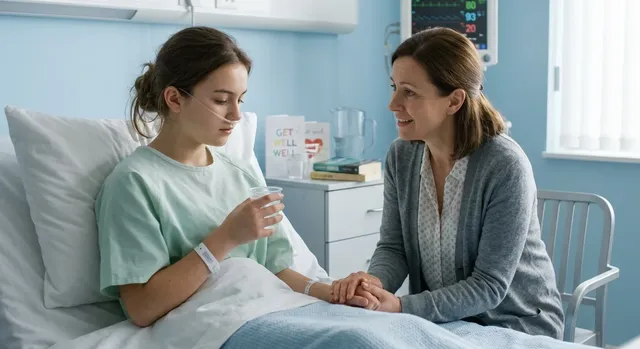
Rachel was now at secondary school and in her teenage years. She had scoliosis and with the teenage years it hadn't improved, and the consultants decided now was the best time to operate. The operation is a major one, where the backbone is realigned and a metal rod is inserted. I'd booked some time off from the Unit to look after Jack and allow Anna to spend more time in the hospital with Rachel.
During the operation, we waited in a room which was set aside for families. Time moved slowly, and Anna was anxious.
'Anna?'
'Yes,' Anna quickly replied.
'Rachel's operation has finished, and it has gone reasonably well. But I'm afraid there have been some complications with her breathing. Her lungs had to be collapsed during the operation, and they're having some difficulties bringing them back. She's had to be taken into Intensive Care. Someone will take you to see her in a very short while.'
Poor Anna was distraught. I didn't know what to do, and Jack was playing with his toys on the floor. I can remember vividly seeing the pain, the anguish, and the fear choking her countenance and eyes, and moving over to her, to hold her, comfort her, and feeling only this woman who was completely numb in my arms. Those few minutes waiting to be taken to Intensive Care were savage, and all the fears and terrors crowded around every thought and feeling you have.
Another nurse appeared, and we were taken along some serpentine corridor with white paint and prepared for going into the ward.
'I must tell you that things will look a lot worse than they are, and you might be a little upset when you go in. You will probably want to hold her, but you must let her rest.'
We went in and there was Rachel, Little Legs, as Anna used to call her, enmeshed in a myriad of pipes and machines and looking desperately ill. Anna fell to crying but tried to maintain composure. I simply wept, as I couldn't comprehend what I was seeing.
We stayed a short time in the ward, and then were shown to another room, where families were allowed to wait. Anna waited days in that room, and I can only imagine the deep pain she went through as a mother those first few days.
Rachel was strong, though, and with time her lungs once again took in that breath of life, and after some days, she was taken to another specialist ward, where she spent a further couple of weeks. All in all Rachel was in hospital for six weeks before she was finally allowed back home. When she did arrive home, Anna was in that heaven of bliss, and she busied every moment looking after her little child.
Prefer to listen? Watch the video reading below.
Reader Comments
Leave a Comment
We would love to hear your thoughts on this chapter.

About Karl Swainston
Karl Swainston is a writer and storyteller whose work is forged from a life lived across the North of England and far beyond. Growing up on a Leeds council estate in the 1960s, Karl's journey was anything but linear. By the age of thirty, he had already lived a dozen lives: from the rigors of grammar school to a degree in Latin, a stint as a fishmonger, a period of discovery living in Marseille, and a return to the hustle of London. Whether working as a postman, a builder, or competing as a county-level chess player, he was, above all, an avid reader—constantly documenting the world around him. This restless spirit continued into his professional life. Karl later taught in Bradford, where he ran a specialist unit for 244 of the most excluded students from across the region—young people whom even the local Pupil Referral Units could not accommodate. Working alongside his old friend Malcolm, Karl spent his days navigating the volatility of Bradford's most aggressive and dysfunctional teenagers. Throughout his life, Karl has been an avid runner and has always shared his home with a rotating cast of beloved dogs and cats—companions who have been constant witnesses to his work. As a writer, Karl's range is as expansive as his history. He works across a wide breadth of genres, including fiction and short stories, autobiography and memoir, biography, non-fiction, and metaphysical writing, as well as providing sharp commentary, opinion, analysis, and essays. Whether writing about his years managing the Harrogate Arms or offering insights from his current adopted home in South East India, where he lives in a simple village with his dog, Bambi, Karl's voice reflects the full, untidy, and deeply human breadth of life. He continues to draw on the rich, decades-long tapestry of his experiences to tell stories that matter, proving that no matter where you live, the human story remains the same.
Author Page