Tales From A Harrogate Caravan
Chapter 11 — The Mortgage Rejection
← Karl Swainston / Tales From A Harrogate Caravan
Days passed; weeks passed, and even months passed, and the bank had yet to give approval to Rita’s application. The sellers of the Harrogate Arms were now becoming desperate to sell, and daily they would petition Isla and pester her for some resolution to the sale. But we could do nothing, and the bank held all the cards. It was a trying time for all.
It was at this time that Isla jumped the gun, as it were, and not only did she hand in her resignation as hotel manager, but she also gave notice on her flat, thinking the whole situation and sale would go through within a matter of weeks. Add to that, she promised two of the girls she worked with jobs at the new business, jobs for which the two girls handed in their notice. When the weeks became months, and no news on the mortgage came through, Isla told me of what had transpired. I was angry that she’d compounded a difficult situation and made it desperate.
Isla’s employment ended and the tenancy expired, and she and Rachel were now homeless, having to live in B&Bs until the sale of the house went through; the two girls were without work and waiting for the business to be bought: all were waiting.
I was annoyed because of the great onus which was placed upon me to take care of these five people. When you make mistakes yourself, it’s easier to deal with the aftermath of them, but when the mistakes are not of your own architecture and design, then there’s anger at having to deal with the mess.
Rita, too, felt the strain, as I would ring her every day to find out if there was any news from the bank. Both of us knew that there would be a question mark over Rita’s self-employed status, as she no longer worked for the Academy and could only offer the bank less than six months of self-employed finances, but we were both hopeful.
When Rita first learned I was going to buy the business, she suggested I let her have a look at the business’s accounts for the last two years, and that she would also get our accountant to have a quick look, too, which was entirely appropriate. Isla went ballistic, though, and had never met Rita, and she didn’t want her having anything to do with the business. ‘I’m a hotel manager, and I know what will work here,’ she would shout. ‘I don’t need someone else’s opinion, and particularly someone from your past, Karl. That’s all finished.’
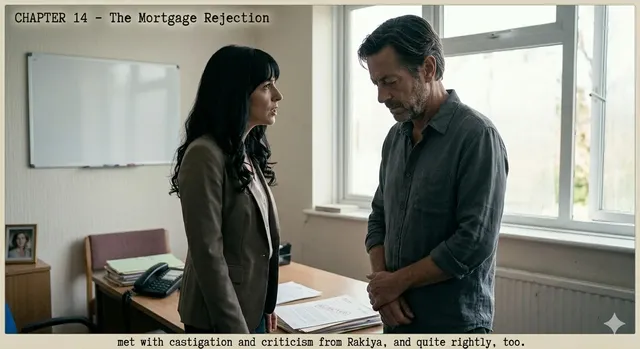
I played another mistake and acquiesced to Isla and met with castigation and criticism from Rita, and quite rightly, too.
On the Tuesday morning, I was at work, and Isla and Rachel were staying in a B&B in Shipley. The two women in Harrogate were no doubt sat by the phone.
‘Karl, it’s Rita.’
‘Oh, hello, Rita! Any news?’
‘Yes, but it’s not good. They’ve rejected my application on the grounds that I don’t have enough recent employment history, and that I have existing mortgages which could be compromised by adding another property.’
The conversation didn’t last much longer.
The turmoil and anxiety I felt was the most severe at that time when I put down the phone than at any other time then or since. How does one break such news? There is no easy way.
‘Isla. Rita didn’t get the mortgage.’
Isla told me afterwards how numb she was when hearing the dreaded news. She was driving back from Harrogate after dropping Rachel off at school, and she had to pull over the car, as she was shaking.
I told Andy that I would have to leave college for the day, and since it was very quiet, he agreed, and I set off to meet with Isla. When I met with her, she was in pieces, distraught, and almost helpless.
This was a situation which should never have happened. Isla shouldn’t have done the deeds, and I shouldn’t have allowed it to either.
Prefer to listen? Watch the video reading below.
Reader Comments
Leave a Comment
We would love to hear your thoughts on this chapter.

About Karl Swainston
Karl Swainston is a writer and storyteller whose work is forged from a life lived across the North of England and far beyond. Growing up on a Leeds council estate in the 1960s, Karl's journey was anything but linear. By the age of thirty, he had already lived a dozen lives: from the rigors of grammar school to a degree in Latin, a stint as a fishmonger, a period of discovery living in Marseille, and a return to the hustle of London. Whether working as a postman, a builder, or competing as a county-level chess player, he was, above all, an avid reader—constantly documenting the world around him. This restless spirit continued into his professional life. Karl later taught in Bradford, where he ran a specialist unit for 244 of the most excluded students from across the region—young people whom even the local Pupil Referral Units could not accommodate. Working alongside his old friend Malcolm, Karl spent his days navigating the volatility of Bradford's most aggressive and dysfunctional teenagers. Throughout his life, Karl has been an avid runner and has always shared his home with a rotating cast of beloved dogs and cats—companions who have been constant witnesses to his work. As a writer, Karl's range is as expansive as his history. He works across a wide breadth of genres, including fiction and short stories, autobiography and memoir, biography, non-fiction, and metaphysical writing, as well as providing sharp commentary, opinion, analysis, and essays. Whether writing about his years managing the Harrogate Arms or offering insights from his current adopted home in South East India, where he lives in a simple village with his dog, Bambi, Karl's voice reflects the full, untidy, and deeply human breadth of life. He continues to draw on the rich, decades-long tapestry of his experiences to tell stories that matter, proving that no matter where you live, the human story remains the same.
Author Page