Tales From A Harrogate Caravan
Chapter 50 — The Food Wage
← Karl Swainston / Tales From A Harrogate Caravan
There was a gallery of colourful characters who attended the Unit. Most had been excluded from school at one time or another for any degree of misdemeanour such as fighting, pratting around, stealing, drug dealing, bullying, etc. However, when they began at the Unit, it was harder for them to conduct this type of unruly behaviour as the students who attended with them were just as hard and wouldn’t have allowed it, as some students in the mainstream had felt compelled to do.
Most of the students generally fell immediately into the pecking order, and the one at the top was nearly always the ‘big man’, who didn’t take shit from anyone. Once you got these characters shouting the same song as you, you had most of the other students covered.
Anna and Kate now ran the Unit down Burnett Street. Gary had come back to the main site to deliver Motor Vehicle. Both women would regularly have thirty or more of the most difficult students, but they didn’t mind as they were tough women, who were more than a match for the ‘big men’ and ‘their boys.’
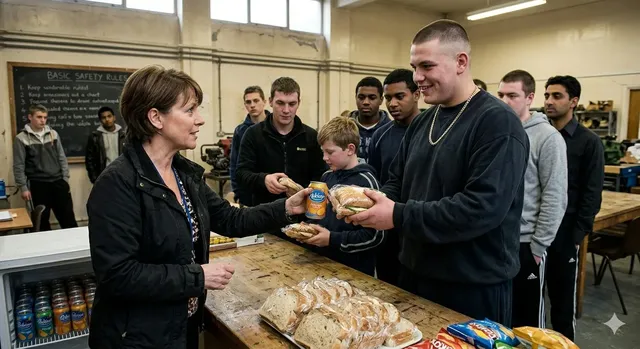
Anna would run a ‘food wage’ as she called it for the ‘leaders’ of this ungodly crew, and if these characters kept in line all the other students whilst out at the shop, they would be given sandwiches and pop as their ‘wage’. Prior to this strategy, we would have untold problems at break times, even with staff in observance. Students would find a way to cause some trouble without being seen, such as setting fire to Mr Khan’s bin; he was the local shopkeeper and an eternal complaint for us on account of the students.
Once the delegates had been chosen, and their duties explained, which were basically that if there was any trouble at the shops, they wouldn’t be getting fed. The trouble stopped on the first day, and any new upstart deeming it funny on account of his ignorance to start some trouble was quickly told ‘how things work round here,’ and he never stepped out of line again.
To the students, Anna and Rita, too, to an extent, were the paymasters of food and drink, and you kept on the right side of them. However, that didn’t mean the students didn’t see opportunities to deceive them and relieve the Unit of whatever could be had.
Prefer to listen? Watch the video reading below.
Reader Comments
Leave a Comment
We would love to hear your thoughts on this chapter.

About Karl Swainston
Karl Swainston is a writer and storyteller whose work is forged from a life lived across the North of England and far beyond. Growing up on a Leeds council estate in the 1960s, Karl's journey was anything but linear. By the age of thirty, he had already lived a dozen lives: from the rigors of grammar school to a degree in Latin, a stint as a fishmonger, a period of discovery living in Marseille, and a return to the hustle of London. Whether working as a postman, a builder, or competing as a county-level chess player, he was, above all, an avid reader—constantly documenting the world around him. This restless spirit continued into his professional life. Karl later taught in Bradford, where he ran a specialist unit for 244 of the most excluded students from across the region—young people whom even the local Pupil Referral Units could not accommodate. Working alongside his old friend Malcolm, Karl spent his days navigating the volatility of Bradford's most aggressive and dysfunctional teenagers. Throughout his life, Karl has been an avid runner and has always shared his home with a rotating cast of beloved dogs and cats—companions who have been constant witnesses to his work. As a writer, Karl's range is as expansive as his history. He works across a wide breadth of genres, including fiction and short stories, autobiography and memoir, biography, non-fiction, and metaphysical writing, as well as providing sharp commentary, opinion, analysis, and essays. Whether writing about his years managing the Harrogate Arms or offering insights from his current adopted home in South East India, where he lives in a simple village with his dog, Bambi, Karl's voice reflects the full, untidy, and deeply human breadth of life. He continues to draw on the rich, decades-long tapestry of his experiences to tell stories that matter, proving that no matter where you live, the human story remains the same.
Author Page