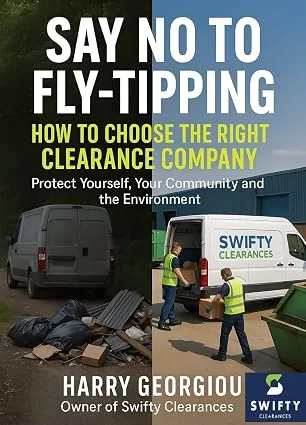
Say No to Fly-Tipping
Chapter 5 — The Impact on Farmers and Rural Communities
← Harry Georgiou / Say No to Fly-Tipping
Fly-tipping can have a particularly damaging effect on rural communities.
Dumped waste can obstruct farm tracks, gateways and access roads.
This can delay harvesting, animal movements, deliveries and emergency vehicles.
Nails, wire, broken glass, chemicals and other materials can present serious risks to animals.
Injuries can result in veterinary bills and, in the worst cases, the loss of livestock.
When waste is dumped on private land, the landowner can be left facing the cost of removal.
For a farmer already dealing with rising operating costs, an unexpected clearance bill can be devastating.
Repeated fly-tipping damages more than the physical landscape.
When residents repeatedly see rubbish dumped along lanes, in gateways or at beauty spots, they can begin to feel that their community has been abandoned.
Fly-tipping can also create complications for insurance claims and may result in additional costs or disputes, depending on the circumstances and policy.
Many farmers feel that they are being told: your land, your problem.
Reporting incidents remains important.
Repeated reports can help authorities identify hotspots and may support measures such as cameras, patrols and community initiatives.
Reader Comments
Leave a Comment
We would love to hear your thoughts on this chapter.
About Harry Georgiou
Harry Georgiou is the owner of Swifty Clearances, a waste clearance business. He writes about responsible waste disposal, fly-tipping prevention, and the practical steps households and businesses can take to avoid inadvertently funding illegal waste operations.
Author Page