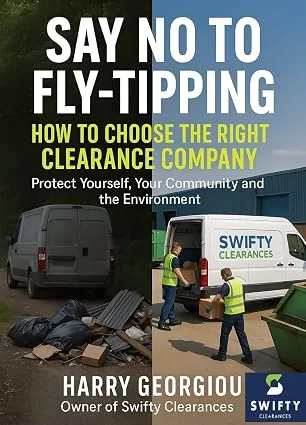
Say No to Fly-Tipping
Chapter 12 — Community and Environment
← Harry Georgiou / Say No to Fly-Tipping
Oils, solvents, chemicals and heavy metals can remain in the environment for long periods.
Contaminated soil can affect crops and wildlife, while run-off can enter streams and other waterways.
Illegal waste fires can release particulate matter and other pollutants.
Burning plastics and tyres can produce particularly harmful smoke.
Fly-tipping can damage habitats and injure or poison wildlife.
Animals can become trapped in discarded materials or consume dangerous substances.
Microplastics can also enter ecosystems and move through food chains.
Fly-tipped waste near paths, playgrounds and residential areas can expose people to sharp objects, contaminated materials, chemicals and vermin.
Asbestos presents an additional long-term health concern when asbestos-containing materials are damaged or disturbed.
There is a psychological effect as well.
Clean, cared-for spaces encourage people to take pride in their surroundings.
Repeated dumping can create the opposite effect: once an area becomes known as a dumping ground, more people may feel that adding another bag of rubbish will make little difference.
Breaking that cycle matters.
Community groups, environmental organisations and local volunteers often spend countless hours removing illegally dumped waste.
Their work is admirable.
But clean-up is a response, not a solution.
The real victory is prevention: customers refusing rogue operators, authorities targeting hotspots, and legitimate disposal services being accessible and affordable.
Reader Comments
Leave a Comment
We would love to hear your thoughts on this chapter.
About Harry Georgiou
Harry Georgiou is the owner of Swifty Clearances, a waste clearance business. He writes about responsible waste disposal, fly-tipping prevention, and the practical steps households and businesses can take to avoid inadvertently funding illegal waste operations.
Author Page