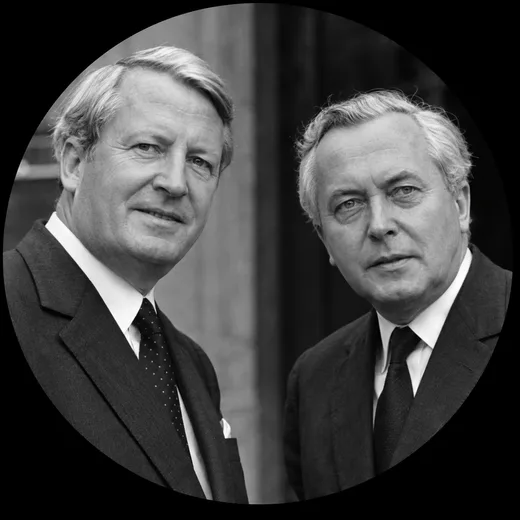
There was a time when British politics was populated by politicians who, whatever their faults, appeared to understand that governing a country was a serious business. Harold Wilson and Edward Heath were not saints, nor should either man be transformed into some mythical figure of political perfection. Their governments made mistakes, suffered humiliating defeats and wrestled with economic problems that they frequently failed to solve. But they inhabited a political world in which a Prime Minister was expected to understand economics, foreign affairs, Parliament, the civil service, industrial relations and the constitutional machinery of the state. They were politicians who had to govern through crises rather than merely comment upon them.
The contrast with the political culture of today is striking. Wilson and Heath faced a Britain undergoing a profound transformation: the decline of the old industrial economy, repeated sterling crises, inflation, militant industrial disputes, the collapse of Britain's imperial role, the changing relationship with Europe, the Vietnam War, the Cold War and the rapidly worsening situation in Northern Ireland. The challenges were not theoretical. They involved strikes, shortages, financial crises, military commitments and the very question of Britain's place in the world.
Harold Wilson entered Downing Street in 1964 with Labour holding a majority of just four seats. His government inherited an economy already under pressure, including a substantial balance-of-payments problem. Sterling came under repeated pressure, producing crises in 1964, 1965 and 1966. Wilson's government tried to avoid devaluing the pound, partly because of the political symbolism attached to sterling and partly because ministers feared the consequences for prices and living standards. Eventually the pressure became overwhelming.
On 18 November 1967, the pound was devalued from $2.80 to $2.40 — a reduction of approximately 14.3 per cent. The decision was accompanied by higher interest rates, spending cuts and other measures intended to restore Britain's financial position.
This was not a minor embarrassment. For a government that had presented itself as economically competent and modernising, it was a profound political humiliation. Wilson's subsequent television statement attempting to explain the consequences of devaluation became one of the defining political moments of the period. The fact that a Prime Minister had to go before the nation to explain why its currency had just been substantially devalued gives some indication of the seriousness of the political environment.
And the crisis did not exist in isolation. The 1967 Six-Day War contributed to the closure of the Suez Canal and a rise in oil and commodity prices, while Britain's balance-of-payments position remained vulnerable. By 1968 the government was confronting another major international monetary crisis and had to introduce painful spending reductions. The National Archives describes the combination of economic and international pressures as presenting the government with exceptionally difficult choices.
Yet Wilson's government was simultaneously attempting something much more ambitious than merely surviving economic crises. Wilson talked about the "white heat" of technological change and sought to modernise Britain. His government established the Open University and introduced major social and legal reforms, including the 1965 suspension of the death penalty and the 1967 decriminalisation of certain homosexual offences. It also pursued reforms concerning education, housing, gender equality and discrimination.
That combination is important. Wilson could be criticised for economic failures, but he was at least attempting to articulate a coherent conception of what Britain should become. He was not merely attempting to manufacture the next day's favourable newspaper story.
His government also had to contend with industrial relations. The relationship between Labour and the trade-union movement was becoming increasingly strained. In 1969, the government's attempt to reform industrial relations through the proposals contained in In Place of Strife collapsed in the face of opposition, including from within the Labour movement itself. The National Archives describes the episode as a major failure of Wilson's attempt to modernise industrial relations.
Then there was Britain's diminishing international position. Wilson inherited a country whose military commitments were increasingly difficult to sustain economically. His government ultimately announced the gradual withdrawal from East of Suez in 1968. This was not simply a matter of changing military deployments; it represented the painful recognition that Britain could no longer sustain the global role it had exercised for generations. Wilson nevertheless attempted to maintain the Anglo-American relationship while refusing to send British combat troops to Vietnam.
And then came Edward Heath.
Heath became Prime Minister in 1970 after defeating Wilson at the general election. He inherited many of the problems Wilson had struggled with, but the industrial and economic crisis of the early 1970s was about to become even more severe.
Heath's government initially pursued a substantial change of direction. It sought to reduce government intervention, restrain trade-union power and move towards a more market-oriented economy. The Industrial Relations Act 1971 attempted to restrict aspects of trade-union power. But the political consequences were fierce. The legislation became deeply controversial, and Heath's government found itself confronting organised industrial resistance on a scale that would eventually overwhelm its strategy.
Unemployment rose sharply. In January 1972, the official unemployment figure passed one million — a politically explosive development in a country where successive governments had treated full employment as a central post-war objective. The Heath government had entered office promising to reverse Britain's economic decline, but within a relatively short period it was itself struggling with unemployment, inflation and industrial unrest.
Then came the miners.
The miners' strike of 1972 was one of the defining industrial confrontations of the era. The government and the National Union of Mineworkers entered a confrontation over pay and conditions, and the dispute demonstrated the extraordinary political power still possessed by organised labour.
The crisis returned with even greater force in 1973–74. Inflation was accelerating, partly in the context of the international oil crisis, while industrial disputes intensified. The miners struck again. Heath's government responded by imposing restrictions on electricity consumption, leading to the extraordinary decision to introduce a three-day working week. For a modern reader, it can sound almost surreal: electricity supplies were restricted so severely that much of industry was limited to three consecutive days of electricity use each week.
Imagine the political pressure involved in that decision. Factories were affected. Businesses were disrupted. Television schedules were restricted. The public was being asked to conserve electricity. The government was fighting the miners while attempting to control inflation and maintain authority over the trade unions.
Heath then called the February 1974 general election around the question: "Who governs Britain?"
The result was devastating. The Conservatives won more votes than Labour but failed to secure a majority of seats. Wilson returned to Downing Street and formed a minority government before calling another election later that year.
This is where the modern political comparison becomes particularly revealing.
Neither Heath nor Wilson could simply escape difficult problems through a communications strategy. When the pound was under attack, they had to defend sterling. When Britain's balance of payments collapsed, they had to find money. When electricity supplies became inadequate, Heath had to ration them. When miners went on strike, the government had to negotiate or confront them. When Britain could no longer afford its overseas military commitments, Wilson had to reduce them. When Northern Ireland descended into violence, both governments had to deal with a rapidly deteriorating security situation.
There were no easy answers. There were no immaculate solutions waiting to be announced at a press conference. Every decision carried consequences.
This is what makes the modern obsession with political presentation so depressing. Modern politicians operate in an age of unprecedented communications technology, yet the political conversation can seem remarkably shallow. A complicated economic problem is reduced to a slogan. A structural problem in public services becomes a press release. A long-term question about Britain's place in the world becomes an argument about which politician delivered the better soundbite.
The old politicians were hardly immune to spin. Wilson was a superb political communicator. Heath was certainly capable of political manoeuvring. Both understood newspapers, television and the importance of presentation. But there remained a difference between using political communication and making communication the substance of politics.
Wilson had to defend an actual currency. Heath had to keep an actual country supplied with electricity.
That is a rather different political environment from the modern obsession with social-media cycles, carefully managed photo opportunities and endless rows over the wording of press releases.
And this is not an argument that Heath and Wilson were secretly brilliant. They weren't. Wilson's economic record remains contested by historians. His government promised modernisation but struggled to deliver sustained economic stability, and unemployment reached one million during his second period in office. Academic historians have also pointed to the serious shortcomings of his government's economic strategy, even while noting achievements in science, education and industrial investment.
Heath's record is equally open to criticism. His attempt to transform Britain's economic direction ended in a spectacular U-turn. His industrial relations policy failed to defeat the unions, while inflation and unemployment became increasingly serious problems. His government eventually found itself imposing the extraordinary three-day week while facing an industrial confrontation that contributed directly to its defeat.
But that is precisely the point.
They were politicians who could fail at governing because governing was what they were attempting to do.
The modern political class often gives the impression of having reversed the priorities. The objective is frequently to survive the next news cycle, dominate the next interview, avoid the next scandal and produce the next announcement. Politics becomes an exercise in permanent campaigning. Government becomes something that happens somewhere behind the scenes while politicians concentrate on explaining why everything is somebody else's fault.
The difference is not simply one of intelligence or personal character. It is institutional and cultural. The political environment has changed. Television transformed politics in the twentieth century; social media has transformed it again. Politicians now operate in an environment where outrage travels instantly, where every statement can be clipped into seconds, and where maintaining attention can become almost as important as developing policy.
The result is a peculiar form of political inflation: more statements, more announcements, more slogans, more promises and more communication, while the public becomes increasingly sceptical about whether any of it actually changes anything.
Heath and Wilson operated in a Britain that was itself in decline relative to its competitors, struggling with the consequences of deindustrialisation, imperial retreat and repeated economic crises. They faced a country wrestling with the loss of its old certainties. Their governments did not solve those problems. In some cases, they arguably made matters worse. But they confronted the problems directly.
That distinction matters.
The traditional politician was not necessarily better because he was older, posher, tougher or more eloquent. He was different because political office still carried an expectation of responsibility. If the economy collapsed, the government had to answer for it. If the lights went out, the government had to explain it. If the unions went on strike, the government had to negotiate with them. If Britain had to retreat from an overseas commitment, the Prime Minister had to stand in Parliament and defend the decision.
There was nowhere to hide.
That may be the quality missing most conspicuously from contemporary politics: not perfection, but seriousness.
Heath and Wilson could be wrong. They could be evasive. They could be politically calculating. They could make disastrous decisions. But they were operating in an environment in which the machinery of government, Parliament, industrial relations, international finance and Britain's place in the world demanded sustained attention.
The modern political class inherited a country with different problems and far more sophisticated technology, but too often seems to have inherited none of the patience required to solve them. The problems have become more complicated while the political language used to describe them has become thinner.
And so the spectacle continues: another announcement, another slogan, another carefully staged photograph, another promise that the next initiative will finally fix the problem that the previous initiative was supposed to fix.
The politicians of the Heath and Wilson generation did not possess some magical quality unavailable to their successors. They made enormous mistakes. Their governments suffered humiliating failures. Their economic records provide plenty of ammunition for their critics.
But when the pound was collapsing, when miners were striking, when electricity was being rationed, when Britain's overseas commitments had become financially unsustainable and when Northern Ireland was descending into violence, British politics was dealing with consequences rather than merely managing perceptions.
That is the uncomfortable comparison.
Perhaps the real demise of the traditional politician is not that Britain stopped producing people like Heath and Wilson. Perhaps it is that politics stopped demanding politicians who were prepared to spend years wrestling with difficult problems for which there was no convenient slogan, no viral clip and no easy victory.
The old politicians could fail magnificently.
The modern ones too often seem determined merely to look successful.
Reader Comments
Leave a Comment or a Book Review
We would love to hear your thoughts on this chapter, or even a complete book review.