Art Publications — Example Gallery
A look at how a published piece appears on the site.
These six works are well-known public domain pieces used purely as layout examples — not real author submissions. They show how your own artwork and story would appear once published: image, title, and the story behind it, side by side.
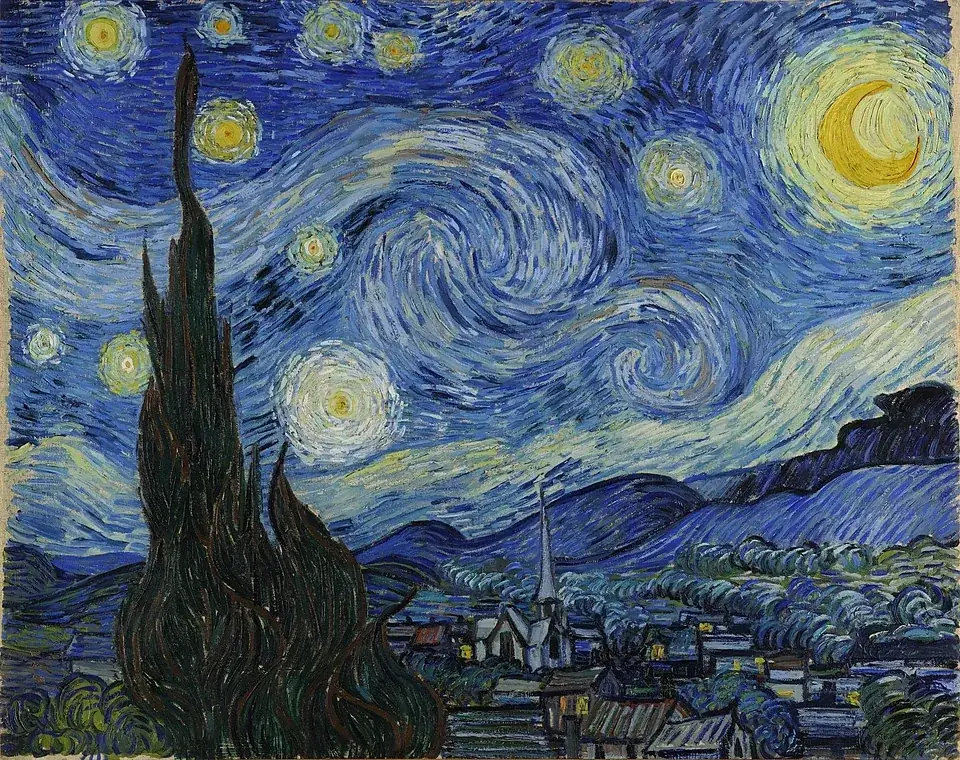
The Starry Night
Vincent van Gogh, 1889
Painted from a barred asylum window in Saint-Rémy, the sky churns while the village below sleeps undisturbed. Van Gogh once wrote to his brother Theo, “Looking at the stars always makes me dream.” That restlessness is everywhere here — in the spiraling air, the flame-shaped cypress reaching skyward like it's trying to join the stars.
He considered the painting something of a failure, a reach for abstraction that didn't quite land. History disagreed.
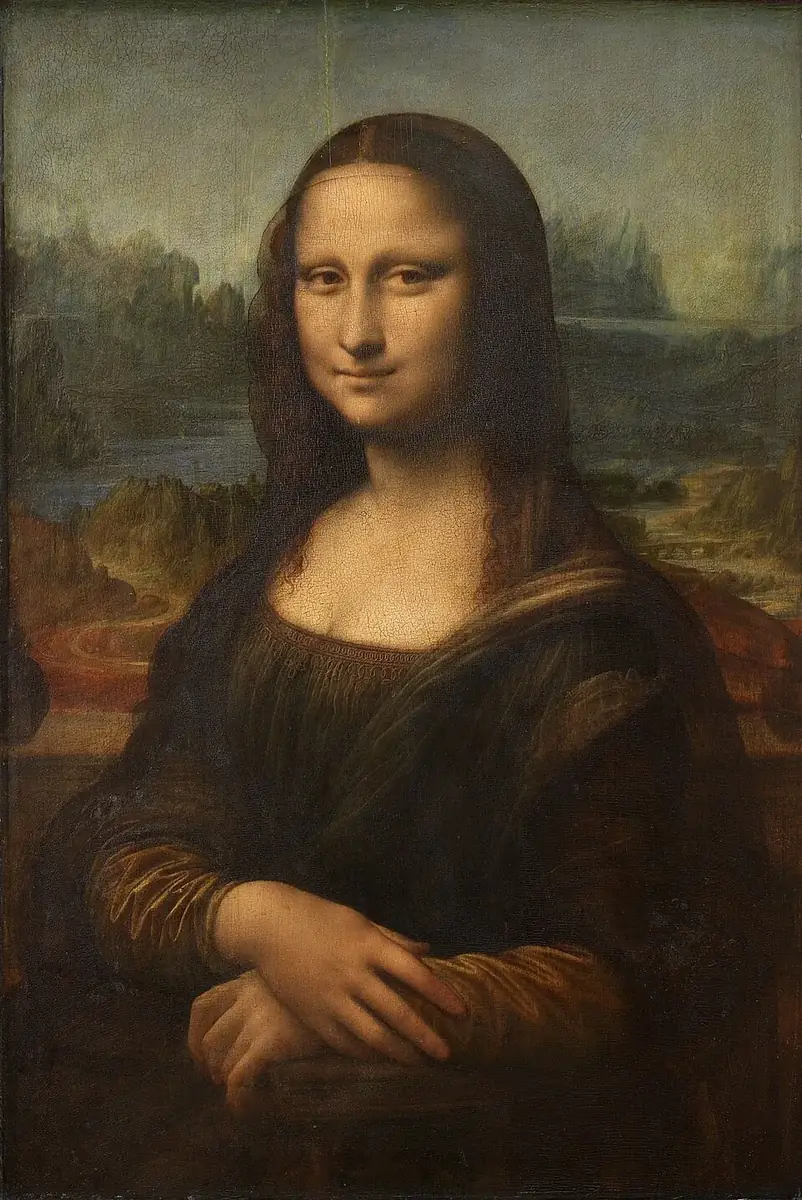
Mona Lisa
Leonardo da Vinci, c. 1503–1519
There is a stillness to her that resists explanation. The corners of her mouth suggest a smile that never quite arrives, held in that soft blur Leonardo called sfumato — tone dissolving into tone so gradually the eye can never find the edge.
Behind her, a landscape recedes into blue haze. Leonardo is said to have kept adjusting this portrait for years, as if certain a face could hold more truth the longer one looked.
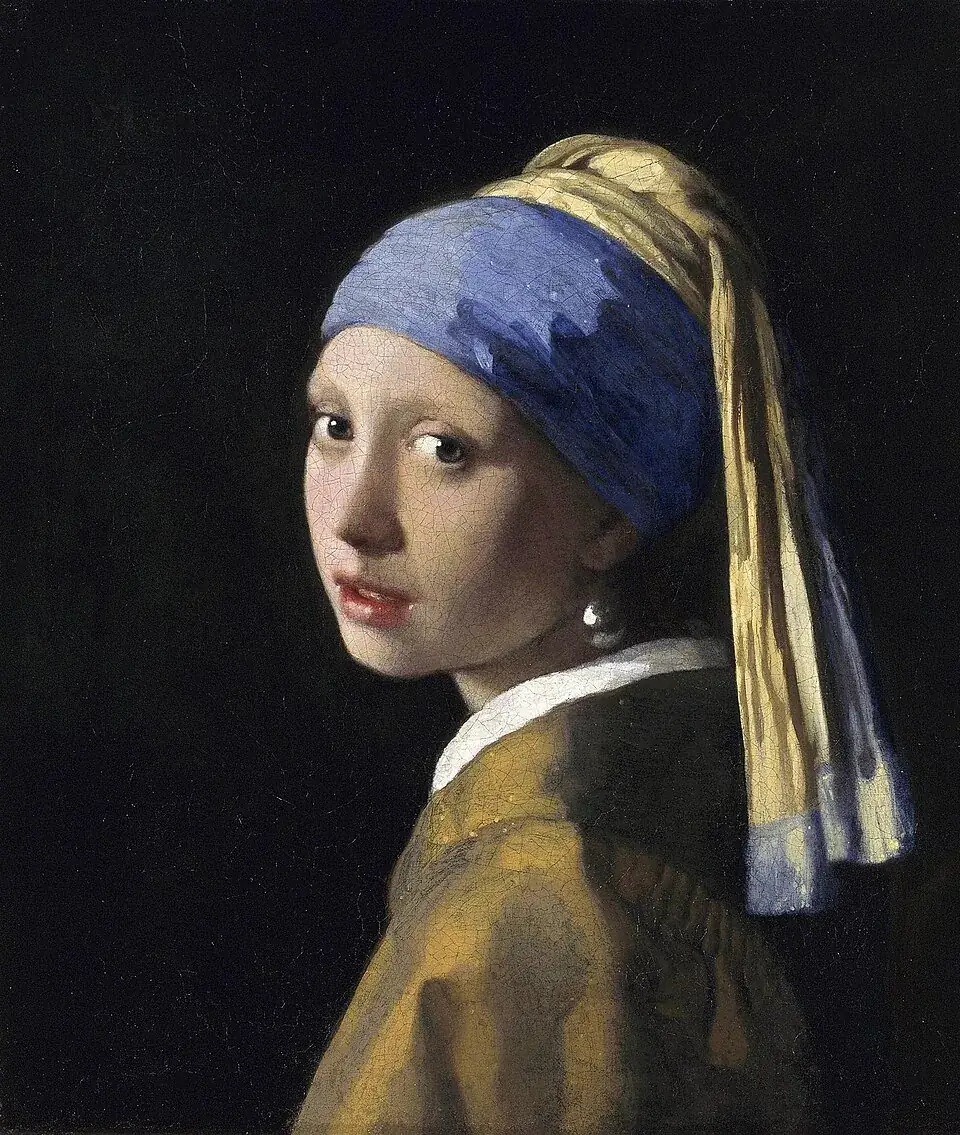
Girl with a Pearl Earring
Johannes Vermeer, c. 1665
She turns as if someone has just spoken her name. That's the whole of it — a single gesture, caught mid-motion, holding the entire room.
Vermeer gives her no story, no setting, no clue to who she was. Just the dark behind her, and that pearl catching light with two brushstrokes that do more work than an hour of detail could.
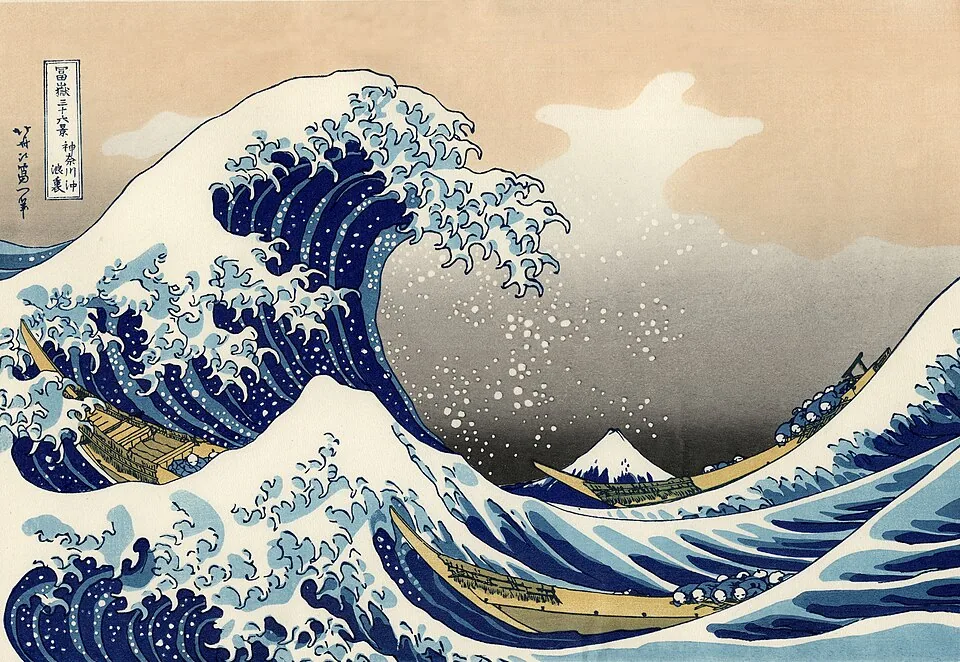
The Great Wave off Kanagawa
Katsushika Hokusai, c. 1831
Three fishing boats vanish beneath a wave shaped like a claw, Mount Fuji small and calm in the distance — dwarfed, almost an afterthought. Hokusai made this print in his seventies, still convinced his best work lay ahead of him.
“If heaven had granted me five more years,” he wrote near the end of his life, “I could have become a real painter.” He'd already made the most reproduced image in art history.
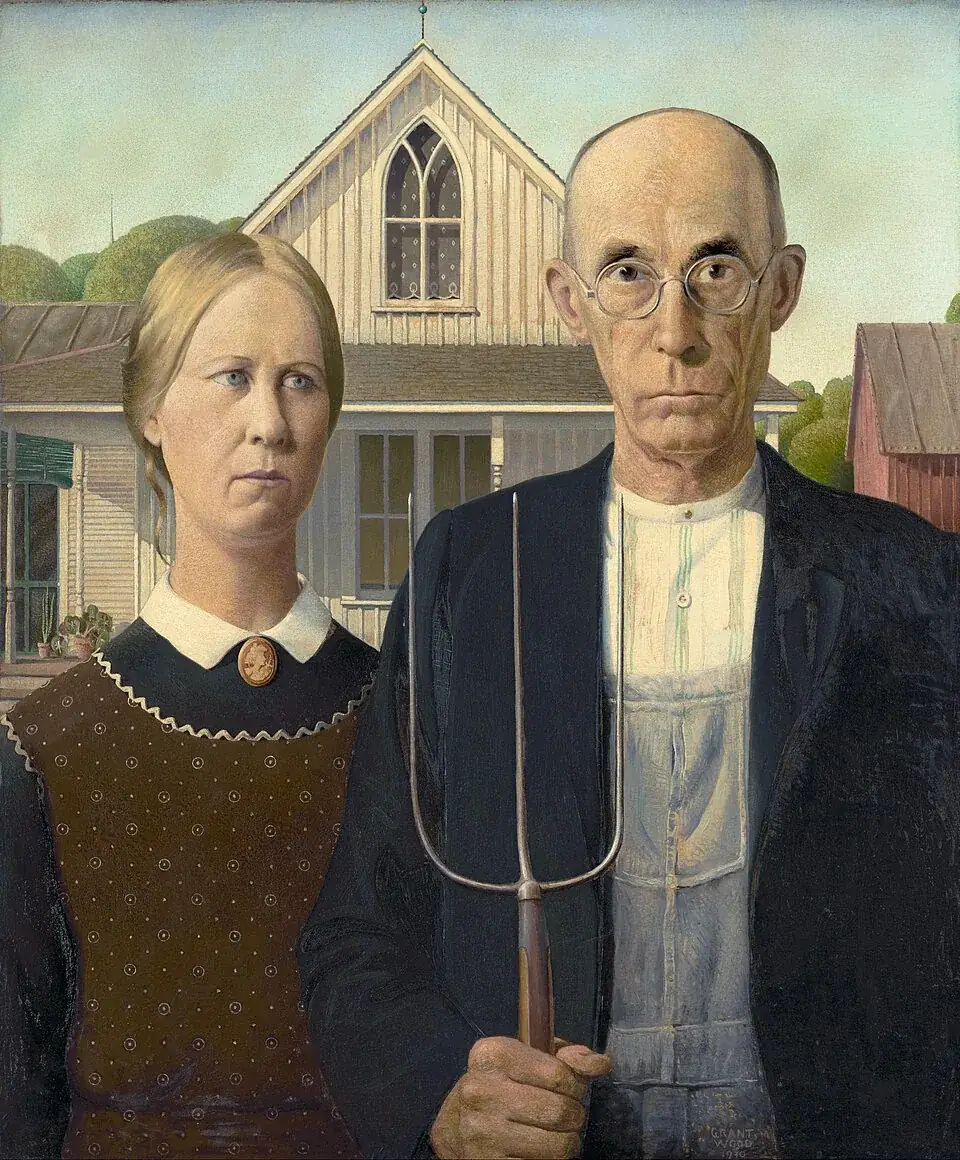
American Gothic
Grant Wood, 1930
A farmer and his daughter stand rigid before a house with a church-shaped window, pitchfork held like a weapon or a scepter. Wood insisted this was affection, not mockery — a tribute to the people he'd grown up around.
“There is satire in it,” he admitted, “but only as there is satire in any realistic statement.” Audiences have argued about which one it is for nearly a century.
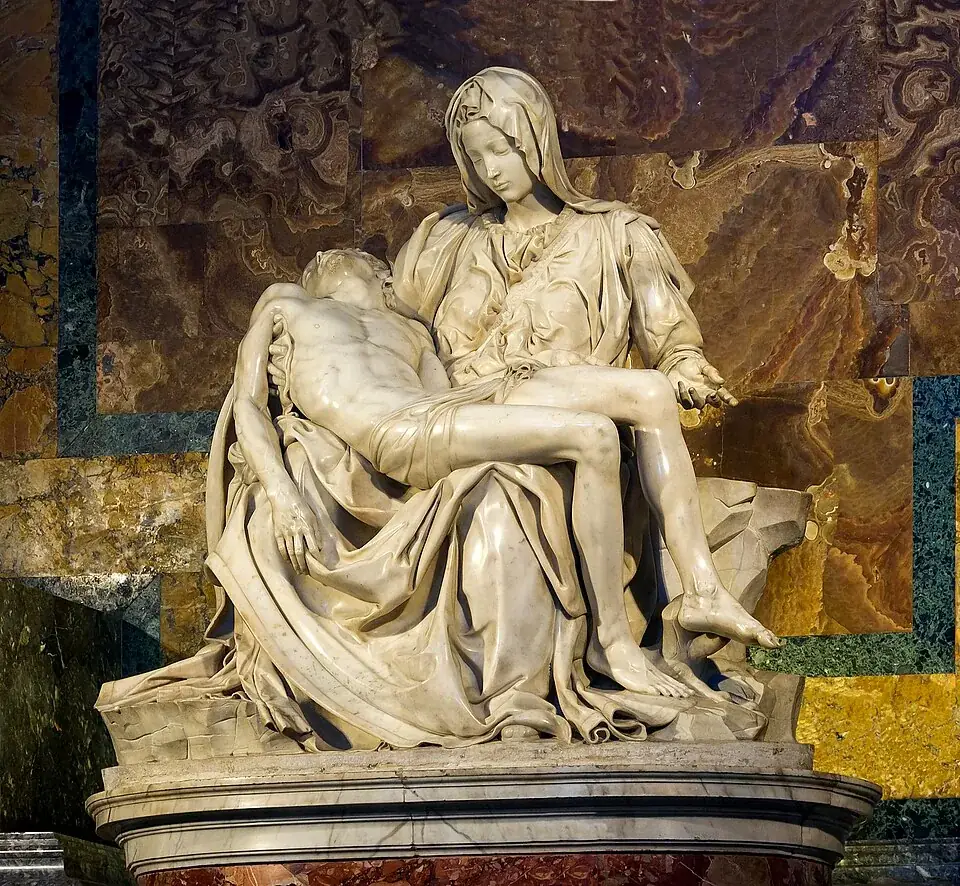
Pietà
Michelangelo, 1498–1499
He was twenty-four when he finished it. Mary is impossibly serene for a mother holding her dead son — young, not aged by grief, her drapery falling in folds so convincing that visitors have reached out to touch cloth that isn't there.
It's the only work Michelangelo ever signed, cut across the sash on Mary's chest. Legend says he carved it late one night, after overhearing someone credit the sculpture to another man.