We Are All Vampires
XIII — Lack of Vampiric Profundity
← Karl Swainston / We Are All Vampires
One tell-tale sign that you have a vampire on your hands is the vampire cannot delve into the profundity of life.
To ponder the profundity of life, you need to possess a panoramic view of life. The vampire cannot empathise, sympathise, or even feel how another is feeling, so they avoid any more profound conversation concerning life.
There must be a consideration of all the points of life: the advantages and disadvantages of living, being happy and being sad, for us to understand the depth of life.
The vampire would have to move out of its comfort zone and think and feel how others do to entertain the deeper aspects of life.
The vampire possesses only a single-minded focus on their own ambitions, aims, and desires. They can only follow their own train of thought.
People often wonder how such people have climbed high on the social ladder of achievement and yet appear frivolous and lacking in depth. This is this particular kind of vampire creature. They are successful but lack the depth of character which marks a person out to be genuinely remarkable.
The CEO recognised this inability to determine this at the interview stage of the four vampires.
As hitherto stated, to be profound, you must possess sympathy and empathy and see how others see events and the world. The vampire is incapable of doing this. They cannot hide this fact.
At the interview stage, this should have been pressed hard through scenarios to test the candidate. The vampire will fail the test miserably on the grounds of lacking sympathy and empathy.
Vampires completely lack empathy or sympathy for others, particularly their victims.
This bestows upon the vampire the right to tread down any opposition to their plans, ambitions, dreams, and desires.
They are utterly devoid of all empathy and concern for others. They will feed on whatever force and positive energy are available to them, and they won’t give a damn about the consequences of the hurt they bring upon hapless individuals.
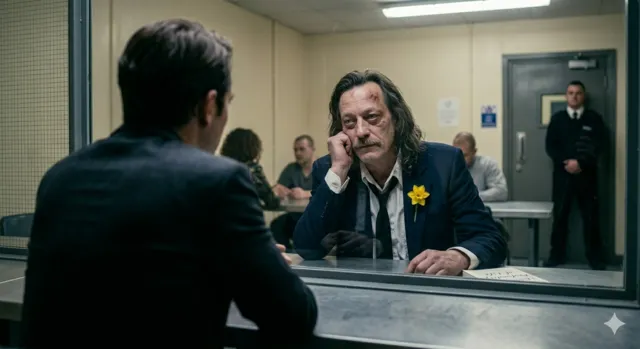
Penal institutions across the land are laden with these vicious forms of vampiric creatures with inflated egos and a ‘couldn’t give a damn’ attitude.
Vampires see weakness as merely a stepping stone to achieving higher ambitions. What they see in others, they take without censorship.
But it is not only in penal centres and institutions these dreadful creatures are cast.
No. In any organisation, even the biggest, they swarm around in abundance, using their inflated egos as a pulse of energy to spur them on.
In business and commerce, they ply their trade not to further the companies’ ambitions but their own.
This was the case in the CEO’s business.
The vampire does not possess that sense of self-introspection and self-awareness we sometimes feel.
We perform an act and ponder upon the consequences of the act and the righteousness of that act. The vampire is incapable of this gift. They are utterly bereft of the ability to delve into the righteousness of their acts.
For the vampire, all their acts, without exception, are dutiful and just to the vampire’s rightful cause.
Self-aware vampires do not exist. Because vampires do not possess the gift of introspection, they are constantly in a field of contention. Their acts invariably tread and infringe upon the lives of others.
Most of the time, the vampire’s victims suffer in silence, but often, there are strong individuals who will not suffer the vampire and their deeds.
These characters are the worst characters for the vampire. There is nothing worse for the vampire. They will have to bear the indignity and downright wrong - for the vampire always believes they are right.
During these mortified times, the vampire can be at their most vicious. They will feel a significant surge of revenge for the perpetrators of their downfall. This rage - to bring revenge - often leads the vampire to commit atrocious acts of harm, including murder.
Within the walls of many prisons up and down the country, there are vampires doing life who feel they killed justifiably and have no remorse for their victims.
Looking at our actions through the physiognomy of our beings will tell us something about ourselves.
Let us say we do something bad, not wrong enough to send us to prison, but bad enough that the act unnerves us, say taking something from work. Everyone is guilty of this demeanour at some point.
As we perpetrate the act, we become hot; our flesh begins to sweat. This is both the engine of conscience and the acknowledgement that we are sinning coming to call on us.
We are also mortified should we become caught. The mortification lies in that what we are doing, we know, is wrong.
The vampire does not think this way. The ‘wrong’ never even enters the vampire’s head. The vampire possesses a singular-minded focus of self-satisfaction to drive out all other thoughts.
This can make vampires powerful around weak and unsuspecting individuals.
Prefer to listen? Watch the video reading below.
Reader Comments
Leave a Comment
We would love to hear your thoughts on this chapter.

About Karl Swainston
Karl Swainston is a writer and storyteller whose work is forged from a life lived across the North of England and far beyond. Growing up on a Leeds council estate in the 1960s, Karl's journey was anything but linear. By the age of thirty, he had already lived a dozen lives: from the rigors of grammar school to a degree in Latin, a stint as a fishmonger, a period of discovery living in Marseille, and a return to the hustle of London. Whether working as a postman, a builder, or competing as a county-level chess player, he was, above all, an avid reader—constantly documenting the world around him. This restless spirit continued into his professional life. Karl later taught in Bradford, where he ran a specialist unit for 244 of the most excluded students from across the region—young people whom even the local Pupil Referral Units could not accommodate. Working alongside his old friend Malcolm, Karl spent his days navigating the volatility of Bradford's most aggressive and dysfunctional teenagers. Throughout his life, Karl has been an avid runner and has always shared his home with a rotating cast of beloved dogs and cats—companions who have been constant witnesses to his work. As a writer, Karl's range is as expansive as his history. He works across a wide breadth of genres, including fiction and short stories, autobiography and memoir, biography, non-fiction, and metaphysical writing, as well as providing sharp commentary, opinion, analysis, and essays. Whether writing about his years managing the Harrogate Arms or offering insights from his current adopted home in South East India, where he lives in a simple village with his dog, Bambi, Karl's voice reflects the full, untidy, and deeply human breadth of life. He continues to draw on the rich, decades-long tapestry of his experiences to tell stories that matter, proving that no matter where you live, the human story remains the same.
Author Page