We Are All Vampires
XI — The Vampiric Parent
← Karl Swainston / We Are All Vampires
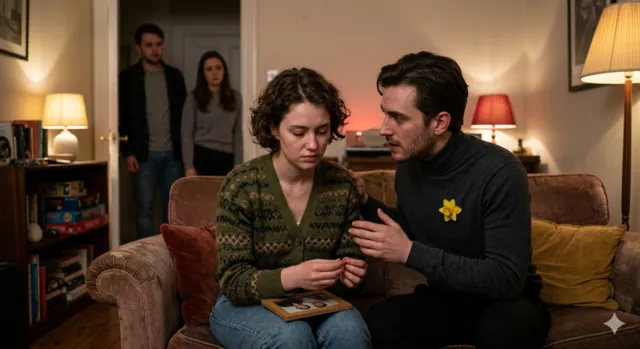
Marriage and children for the vampire are a collision course for disaster.
It is the vampire’s fate. The vampire is never a successful parent or partner. They are too selfish to consider the needs of others.
Others are simply prey the vampire can feed off to gain positive energy.
Caring for a spouse or a child goes against every grain of nature within the vampire.
Both spouse and children will only be a hindrance to the vampire. Marriages inevitably break down, and the vampire will move on to another victim, leaving the old victim behind to care for the children.
The vampire will often cease having any connection whatsoever with its children.
They will disown the children completely.
This is not a meditated act by the vampire but simply a necessity. They only need their whole, undivided and focused attention concentrated upon themselves, their dreams and their aspirations.
For the victims - the spouse and the children - it is only when the disaster has reached its final phase that they realise and recognise, or as they say in Greek tragedy, see the anagnorisis - the recognition of their actual state and self and the true nature of others, the true nature of the vampire they have been living with all this time.
They will have that proverbial ‘awakening moment.’ The victim will finally see the vampiric monster they have been living with.
Separating from the vampire is a blessing if the spouse and children are strong. The immediate days, weeks, and months will be challenging, but it will be worth it, losing the misery and gaining freedom and happiness from the vampire’s control.
Unfortunately, most of the time, spouses don’t make that severance. They persevere, believing it will all ‘be okay in the end.’ The vampire will then possess total control.
Vampires never change.
Prefer to listen? Watch the video reading below.
Reader Comments
Leave a Comment
We would love to hear your thoughts on this chapter.
About Karl Swainston
Karl Swainston is a writer and storyteller whose work is forged from a life lived across the North of England and far beyond. Growing up on a Leeds council estate in the 1960s, Karl's journey was anything but linear. By the age of thirty, he had already lived a dozen lives: from the rigors of grammar school to a degree in Latin, a stint as a fishmonger, a period of discovery living in Marseille, and a return to the hustle of London. Whether working as a postman, a builder, or competing as a county-level chess player, he was, above all, an avid reader—constantly documenting the world around him. This restless spirit continued into his professional life. Karl later taught in Bradford, where he ran a specialist unit for 244 of the most excluded students from across the region—young people whom even the local Pupil Referral Units could not accommodate. Working alongside his old friend Malcolm, Karl spent his days navigating the volatility of Bradford's most aggressive and dysfunctional teenagers. Throughout his life, Karl has been an avid runner and has always shared his home with a rotating cast of beloved dogs and cats—companions who have been constant witnesses to his work. As a writer, Karl's range is as expansive as his history. He works across a wide breadth of genres, including fiction and short stories, autobiography and memoir, biography, non-fiction, and metaphysical writing, as well as providing sharp commentary, opinion, analysis, and essays. Whether writing about his years managing the Harrogate Arms or offering insights from his current adopted home in South East India, where he lives in a simple village with his dog, Bambi, Karl's voice reflects the full, untidy, and deeply human breadth of life. He continues to draw on the rich, decades-long tapestry of his experiences to tell stories that matter, proving that no matter where you live, the human story remains the same.
Author Page