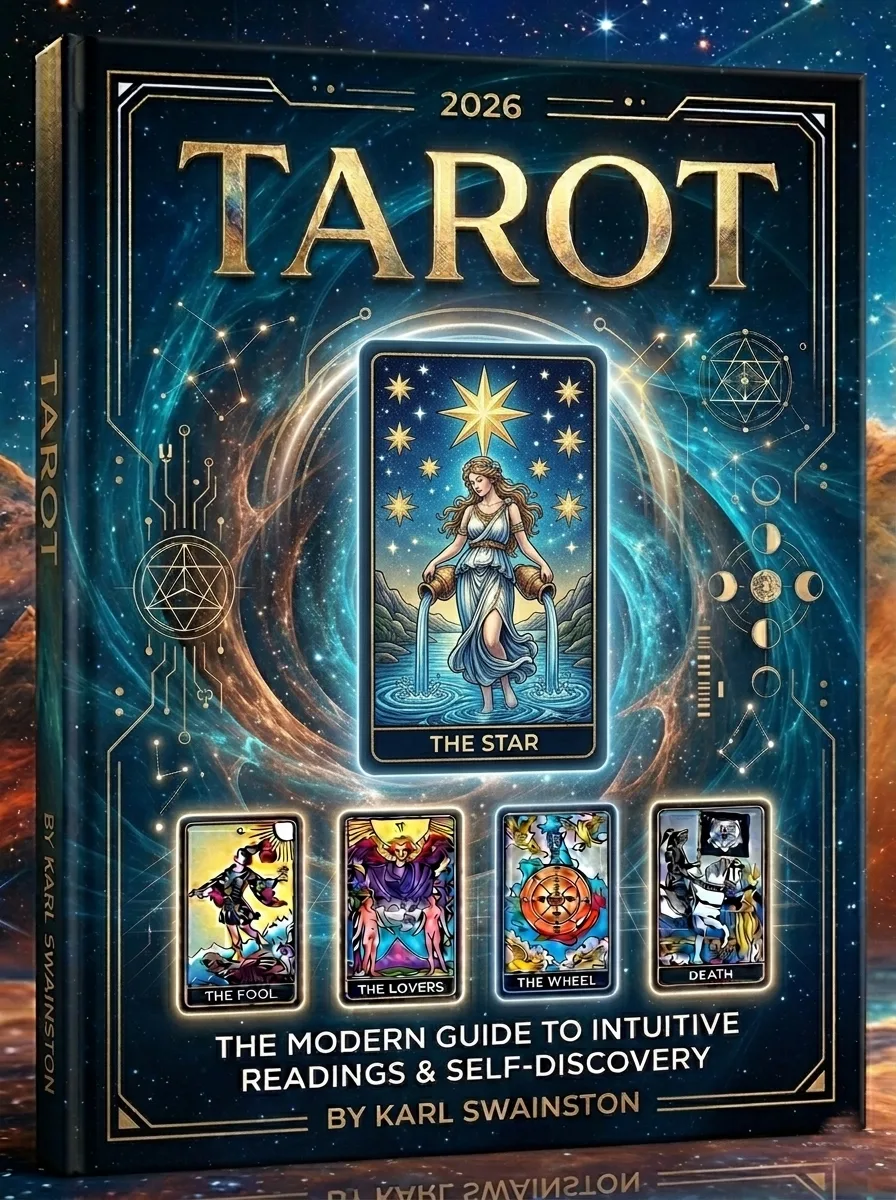
Tarot
Introduction
Throughout the centuries, Tarot cards have been used to make sense of the past, the present, and the future. While the true origins of the Tarot remain uncertain, it is widely believed that they originated in Egypt before being brought to Italy, where they began appearing in the mid-15th century. Among these, the Visconti-Sforza cards, painted for the Duchy of Milan, stand as the oldest surviving Tarot cards in existence.
Centuries later, these cards evolved to take on the form of divination and tarotology—the dedicated art of formulating a question, drawing cards, and gaining profound insight into a person’s life path. As followers of the occult grew increasingly interested in the deck, they began to perceive its rich symbols as a powerful means to foretell what the future could hold for those for whom the cards are being read.
Crucially, this guide is designed with a deliberate focus on the constructive and uplifting energies of the deck. In keeping with a proactive, positive mindset, only the constructive and empowering aspects of the Tarot cards will be referred to throughout this book. By channeling your focus exclusively into these higher vibrations, you can fully contemplate and act upon the guidance of the cards without the paralyzing limitations or anxieties of negativity. This approach allows the deck to serve not as a warning of doom, but as a roadmap for personal empowerment and growth.
To understand the deck, one must first understand its structure. Tarot cards are divided into two main parts: the Major Arcana and the Minor Arcana. The Major Arcana consists of 22 cards in total, representing significant, overarching changes in a person’s life. These cards serve to present the larger, archetypal picture to those seeking deeper revelation. Conversely, the Minor Arcana represents the smaller, day-to-day shifts in a person’s experience.
The Minor Arcana is divided into four distinct suits, each comprising 14 cards. These sets are known as the Suit of Wands, the Suit of Cups, the Suit of Pentacles, and the Suit of Swords. Each individual suit is numbered 1 through 10 and includes four court cards: the Page, the Knight, the Queen, and the King.
Every suit is deeply tied to a specific elemental force:
- The Suit of Swords represents the cards of air. They are powerful and authoritative in their aspect, carrying strength at their core. These cards can signify changing fortunes, but also ultimate freedom.
- The Suit of Wands is associated with the element of fire. There is immense passion and movement in these cards, reflecting drive and ambition alongside intuition and creativity.
- The Suit of Pentacles is associated with wealth, security, and stability, with earth serving as its anchoring element.
- The Suit of Cups is intimately connected with water, engaging fluid movement, deep emotions, and human feelings.
Reader Comments
Leave a Comment
We would love to hear your thoughts on this chapter.

About Karl Swainston
Karl Swainston is a writer and storyteller whose work is forged from a life lived across the North of England and far beyond. Growing up on a Leeds council estate in the 1960s, Karl's journey was anything but linear. By the age of thirty, he had already lived a dozen lives: from the rigors of grammar school to a degree in Latin, a stint as a fishmonger, a period of discovery living in Marseille, and a return to the hustle of London. Whether working as a postman, a builder, or competing as a county-level chess player, he was, above all, an avid reader—constantly documenting the world around him. This restless spirit continued into his professional life. Karl later taught in Bradford, where he ran a specialist unit for 244 of the most excluded students from across the region—young people whom even the local Pupil Referral Units could not accommodate. Working alongside his old friend Malcolm, Karl spent his days navigating the volatility of Bradford's most aggressive and dysfunctional teenagers. Throughout his life, Karl has been an avid runner and has always shared his home with a rotating cast of beloved dogs and cats—companions who have been constant witnesses to his work. As a writer, Karl's range is as expansive as his history. He works across a wide breadth of genres, including fiction and short stories, autobiography and memoir, biography, non-fiction, and metaphysical writing, as well as providing sharp commentary, opinion, analysis, and essays. Whether writing about his years managing the Harrogate Arms or offering insights from his current adopted home in South East India, where he lives in a simple village with his dog, Bambi, Karl's voice reflects the full, untidy, and deeply human breadth of life. He continues to draw on the rich, decades-long tapestry of his experiences to tell stories that matter, proving that no matter where you live, the human story remains the same.
Author Page