Tales From A Harrogate Caravan
Chapter 15 — Selling Another Property
← Karl Swainston / Tales From A Harrogate Caravan
A month after the catastrophe passed, the business became markedly slow, and when I was cutting the grass in the grounds, I noticed Isla in the car. She’d been in the car for some time, and she wasn’t on the phone either.
‘What’s the matter?’ I asked upon opening the car door.
Isla was crying and merely looked up before continuing the tears.
‘I need to know what the matter is, Isla, as I can’t do anything if I don’t know?’
Isla finally admitted the books weren’t balancing, and that there was more going out than coming in each week. In fact that had been the case for a month or two, and things had fallen into debt.
That was when I sold a second property to keep the Harrogate Arms open. In hindsight, I shouldn’t have done, but ever the wise in hindsight. At that time, the Arms was not only a business – just about – but a home to three dogs, a cat, two children, Isla and me, and the two women living rent free in the caravan. They were the first to go. Since Isla had brought them here, they put unnecessary stress upon finances, and their contribution to the Arms was, to say the least, woeful. They had both given up trying anyway, and I think if they could have found accommodation earlier, they would have already abandoned the place.
‘I’ll sell the house, Isla, but you will have to finish those two, and Jack, Rachel, Kyle and I will all have to take more of a working role to reduce wages.’ There was no other choice. The present situation wasn’t sustainable, and with the onset of winter, things would become even more difficult.
Matters became a bit easier on the wages when one of the chefs went to live in America, and a cleaner went off with some roofer to Gloucestershire or somewhere, and that only left the two in the caravan.
Question: How do you finish the employment of two employees whom you can no longer afford to pay? You could simply give them a couple of weeks’ notice, put an extra week’s money in their pay packet and bid them all the best? Or you could enter a contract with Peninsula Employment Services for £250 a month and be tied in for ten years to give advice on the one remaining employee you had left there? I only found out a year later which option Isla chose when I received an Enforcement Notice for £15,000 from Peninsula Employment Services.
At the time I should have known, but I didn’t.
Winter ground on, and the only thing which kept us alive was the delicious carvery we all presented on a Sunday. Christmas was good, too, but with the advent of January, things became dire, and the strain became almost unbearable. There was a continual cold and sharp frost, and the building was old, and the heating drank any available money in kerosene. It was a losing task, and even after selling another property, things started to snap.
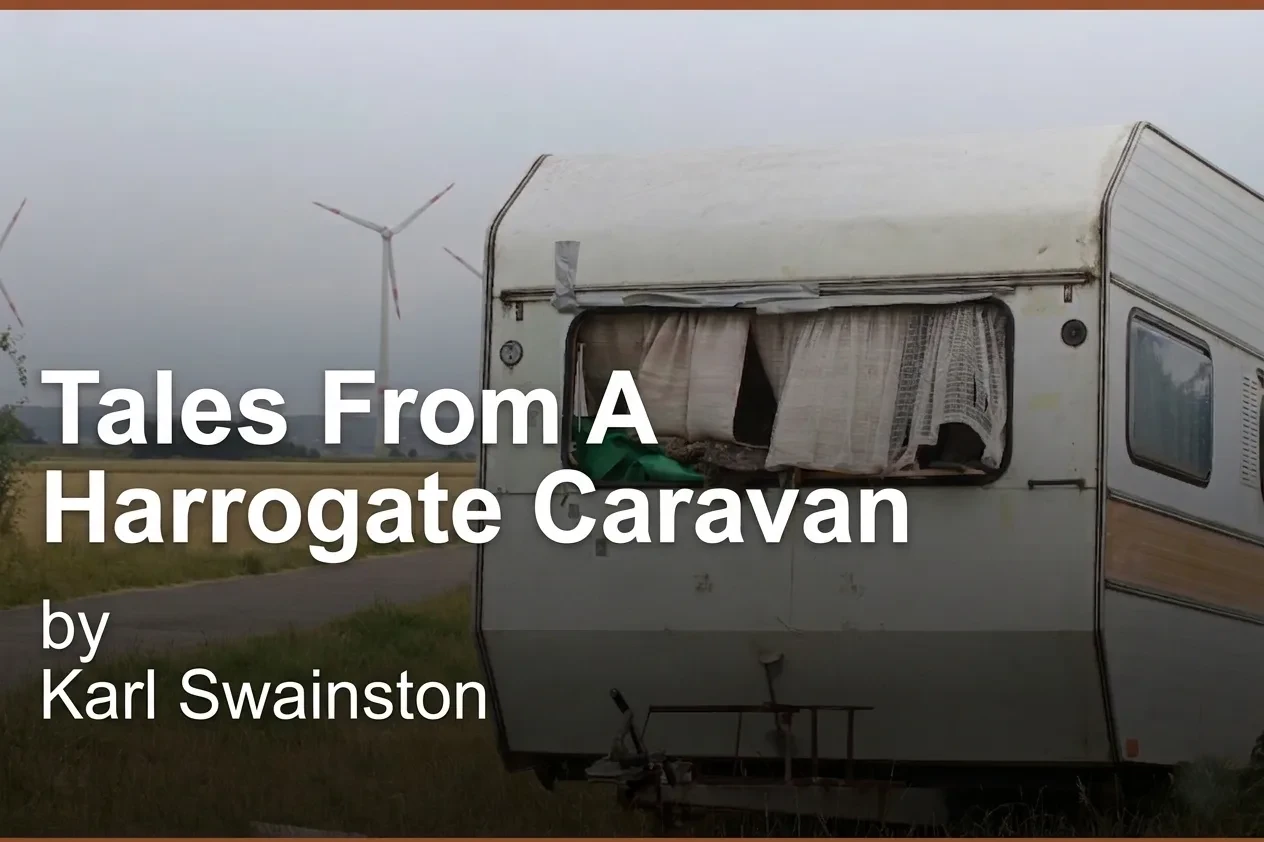
I had to continue working, as that was the only means with which to see out each week. By this time Thomas and his son, Leon, had taken up residence in the caravan, and they helped out enormously, and I think without their help, I would have capitulated sooner.
Prefer to listen? Watch the video reading below.
Reader Comments
Leave a Comment
We would love to hear your thoughts on this chapter.

About Karl Swainston
Karl Swainston is a writer and storyteller whose work is forged from a life lived across the North of England and far beyond. Growing up on a Leeds council estate in the 1960s, Karl's journey was anything but linear. By the age of thirty, he had already lived a dozen lives: from the rigors of grammar school to a degree in Latin, a stint as a fishmonger, a period of discovery living in Marseille, and a return to the hustle of London. Whether working as a postman, a builder, or competing as a county-level chess player, he was, above all, an avid reader—constantly documenting the world around him. This restless spirit continued into his professional life. Karl later taught in Bradford, where he ran a specialist unit for 244 of the most excluded students from across the region—young people whom even the local Pupil Referral Units could not accommodate. Working alongside his old friend Malcolm, Karl spent his days navigating the volatility of Bradford's most aggressive and dysfunctional teenagers. Throughout his life, Karl has been an avid runner and has always shared his home with a rotating cast of beloved dogs and cats—companions who have been constant witnesses to his work. As a writer, Karl's range is as expansive as his history. He works across a wide breadth of genres, including fiction and short stories, autobiography and memoir, biography, non-fiction, and metaphysical writing, as well as providing sharp commentary, opinion, analysis, and essays. Whether writing about his years managing the Harrogate Arms or offering insights from his current adopted home in South East India, where he lives in a simple village with his dog, Bambi, Karl's voice reflects the full, untidy, and deeply human breadth of life. He continues to draw on the rich, decades-long tapestry of his experiences to tell stories that matter, proving that no matter where you live, the human story remains the same.
Author Page