Resonance
XXVIII — The Root Chakra
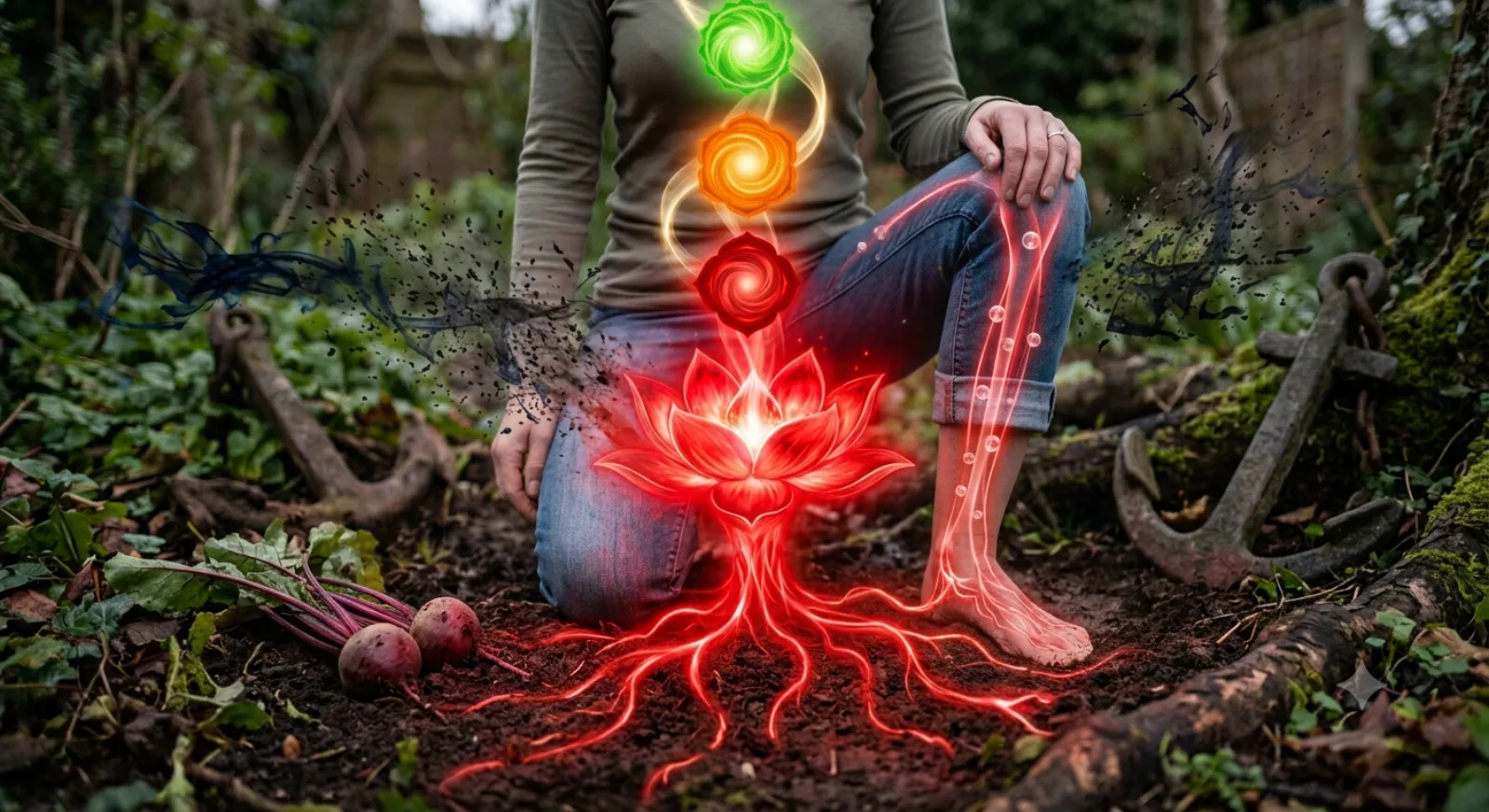
Furthest down the body is the Root Chakra. This Chakra has firm foundations in Mother Earth and is attached unreservedly to it and is feminine in its energy aspect. It represents the tangible footings we all have with life and with nature, and this is why many practitioners of Chakra healing like to remove footwear and feel the living earth beneath them and at one with them. The Root Chakra helps to administer financial well being and fecundity, and, at the same time, the Root Chakra is attached with food, and in particular root vegetable foods such as beetroot.
Being attached to everything earthly, the Root Chakra provides safety for the initiate. It gives to its host a great sense of security and contentment. We are anchored to the earth and feel secure in her being.
The traditional colour of the Root Chakra is red, a rich, vibrant, and vermilion red, which symbolises the lifeblood and source of the Earth. It is the densest of all the colours of the Chakra, as it is the closest to the Earth. The Root Chakra is represented as a lotus flower exuding four petals from a fountain of beautiful red, filled with life and giving life to all who become attached to her.
When the Root Chakra is neglected, often there comes to call feelings of scarcity and insecurity and feelings of not knowing where the next thing you need will come from. Accompanying this anxious state will be fear, naked fear, which will rule if left unchecked. This is why, when we do experience this condition, it always feels 'nagging' and is heavy as though it pulls us down and makes us feel down and depressed. It is as though it pleads for a reattachment to the Earth of which it seeks. This pulling is the Root Chakra's cause to be reunited with its Mother Earth. And only by allowing the Chakra its connection can we break the cycle of anxiety and insecurity we feel.
Prefer to listen? Watch the video reading below.
Reader Comments
Leave a Comment
We would love to hear your thoughts on this chapter.
About Karl Swainston
Karl Swainston is a writer and storyteller whose work is forged from a life lived across the North of England and far beyond. Growing up on a Leeds council estate in the 1960s, Karl's journey was anything but linear. By the age of thirty, he had already lived a dozen lives: from the rigors of grammar school to a degree in Latin, a stint as a fishmonger, a period of discovery living in Marseille, and a return to the hustle of London. Whether working as a postman, a builder, or competing as a county-level chess player, he was, above all, an avid reader—constantly documenting the world around him. This restless spirit continued into his professional life. Karl later taught in Bradford, where he ran a specialist unit for 244 of the most excluded students from across the region—young people whom even the local Pupil Referral Units could not accommodate. Working alongside his old friend Malcolm, Karl spent his days navigating the volatility of Bradford's most aggressive and dysfunctional teenagers. Throughout his life, Karl has been an avid runner and has always shared his home with a rotating cast of beloved dogs and cats—companions who have been constant witnesses to his work. As a writer, Karl's range is as expansive as his history. He works across a wide breadth of genres, including fiction and short stories, autobiography and memoir, biography, non-fiction, and metaphysical writing, as well as providing sharp commentary, opinion, analysis, and essays. Whether writing about his years managing the Harrogate Arms or offering insights from his current adopted home in South East India, where he lives in a simple village with his dog, Bambi, Karl's voice reflects the full, untidy, and deeply human breadth of life. He continues to draw on the rich, decades-long tapestry of his experiences to tell stories that matter, proving that no matter where you live, the human story remains the same.
Author Page